

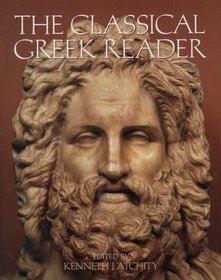
The Classical Greek Reader
-
10% KEDVEZMÉNY?
- A kedvezmény csak az 'Értesítés a kedvenc témákról' hírlevelünk címzettjeinek rendeléseire érvényes.
- Kiadói listaár GBP 24.49
-
11 700 Ft (11 142 Ft + 5% áfa)
Az ár azért becsült, mert a rendelés pillanatában nem lehet pontosan tudni, hogy a beérkezéskor milyen lesz a forint árfolyama az adott termék eredeti devizájához képest. Ha a forint romlana, kissé többet, ha javulna, kissé kevesebbet kell majd fizetnie.
- Kedvezmény(ek) 10% (cc. 1 170 Ft off)
- Kedvezményes ár 10 529 Ft (10 028 Ft + 5% áfa)
Iratkozzon fel most és részesüljön kedvezőbb árainkból!
Feliratkozom
11 700 Ft

Beszerezhetőség
Megrendelésre a kiadó utánnyomja a könyvet. Rendelhető, de a szokásosnál kicsit lassabban érkezik meg.
Why don't you give exact delivery time?
A beszerzés időigényét az eddigi tapasztalatokra alapozva adjuk meg. Azért becsült, mert a terméket külföldről hozzuk be, így a kiadó kiszolgálásának pillanatnyi gyorsaságától is függ. A megadottnál gyorsabb és lassabb szállítás is elképzelhető, de mindent megteszünk, hogy Ön a lehető leghamarabb jusson hozzá a termékhez.
A termék adatai:
- Kiadó OUP USA
- Megjelenés dátuma 1999. február 11.
- ISBN 9780195123036
- Kötéstípus Puhakötés
- Terjedelem470 oldal
- Méret 232x188x32 mm
- Súly 812 g
- Nyelv angol
- Illusztrációk numerous photographs 0
Kategóriák
Rövid leírás:
This anthology seeks to present the widest possible perspective on the Greek classical period, from its roots in the Homeric epics to its echoes in the histories of Plutarch and romances of Heliodorus. An introduction precedes each selection providing information that allows modern readers to consider these ancient texts in a new light.
TöbbHosszú leírás:
Scholarly commentary on the nuances of Greek writing fills library shelves, even entire libraries. Yet nothing can take the place of the documents themselves. The Classical Greek Reader marks an exciting departure from the traditional anthology approach to Greek literature and thought. By focusing not only on the big names but also on the less-familiar voices--the women, doctors, storytellers, herbalists, and romance writers--we are offered a glimpse of ancient Greece as we have rarely seen it.
Kenneth J. Atchity provides the reader with firsthand access to literary, artistic, social, political, religious, scientific, and philosophical texts that shaped Greek thinking. From Homeric epics to the histories of Plutarch, and from the poems of Korinna to the romances of Heliodorus, this invaluable reference provides readers with modern translations of the voices that shaped the classical Greek spirit. Each entry contains an introduction identifying the author and providing information that allows readers to consider these ancient texts in a new light.
Here are the wonders of the Greek world presented in a modern, accessible manner, perfect for those looking to refresh their acquaintance with the classics and for those who have yet to explore the exciting intellectual energy of the ancient Greek world.
This new examination of original texts, poems, art, plays, and historical documents from classical Greece offers a far more accessible format than most, providing source materials in a lively format for general readers
Tartalomjegyzék:
Preface; Introduction; Part One:Preclassical; Homer:The Iliad; Homer: The Odyssey; Hesiod: Theogony; Hesiod: Works and Days; Anonymous: Homeric Hymns: Hymn to Aphrodite; Archilochos: Lyrics; Thales of Miletus: Water; Terpandros: Lyrics; Alkman: Lyrics; Alcaeus: Lyrics; Solon:Lyrics and Law Codes; Sappho: Lyrics; Stesichoros: Lyrics; Anacreon: Lyrics; Simonides: Lyrics; Anaximander: On Nature; Anaximenes: Air; Theognis: Lyrics; Aesop:Fables; Pythagoras: The Golden Verses; Xenophanes: On Nature and Lyrics
Part Two:Classical; Pindar: Olympian Ode 2; Korinna: Lyric Fragments; Aeschylus: The Eumenides; Pricles: Funeral Oration(from Thucydes); Heraclitus: On Nature; Parmenides: On Nature; Telesilla: Lyric Fragments; Empedocles: Fragments and On Nature; Anaxagoras: On Nature; Protagoras: Fragments; Sophocles: Antigone; Herodotus: The History; Zeno: On Motion; Euripides: Alcestis; Hippocrates: The Physician's Oath; Thucydides: The Peloponnesian War;
Socrates: Speech to the Athenians (from Plato's Apology); Praxilla: Lyrics; Aristophanes: Lysistrata; Lysias: The Olympiacus; Isocrates: Oration to Philip; Plato: The Republic; Xenophon: Anabasis; Aeneas the Tactician: On the Defense of Fortified Positions; Aeschines: Against Timarchus
Aristotle: Poetics; Demosthenes: On the Crown; "Theophrastus"Tyrtamos: The Characters; Menander: The Dyskolos; Epicurus: Letter to Herodotus; Euclid: The Elements of Geometry; Leonidas of Tarentum: Lyrics; Theocritus: Thyrsis: The Death of Daphinis; Apollonius of Rhodes: The Voyage of Argo (Argonautica); Archimedes: The Sand-reckoner
Part Three:Postclassical; Polybius: The General History of the Wars of the Romans; Nicander: Theriaca; Bion: Lament for Adonis; Strabo: The Geography; Meleager: Lyrics; Dionysius of Halicarnassus: The Roman Antiquities; Dioscorides: Materia medica; "Longinus": On the Sublime; Epictetus: The Encheiridion (Handbook); Plutarch: The Life of Alexander the Great and Against Going into Debt; Dio(n) Chrysostomos: The Hunters of Euboea; Lucian: Lyrics and Dialogues; Ptolemy: The Almagest; Apollodorus: The Library; Pausanias: The Acropolis of Athens; Galen: On the Natural Facilities; Plotinus: True Happiness; Longus: Daphnis and Chloe; Athenaeus: The Sophists at Dinner; Heliodorus: Aethiopica
Greek Gods / Heroes, Roman Counterparts; Landmarks of Greek History; Glossary; Sources & Recommendations; Acknowledgementd; Index

