

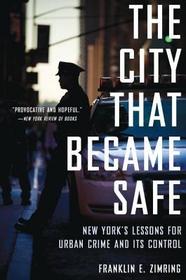
The City That Became Safe
New York's Lessons for Urban Crime and Its Control
Sorozatcím: Studies in Crime and Public Policy;
-
10% KEDVEZMÉNY?
- A kedvezmény csak az 'Értesítés a kedvenc témákról' hírlevelünk címzettjeinek rendeléseire érvényes.
- Kiadói listaár GBP 29.99
-
13 540 Ft (12 895 Ft + 5% áfa)
Az ár azért becsült, mert a rendelés pillanatában nem lehet pontosan tudni, hogy a beérkezéskor milyen lesz a forint árfolyama az adott termék eredeti devizájához képest. Ha a forint romlana, kissé többet, ha javulna, kissé kevesebbet kell majd fizetnie.
- Kedvezmény(ek) 10% (cc. 1 354 Ft off)
- Kedvezményes ár 12 186 Ft (11 606 Ft + 5% áfa)
Iratkozzon fel most és részesüljön kedvezőbb árainkból!
Feliratkozom
13 540 Ft

Beszerezhetőség
Megrendelésre a kiadó utánnyomja a könyvet. Rendelhető, de a szokásosnál kicsit lassabban érkezik meg.
Why don't you give exact delivery time?
A beszerzés időigényét az eddigi tapasztalatokra alapozva adjuk meg. Azért becsült, mert a terméket külföldről hozzuk be, így a kiadó kiszolgálásának pillanatnyi gyorsaságától is függ. A megadottnál gyorsabb és lassabb szállítás is elképzelhető, de mindent megteszünk, hogy Ön a lehető leghamarabb jusson hozzá a termékhez.
A termék adatai:
- Kiadó OUP USA
- Megjelenés dátuma 2013. október 17.
- ISBN 9780199324163
- Kötéstípus Puhakötés
- Terjedelem272 oldal
- Méret 231x155x22 mm
- Súly 295 g
- Nyelv angol
- Illusztrációk 70 b/w illus. 0
Kategóriák
Rövid leírás:
The 40% drop in crime that occurred across the U.S. from 1991 to 2000 largely remains an unsolved mystery. Even more puzzling then is the crime rate drop in New York City, which lasted twice as long and was twice as large. In this book, Franklin Zimring sets off in search of the New York difference through a detailed and comprehensive statistical investigation into the city's falling crime rates and possible explanations.
TöbbHosszú leírás:
The forty-percent drop in crime that occurred across the U.S. from 1991 to 2000 remains largely an unsolved mystery. Even more puzzling is the eighty-percent drop over nineteen years in New York City. Twice as long and twice as large, it is the largest crime decline on record.
In The City That Became Safe, Franklin E. Zimring seeks out the New York difference through a comprehensive investigation into the city's falling crime rates. The usual understanding is that aggressive police created a zero-tolerance law enforcement regime that drove crime rates down. Is this political sound bite true-are the official statistics generated by the police accurate? Though zero-tolerance policing and quality-of-life were never a consistent part of the NYPD's strategy, Zimring shows the numbers are correct and argues that some combination of more cops, new tactics, and new management can take some credit for the decline That the police can make a difference at all in preventing crime overturns decades of conventional wisdom from criminologists, but Zimring also points out what most experts have missed: the New York experience challenges the basic assumptions driving American crime- and drug-control policies.
New York has shown that crime rates can be greatly reduced without increasing prison populations. New York teaches that targeted harm reduction strategies can drastically cut down on drug related violence even if illegal drug use remains high. And New York has proven that epidemic levels of violent crime are not hard-wired into the populations or cultures of urban America. This careful and penetrating analysis of how the nation's largest city became safe rewrites the playbook on crime and its control for all big cities.
Tartalomjegyzék:
Foreward
Preface
Part I: Anatomy of a Crime Decline
Chapter 1: The Crime Decline - Some Vital Statistics
Chapter 2: A Safe City Now?
Part II: In Search of the New York Difference
Chapter 3: Continuity and Change in New York City
Chapter 4: Of Demography and Drugs: Testing Two 1990s Theories of Crime Causation
Chapter 5: Policing in New York City
Part III: Lessons and Questions
Chapter 6: Open Questions
Chapter 7: Lessons for American Crime Control
Chapter 8: Crime and the City
Appendix A: Staten Island: Crime, Policing and Population in New York's Fifth Borough
Appendix B: The Invisible Economics of New York City Incarceration
Appendix C: New York City Arrest Data and Borough Enforcement Staffing
References
Index

