

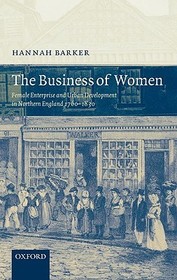
The Business of Women
Female Enterprise and Urban Development in Northern England 1760-1830
-
10% KEDVEZMÉNY?
- A kedvezmény csak az 'Értesítés a kedvenc témákról' hírlevelünk címzettjeinek rendeléseire érvényes.
- Kiadói listaár GBP 145.00
-
65 467 Ft (62 350 Ft + 5% áfa)
Az ár azért becsült, mert a rendelés pillanatában nem lehet pontosan tudni, hogy a beérkezéskor milyen lesz a forint árfolyama az adott termék eredeti devizájához képest. Ha a forint romlana, kissé többet, ha javulna, kissé kevesebbet kell majd fizetnie.
- Kedvezmény(ek) 10% (kb. 6 546 Ft)
- Kedvezményes ár 58 921 Ft (56 115 Ft + 5% áfa)
Iratkozzon fel most és részesüljön kedvezőbb árainkból!
Feliratkozom
65 467 Ft

Beszerezhetőség
Megrendelésre a kiadó utánnyomja a könyvet. Rendelhető, de a szokásosnál kicsit lassabban érkezik meg.
Why don't you give exact delivery time?
A beszerzés időigényét az eddigi tapasztalatokra alapozva adjuk meg. Azért becsült, mert a terméket külföldről hozzuk be, így a kiadó kiszolgálásának pillanatnyi gyorsaságától is függ. A megadottnál gyorsabb és lassabb szállítás is elképzelhető, de mindent megteszünk, hogy Ön a lehető leghamarabb jusson hozzá a termékhez.
A termék adatai:
- Kiadó OUP Oxford
- Megjelenés dátuma 2006. augusztus 31.
- ISBN 9780199299713
- Kötéstípus Keménykötés
- Terjedelem202 oldal
- Méret 223x145x15 mm
- Súly 410 g
- Nyelv angol
- Illusztrációk 4 maps, 4 tables 0
Kategóriák
Rövid leírás:
This study of the experiences of lower middle-class women in northern towns during the industrial revolution challenges widely held views on women's social and economic roles in the late eighteenth and early nineteenth centuries. Hannah Barker balances rigorous quantitative analysis of the available evidence with portraits of individual women and their lives.
TöbbHosszú leírás:
This study argues that businesswomen were central to urban society and to the operation and development of commerce in the late eighteenth and early nineteenth centuries. It presents a rich and complicated picture of lower-middling life and female enterprise in three northern English towns: Manchester, Leeds, and Sheffield. The stories told by a wide range of sources - including trade directories, newspaper advertisements, court records, correspondence, and diaries - demonstrate the very differing fortunes and levels of independence that individual businesswomen enjoyed. Yet, as a group, their involvement in the economic life of towns and, in particular, the manner in which they exploited and facilitated commercial development, force us to reassess our understanding of both gender relations and urban culture in late Georgian England. In contrast to the traditional historical consensus that the independent woman of business during this period - particularly those engaged in occupations deemed 'unfeminine' - was insignificant and no more than an oddity, businesswomen are presented here not as footnotes to the main narrative, but as central characters in a story of unprecedented social and economic transformation.
The book reveals a complex picture of female participation in business. It shows that factors traditionally thought to discriminate against women's commercial activity - particularly property laws and ideas about gender and respectability - did have significant impacts upon female enterprise. Yet it is also evident that women were not automatically economically or socially marginalized as a result. The woman of business might be subject to various constraints, but at the same time, she could be blessed with a number of freedoms, and a degree of independence that set her apart from most other women - and many men - in late Georgian society.
...pioneering work...
Tartalomjegyzék:
Introduction
Manchester, Leeds, and Sheffield in the Later Georgian Age
Women's Work and Urban Development
The 'Public' Face of Female Enterprise
Family Firms, Partnerships, and Independent Traders
Family, Property, and Power
Conclusion
Appendixes
Index

