

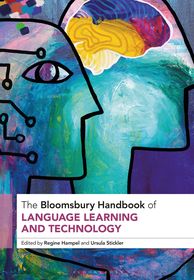
The Bloomsbury Handbook of Language Learning and Technology
Sorozatcím: Bloomsbury Handbooks;
-
18% KEDVEZMÉNY?
- Kiadói listaár GBP 39.99
-
18 055 Ft (17 195 Ft + 5% áfa)
Az ár azért becsült, mert a rendelés pillanatában nem lehet pontosan tudni, hogy a beérkezéskor milyen lesz a forint árfolyama az adott termék eredeti devizájához képest. Ha a forint romlana, kissé többet, ha javulna, kissé kevesebbet kell majd fizetnie.
- Kedvezmény(ek) 18% (kb. 3 250 Ft)
- Kedvezményes ár 14 805 Ft (14 100 Ft + 5% áfa)
- A kedvezmény érvényes eddig: 2026. október 31.
14 805 Ft

Beszerezhetőség
Még nem jelent meg, de rendelhető. A megjelenéstől számított néhány héten belül megérkezik.
Why don't you give exact delivery time?
A beszerzés időigényét az eddigi tapasztalatokra alapozva adjuk meg. Azért becsült, mert a terméket külföldről hozzuk be, így a kiadó kiszolgálásának pillanatnyi gyorsaságától is függ. A megadottnál gyorsabb és lassabb szállítás is elképzelhető, de mindent megteszünk, hogy Ön a lehető leghamarabb jusson hozzá a termékhez.
A termék adatai:
- Kiadó Bloomsbury Publishing (UK)
- Megjelenés dátuma 2026. július 23.
- ISBN 9781350340367
- Kötéstípus Puhakötés
- Terjedelem512 oldal
- Méret 244x166x30 mm
- Súly 860 g
- Nyelv 700
Kategóriák
Hosszú leírás:
This handbook draws together international perspectives on technology and its application to language teaching and learning, written and edited by leading scholars in the field. It meets the increasing demand for pedagogically-informed online language instruction, which is particularly important in the context of the effects that the Covid-19 pandemic has had on the education sector on a global scale, as well as exploring language learning in informal and non-formal contexts. With contributions from5 continents and over 20 countries, including Australia, Canada, Cyprus, Denmark, Finland, France, Greece, Ireland, Japan, Spain, Sweden, the Netherlands, the UK and the USA, the book offers a thorough overview of the main influential theories and explores technology tools, approaches to research, and applications to practice. Carefully curated, this is an innovative and exciting volume for students, teachers, researchers and lecturers in language education.
TöbbTartalomjegyzék:
Introduction, Regine Hampel and Ursula Stickler (Open University, UK)
Part I: CALL through the Ages
1. The Formative Years through an early CALL Journal, Mike Levy (Queensland University, Australia)
2. Technologies, Tools and Tutors, Phil Hubbard (Stanford University, USA)
3. Tutorial CALL - Language Practice with the Computer, Mathias Schulze (San Diego State University, USA)
4. Impact of the Pandemic on Language Education: Voices from across the World, Aline Germain-Rutherford, Banafsheh Karamifar, Emerita Ba---ados, Pauline Ernest, Sarah Heiser, Joe Hopkins, Tom---s Klinka, Mohamad Rahimi, Jackie Robbins and Kl---ra Ulicn--- (Ottawa University, Canada; Universidad de Concepci---n, Chile, Universitat Oberta de Catalunya, Spain; The Open University, UK; Charles University, Czech Republic; Shiraz University, Iran)
Part II: Theories in CALL
5. Second Language Acquisition Theories and TELL, Carol Chapelle (Iowa State University, USA)
6. Sociocultural Theory, Stefan Rathert (Kahramanmaras S---t------ Imam University, Turkey) and Nese Cabaroglu (---ukurova University,Turkey)
7. Multimodal Communication, Styliani Karatza (National and Kapodistrian University of Athens, Greece) and Elisabetta Adami (University of Leeds, UK)
8. (Multi-)Literacies, Anastasia O. Tzirides, Mary Kalantzis, Bill Cope and Vania Castro (University of Illinois, USA)
9. Ecological Perspectives on CALL, Regine Hampel (Open University, UK)
10. Motivation and Autonomy, Glenn Stockwell and Yijen Wang (Waseda University, Japan)
11. Social Media and Intercultural Competence, Jonathon Reinhardt (University of Arizona, USA)
Part III: Digital and Online Technologies Transforming Learning and Teaching
12. Digital Screen Mediation in Language Teaching, Carla Meskill (University of Albany, USA)
13. MOOCs for Language Learning, Elena Martin-Monje (UNED Madrid, Spain)
14. Machine Translation in Language Learning, Teaching and Assessment, Karina von Lindeiner-Str---sk--- and Andrew Gargett (Open University, UK)
15. Data-Driven Language Learning, Alex Boulton (Universit--- de Lorraine, France) and Pascual P---rez-Paredes (Universidad de Murcia, Spain)
16. Augmented and Virtual Reality in CALL, Stella Hadjistassou and Maria Iosifina Avgousti (University of Cyprus, Cyprus)
17. Maker Culture and Design, S---bastien Dubreil and Stephan Caspar (Carnegie Mellon University, USA)
Part IV: Moving the Learner Online
18.Virtual Exchange as a Tool for Intercultural Communicative Competence Development in Contemporary Foreign Language Education, Linda Gijsen, Silvia Canto and Kristi Jauregi-Ondarra (Utrecht University, the Netherlands)
19. Social Presence in Multimodal Virtual Exchange and Online Teaching, M---ge Satar (Newcastle University, UK)
20.Translingual Online Identities, Emotionality and Pedagogy, Sender Dovchin, Stephanie Dryden and Ana Tankosic (Curtin University, Australia)
21. A Hopeful Future for Mobile Language Learning, Agnes Kukulska-Hulme (Open University, UK)
22. Critical CALL: Towards Social Justice and Equity in Language Education, Liudmila Klimanova (University of Arizona, USA) and Kathryn Murphy-Judy (Virginia Commonwealth University, USA)
Part V: Research Methodologies and Methods
23. Activity Theory and CALL, Fran---oise Blin, Aparajita Dey-Plissonneau (Dublin City University, Ireland) and Sagun Shrestha (Open University, UK)
24. A Translanguaging and Multimodal Approach to Video-Mediated 'Street Language Learning', Maria Grazia Sindoni (University of Messina, Italy) and Wing Yee Jenifer Ho (Hong Kong Polytechnic University, Hong Kong)
25. Reconceptualizing Negotiation of Meaning as Multimodal in Desktop and Mobile Videoconferencing, Helen Lee (Open University, UK)
26. Doing N/Ethnography in the Nexus of Language Learning and Technology: Trends and Looking Ahead, Sangeeta Bagga-Gupta (J---nk---ping University, Sweden) and Sylvi Vigmo (Gothenburg University, Sweden)
27. Social Network Theory for Language Education Research, Martina Emke (Fachhochschule Bielefeld, Germany) and Olivia Kelly (Open University, UK)
28. Participant-Focused Eyetracking in a Sociocultural Framework, Ursula Stickler (Open University, UK) and Lijing Shi (London School of Economics, UK)
Part VI: Teachers' Needs and Initiatives
29. Hybridization in the K-12 Educational Context and CALL for a Digital and Post-Pandemic Era, Martine Pellerin (University of Alberta, USA)
30. Digital Multimodal Pedagogy for Teacher Training, Mimi Li (Texas A&M University-Commerce, USA) and Lianjiang Jiang (University of Hong Kong, Hong Kong)
31. Tips for Teachers, All Authors
Conclusion, Regine Hampel and Ursula Stickler (Open University, UK)
Index

