

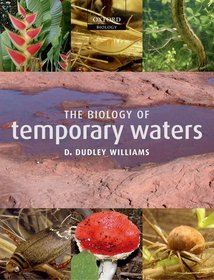
The Biology of Temporary Waters
-
10% KEDVEZMÉNY?
- A kedvezmény csak az 'Értesítés a kedvenc témákról' hírlevelünk címzettjeinek rendeléseire érvényes.
- Kiadói listaár GBP 102.50
-
46 278 Ft (44 075 Ft + 5% áfa)
Az ár azért becsült, mert a rendelés pillanatában nem lehet pontosan tudni, hogy a beérkezéskor milyen lesz a forint árfolyama az adott termék eredeti devizájához képest. Ha a forint romlana, kissé többet, ha javulna, kissé kevesebbet kell majd fizetnie.
- Kedvezmény(ek) 10% (cc. 4 628 Ft off)
- Kedvezményes ár 41 651 Ft (39 668 Ft + 5% áfa)
Iratkozzon fel most és részesüljön kedvezőbb árainkból!
Feliratkozom
46 278 Ft

Beszerezhetőség
A kiadónál véglegesen elfogyott, nem rendelhető. Érdemes újra keresni a címmel, hátha van újabb kiadás.
Why don't you give exact delivery time?
A beszerzés időigényét az eddigi tapasztalatokra alapozva adjuk meg. Azért becsült, mert a terméket külföldről hozzuk be, így a kiadó kiszolgálásának pillanatnyi gyorsaságától is függ. A megadottnál gyorsabb és lassabb szállítás is elképzelhető, de mindent megteszünk, hogy Ön a lehető leghamarabb jusson hozzá a termékhez.
A termék adatai:
- Kiadó Oxford University Press
- Megjelenés dátuma 2005. december 1.
- ISBN 9780198528111
- Kötéstípus Keménykötés
- Terjedelem352 oldal
- Méret 254x196x24 mm
- Súly 958 g
- Nyelv angol
- Illusztrációk Numerous halftones, tables and line drawings 0
Kategóriák
Rövid leírás:
This book brings together the highly scattered and diverse global literature on pure and applied aspects of temporary waters and their biotas, it examines their roles in both natural and human environments, and seeks common evolutionary themes. It will be of particular interest to aquatic ecologists, invertebrate and vertebrate biologists, environmental biologists, wetland conservationists, those charged with controlling water-associated diseases, educators, and
natural historians.
Hosszú leírás:
Temporary waters are found throughout the world, and include intermittent streams and ponds, episodic rain puddles, seasonal limestone lakes, the water-retaining structures of plants, such as bromeliads and pitcher plants, and a variety of man-made container habitats. They are probably populated by various plant, animal, and microscopic communities ranging from the very simple to the highly complex. Temporary waters therefore represent fascinating and significant
arenas in which to study the properties of species, as the latter deal with the rigours of living in highly variable environments. Obligate temporary water species display a remarkable array of adaptations to the periodic loss of their primary medium that largely set them apart from the inhabitants of
permanent water bodies. Survival of individuals frequently depends upon exceptional physiological tolerance or effective migrational abilities that are timed to appropriate habitat phases. Quite apart from their inherent biological interest, temporary waters are now in the limelight from a conservation perspective as these habitats come more and more into conflict with human activities. Traditionally, many temporary waters (be they ponds, pools, streams, or wetlands) have been considered to be
'wasted' areas of land, potentially convertible to agriculture once drained. In reality, they are natural features of the global landscape that represent distinct and unique habitats for many species, some that are found nowhere else and others that reach their maximum abundance and/or genetic
diversity there. Temporary waters are also very important from a human health perspective since they function as breeding places for the vectors of many disease organisms, including those that spread malaria, schistosomiasis, yellow fever, and dengue. Most of these exact a high toll in terms of global human suffering and reduced regional economies. This book collates and synthesises the highly scattered and diverse global literature on pure and applied aspects of these habitats and their biota.
It examines the ecology of temporary waters in both natural and human environments, and seeks to identify common evolutionary themes. It will be of particular interest to aquatic ecologists, invertebrate and vertebrate biologists, environmental biologists, wetland managers and conservationists,
those charged with controlling water-associated diseases, entomologists, educators, and natural historians.
A pioneering authority in the field, he has collated and synthesized a growing body of literature on the biology of temporary waters that represent a fascinating habitat for ecological and limnological research, incorporating a strong conservation component. Dudley Williams brilliantly compresses a huge, complex, perhaps unwieldy and occasionally unclear body of data into a surprisingly accessible account. The book is outstandingly successful and will soon be hailed
as a most accessible text for graduate students and researchers.
Tartalomjegyzék:
Preface
Introduction
The physical environment
Influential environmental factors
The biota
Population dynamics
Community dynamics
Other temporary water habitats
Applied aspects of temporary waters
Habitats for vectors of disease
Importance and stewardship of temporary waters
References
Index

