

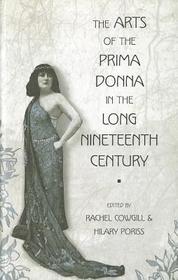
The Arts of the Prima Donna in the Long Nineteenth Century
1800-1920
-
10% KEDVEZMÉNY?
- A kedvezmény csak az 'Értesítés a kedvenc témákról' hírlevelünk címzettjeinek rendeléseire érvényes.
- Kiadói listaár GBP 122.50
-
55 308 Ft (52 675 Ft + 5% áfa)
Az ár azért becsült, mert a rendelés pillanatában nem lehet pontosan tudni, hogy a beérkezéskor milyen lesz a forint árfolyama az adott termék eredeti devizájához képest. Ha a forint romlana, kissé többet, ha javulna, kissé kevesebbet kell majd fizetnie.
- Kedvezmény(ek) 10% (cc. 5 531 Ft off)
- Kedvezményes ár 49 778 Ft (47 408 Ft + 5% áfa)
Iratkozzon fel most és részesüljön kedvezőbb árainkból!
Feliratkozom
55 308 Ft

Beszerezhetőség
Megrendelésre a kiadó utánnyomja a könyvet. Rendelhető, de a szokásosnál kicsit lassabban érkezik meg.
Why don't you give exact delivery time?
A beszerzés időigényét az eddigi tapasztalatokra alapozva adjuk meg. Azért becsült, mert a terméket külföldről hozzuk be, így a kiadó kiszolgálásának pillanatnyi gyorsaságától is függ. A megadottnál gyorsabb és lassabb szállítás is elképzelhető, de mindent megteszünk, hogy Ön a lehető leghamarabb jusson hozzá a termékhez.
A termék adatai:
- Kiadó OUP USA
- Megjelenés dátuma 2012. július 12.
- ISBN 9780195365870
- Kötéstípus Keménykötés
- Terjedelem416 oldal
- Méret 163x236x27 mm
- Súly 700 g
- Nyelv angol 0
Kategóriák
Rövid leírás:
The Arts of the Prima Donna assembles a star-studded yet well-balanced cast of contributors, whose essays combine theoretical approaches to text and narrative, and current theory on gender, performativity, and the commodification of the female body, with the growing understanding of the lives, careers, and performances of the female opera singer.
TöbbHosszú leírás:
Female characters assumed increasing prominence in the narratives of nineteenth- and early twentieth-century opera. And for contemporary audiences, many of these characters - and the celebrated women who played them - still define opera at its finest and most searingly affective, even if storylines leave them swooning and faded by the end of the drama. The presence and representation of women in opera has been addressed in a range of recent studies that offer valuable insights into the operatic stage as cultural space, focusing a critical lens at the text and the position and signification of female characters. Moving that lens onto the historical, The Arts of the Prima Donna in the Long Nineteenth Century sheds light on the singers who created and inhabited these roles, the flesh-and-blood women who embodied these fabled "doomed women" onstage before an audience.
Editors Rachel Cowgill and Hilary Poriss lead a cast of renowned contributors in an impressive display of current approaches to the lives, careers, and performances of female opera singers. Essential theoretical perspectives reflect several broad themes woven through the volume-cultures of celebrity surrounding the female singer; the emergence of the quasi-mythical figure of the diva; explorations of the intricate and sundry arts associated with the prima donna, and with her representation in other media; and the diversity and complexity of contemporary responses to her. The prima donna influenced compositional practices, determined musical and dramatic interpretation, and affected management decisions about the running of the opera house, content of the season, and employment of other artists - a clear demonstration that her position as "first woman" extended well beyond the boards of the operatic stage itself.
The Arts of the Prima Donna in the Long Nineteenth Century is an important addition to the collections of students and researchers in opera studies, nineteenth-century music, performance and gender/sexuality studies, and cultural studies, as well as to the shelves of opera singers and enthusiasts.
The essays offer a rich variety of approaches to the prima donna, and the quality of scholarship and writing is high. Together they reveal the contradictory views of the prima donna in different times and places, the ideologies of gender that shaped perception, and the challenges these singers presented to traditional male/female power dynamics.
Tartalomjegyzék:
Introduction
Rachel Cowgill and Hilary Poriss
PART ONE: PROMOTION AND IMAGE-MAKING
Chapter 1. Divas and Sonnets: Poetry for Female Singers in Teatri arti e letteratura
Francesco Izzo
Chapter 2. Idealizing the Prima Donna in Mid-Victorian London
Roberta Montemorra Marvin
Chapter 3. Prima Donnas and the Performance of Altruism
Hilary Poriss
Chapter 4. Staging Scandal with Salome and Elektra
Joy H. Calico
Chapter 5. Screening the Diva
Mary Simonson
Chapter 6. The Prima Donna's Art of Politics
James R. Currie
INTERLUDE 1: The Prima Donna Creates
Julian Rushton
PART TWO: FANTASY AND REPRESENTATION
Chapter 7. Gautier's "Diva": The First French Use of the Word
James Q. Davies
Chapter 8. Artistic Experiment and the Reevaluation of the Prima Donna in George Moore's Evelyn Innes
Grace Kehler
Chapter 9. Ars moriendi: Reflections on the Death of Mimi
Helen Greenwald
Chapter 10. Lakmé's Echoing Jewels
Gurminder Kaur Bhogal
INTERLUDE 2: Breath's End: Opera and Mortality
Terry Castle
PART THREE: CULTURES OF CELEBRITY
Chapter 11. "Attitudes with a Shawl": Performance, Femininity, and Spectatorship at the Italian Opera in Early Nineteenth-Century London
Rachel Cowgill
Chapter 12. From Diva to Drama Queen
Tracy C. Davis
Chapter 13. The Prima Donna as Opera Impresario: Emma Carelli and the Teatro Costanzi, 1911-1926
Susan Rutherford
Chapter 14. "In Imitation of My Negro Mammy": Alma Gluck and the American Prima Donna
Susan C. Cook
Chapter 15. "The Finest Voice of the Century": Clara Butt and Other Concert-Hall and Drawing-Room Singers of Fin-de-siècle Britain
Sophie Fuller
Chapter 16. Galli-Curci Comes to Town: The Prima Donna's Presence in the Age of Mechanical Reproduction
Alexandra Wilson
Index

