

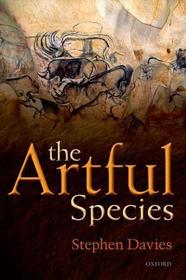
The Artful Species
Aesthetics, Art, and Evolution
-
10% KEDVEZMÉNY?
- A kedvezmény csak az 'Értesítés a kedvenc témákról' hírlevelünk címzettjeinek rendeléseire érvényes.
- Kiadói listaár GBP 33.99
-
15 346 Ft (14 615 Ft + 5% áfa)
Az ár azért becsült, mert a rendelés pillanatában nem lehet pontosan tudni, hogy a beérkezéskor milyen lesz a forint árfolyama az adott termék eredeti devizájához képest. Ha a forint romlana, kissé többet, ha javulna, kissé kevesebbet kell majd fizetnie.
- Kedvezmény(ek) 10% (cc. 1 535 Ft off)
- Kedvezményes ár 13 811 Ft (13 154 Ft + 5% áfa)
Iratkozzon fel most és részesüljön kedvezőbb árainkból!
Feliratkozom
15 346 Ft

Beszerezhetőség
Megrendelésre a kiadó utánnyomja a könyvet. Rendelhető, de a szokásosnál kicsit lassabban érkezik meg.
Why don't you give exact delivery time?
A beszerzés időigényét az eddigi tapasztalatokra alapozva adjuk meg. Azért becsült, mert a terméket külföldről hozzuk be, így a kiadó kiszolgálásának pillanatnyi gyorsaságától is függ. A megadottnál gyorsabb és lassabb szállítás is elképzelhető, de mindent megteszünk, hogy Ön a lehető leghamarabb jusson hozzá a termékhez.
A termék adatai:
- Kiadó OUP Oxford
- Megjelenés dátuma 2014. november 27.
- ISBN 9780198709633
- Kötéstípus Puhakötés
- Terjedelem310 oldal
- Méret 234x157x18 mm
- Súly 476 g
- Nyelv angol 0
Kategóriák
Rövid leírás:
Stephen Davies presents a fascinating exploration of the idea that art, and our aesthetic sensibilities more generally, should be understood as an element in human evolution. He asks: Do animals have aesthetics? Do our aesthetic preferences have prehistoric roots? Is art universal? What is the biological role of aesthetic and artistic behaviour?
TöbbHosszú leírás:
The Artful Species explores the idea that our aesthetic responses and art behaviors are connected to our evolved human nature. Our humanoid forerunners displayed aesthetic sensibilities hundreds of thousands of years ago and the art standing of prehistoric cave paintings is virtually uncontested. In Part One, Stephen Davies analyses the key concepts of the aesthetic, art, and evolution, and explores how they might be related. He considers a range of issues, including whether animals have aesthetic tastes and whether art is not only universal but cross-culturally comprehensible. Part Two examines the many aesthetic interests humans take in animals and how these reflect our biological interests, and the idea that our environmental and landscape preferences are rooted in the experiences of our distant ancestors. In considering the controversial subject of human beauty, evolutionary psychologists have traditionally focused on female physical attractiveness in the context of mate selection, but Davies presents a broader view which decouples human beauty from mate choice and explains why it goes more with social performance and self-presentation. Part Three asks if the arts, together or singly, are biological adaptations, incidental byproducts of nonart adaptations, or so removed from biology that they rate as purely cultural technologies. Davies does not conclusively support any one of the many positions considered here, but argues that there are grounds, nevertheless, for seeing art as part of human nature. Art serves as a powerful and complex signal of human fitness, and so cannot be incidental to biology. Indeed, aesthetic responses and art behaviors are the touchstones of our humanity.
[T]his book is of considerable value. Taking Davies's criticisms seriously would certainly enhance the quality of research in this area.
Tartalomjegyzék:
Introduction to Part One
The aesthetic
The nature of art
The theory of evolution
How might the aesthetic, art, and evolution be related?
Introduction to Part Two - The Aesthetic
Humans' aesthetic appreciation of nonhuman animals
Landscape aesthetics
The aesthetics of human beauty
Introduction to Part Three - The Arts
General theories of art as an adaptation and the origins of art
Art as a spandrel
Art as a technology
Arts as adaptations
Conclusion
Notes
Glossary
References

