

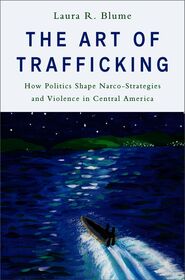
The Art of Trafficking
How Politics Shape Narco-Strategies and Violence in Central America
-
10% KEDVEZMÉNY?
- A kedvezmény csak az 'Értesítés a kedvenc témákról' hírlevelünk címzettjeinek rendeléseire érvényes.
- Kiadói listaár GBP 86.00
-
38 829 Ft (36 980 Ft + 5% áfa)
Az ár azért becsült, mert a rendelés pillanatában nem lehet pontosan tudni, hogy a beérkezéskor milyen lesz a forint árfolyama az adott termék eredeti devizájához képest. Ha a forint romlana, kissé többet, ha javulna, kissé kevesebbet kell majd fizetnie.
- Kedvezmény(ek) 10% (kb. 3 883 Ft)
- Kedvezményes ár 34 946 Ft (33 282 Ft + 5% áfa)
Iratkozzon fel most és részesüljön kedvezőbb árainkból!
Feliratkozom
38 829 Ft

Beszerezhetőség
Megrendelésre a kiadó utánnyomja a könyvet. Rendelhető, de a szokásosnál kicsit lassabban érkezik meg.
Why don't you give exact delivery time?
A beszerzés időigényét az eddigi tapasztalatokra alapozva adjuk meg. Azért becsült, mert a terméket külföldről hozzuk be, így a kiadó kiszolgálásának pillanatnyi gyorsaságától is függ. A megadottnál gyorsabb és lassabb szállítás is elképzelhető, de mindent megteszünk, hogy Ön a lehető leghamarabb jusson hozzá a termékhez.
A termék adatai:
- Kiadó OUP USA
- Megjelenés dátuma 2025. december 15.
- ISBN 9780197818183
- Kötéstípus Keménykötés
- Terjedelem352 oldal
- Méret 234x156x23 mm
- Súly 671 g
- Nyelv angol 646
Kategóriák
Rövid leírás:
The Art of Trafficking is a powerful condemnation of the U.S.-led War on Drugs and makes a strong case for urgent policy changes, both in the U.S. as well as in Central America.
TöbbHosszú leírás:
How and why do drug traffickers adapt their operational strategies based on political and community dynamics, and, in turn, how do these different narco-strategies impact violence? To address these questions, this book draws on several years of immersive, ethnographic fieldwork in drug trafficking hotspots along the Caribbean coast of Honduras, Nicaragua, and Costa Rica. In addition to extensive use of participant observation methods, the author has conducted 300 informal interviews, more than 75 of which were with participants in the illegal narcotics trade ranging from local marijuana and crack dealers to international cocaine traffickers.
The book presents a theory of how corruption and political competition determine traffickers' main strategies (collusion, cooptation, or evasion) as well as how traffickers may cultivate local community support, especially in their native communities. It then elaborates on how these various narco-strategies and differences in community support influence traffickers use of violence. The author illustrates with ethnographic evidence, as well as original datasets on massacres and violence against public figures, how cooptation strategies in Honduras and evasion strategies in Costa Rica both increase the risk of violence, especially when there is zero-sum criminal competition, yet with significant differences in terms of the targets of violence under evasion versus cooptation strategies. In contrast, collusion strategies in Nicaragua eliminate most trafficking-related violence; yet the same authoritarian system that de facto manages the drug trade and reduces narco-violence contributes to violent political repression in Nicaragua.
Ultimately, The Art of Trafficking is a powerful condemnation of the U.S.-led War on Drugs and makes a strong case for urgent policy changes, both in the U.S. as well as in Central America.
Tartalomjegyzék:
Introduction
Chasing Cocaine along the Caribbean Coast
From Banana Republics to Cocaine Republics
A Theory of Traffickers' Strategies
Co-optation Strategies in Honduras
Collusion Strategies in Nicaragua
Evasion Strategies in Costa Rica
Policy Recommendations
Conclusion

