

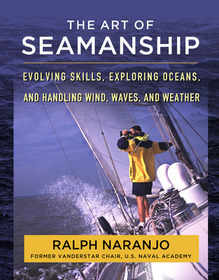
The Art of Seamanship
Evolving Skills, Exploring Oceans, and Handling Wind, Waves, and Weather
Sorozatcím: INTERNATIONAL MARINE-RMP;
-
10% KEDVEZMÉNY?
- A kedvezmény csak az 'Értesítés a kedvenc témákról' hírlevelünk címzettjeinek rendeléseire érvényes.
- Kiadói listaár GBP 48.99
-
22 118 Ft (21 065 Ft + 5% áfa)
Az ár azért becsült, mert a rendelés pillanatában nem lehet pontosan tudni, hogy a beérkezéskor milyen lesz a forint árfolyama az adott termék eredeti devizájához képest. Ha a forint romlana, kissé többet, ha javulna, kissé kevesebbet kell majd fizetnie.
- Kedvezmény(ek) 10% (kb. 2 212 Ft)
- Kedvezményes ár 19 906 Ft (18 959 Ft + 5% áfa)
Iratkozzon fel most és részesüljön kedvezőbb árainkból!
Feliratkozom
22 118 Ft

Beszerezhetőség
Megrendelésre a kiadó utánnyomja a könyvet. Rendelhető, de a szokásosnál kicsit lassabban érkezik meg.
Why don't you give exact delivery time?
A beszerzés időigényét az eddigi tapasztalatokra alapozva adjuk meg. Azért becsült, mert a terméket külföldről hozzuk be, így a kiadó kiszolgálásának pillanatnyi gyorsaságától is függ. A megadottnál gyorsabb és lassabb szállítás is elképzelhető, de mindent megteszünk, hogy Ön a lehető leghamarabb jusson hozzá a termékhez.
A termék adatai:
- Kiadó International Marine
- Megjelenés dátuma 2014. október 16.
- ISBN 9780071493420
- Kötéstípus Keménykötés
- Terjedelem544 oldal
- Méret 281x226x28 mm
- Súly 1368 g
- Nyelv angol 0
Kategóriák
Hosszú leírás:
Wind, waves, weather, and water demand the practiced art of seamanship
"Planning and reacting to the unanticipated are the flip sides of seamanship. This blending of pre-voyage preparedness with effective on-the-water response is learned rather than inherent--together they define the art of seamanship." -- Author RALPH NARANJO
Each time a sailboat casts off its docklines the sailor enters a marine realm that demands knowledge, preparedness, vigilance, and coolheadedness--these qualities are the foundation of good seamanship. Both an art as well as a science, seamanship is also the mastery of numerous practical details, from the best choice of line for a jib sheet to an accurate assessment of the passage of a deep low-pressure system.
Around-the-world sailor Ralph Naranjo--technical expert, ocean racer, former Vanderstar Chair at the U.S. Naval Academy--delivers a priceless reference for anything that comes up while on the water, sharing all the knowledge today's sailors need to "hand, reef, and steer"--an enduring reference to the collective skills of the bluewater sailor. Naranjo's vast knowledge is supported by real-life examples of sailing mishaps, sample itineraries, vibrant photos, as well as first-hand accounts and sidebarsfrom top sailors and marine experts, including Shelia McCurdy, Chuck Hawley, Lee Chesneau, and Paul Miller, N.A.Seamanship is a dynamic art, demanding full attention from the sailor amidst a constant flow of information and knowledge.
The Art of Seamanship will improve your problem-solving skills, whether daysailing around the harbor or voyaging around the world.
You'll learn:
- The attributes of a good skipper and crew—includingphysical and mental agility, effective communication, andknowledge-based decision making
- Fine-tuning your voyaging with the seaworthiness of your boat and the capability of your crew in mind
- Using weather information and routing resources to lower risks and raise rewards
- Developing advanced boat-handling skills—includingheaving-to, towing a drogue, reefing, setting storm sails,and kedging
- Lines, line handling, and rigging--making sure the right strings are attached, including an in-depth look at modern rope construction
- Anchoring--the art of staying put--with a realistic lookat tackle from lunch hooks to storm anchors
- Sails, modern sail material, sail trim, sail handling, and hardware, from hanked-on headsails to the latest top-down furlers
- Navigating in the satellite age, including paper and digital chartplotting, how to best use the new equipment, plus understanding the role of celestial navigation as a fail-safe
- Sailboat design and dynamics, including the role of vessel structure and stability and a look at what your current boat has to offer and what to look for in a new boat
- Sharing crowded waters and understanding the reasonsbehind the "rules of the road"
- How to be ready for any emergency, including fire, crewoverboard, a flooding bilge, or the need to abandon ship
- Establishing reliable communication, including VHF, AIS, SSB, satellite phones, and beacon signaling (EPIRBS, PLBS)
Wind, waves, weather, and water demand the practiced art of seamanship
"Planning and reacting to the unanticipated are the flip sides of seamanship. This blending of pre-voyage preparedness with effective on-the-water response is learned rather than inherent--together they define the art of seamanship." -- Author RALPH NARANJO
Each time a sailboat casts off its docklines the sailor enters a marine realm that demands knowledge, preparedness, vigilance, and coolheadedness--these qualities are the foundation of good seamanship. Both an art as well as a science, seamanship is also the mastery of numerous practical details, from the best choice of line for a jib sheet to an accurate assessment of the passage of a deep low-pressure system.
Around-the-world sailor Ralph Naranjo--technical expert, ocean racer, former Vanderstar Chair at the U.S. Naval Academy--delivers a priceless reference for anything that comes up while on the water, sharing all the knowledge today's sailors need to "hand, reef, and steer"--an enduring reference to the collective skills of the bluewater sailor. Naranjo's vast knowledge is supported by real-life examples of sailing mishaps, sample itineraries, vibrant photos, as well as first-hand accounts and sidebarsfrom top sailors and marine experts, including Shelia McCurdy, Chuck Hawley, Lee Chesneau, and Paul Miller, N.A.Seamanship is a dynamic art, demanding full attention from the sailor amidst a constant flow of information and knowledge.
The Art of Seamanship will improve your problem-solving skills, whether daysailing around the harbor or voyaging around the world.
You'll learn:
- The attributes of a good skipper and crew—includingphysical and mental agility, effective communication, andknowledge-based decision making
- Fine-tuning your voyaging with the seaworthiness of your boat and the capability of your crew in mind
- Using weather information and routing resources to lower risks and raise rewards
- Developing advanced boat-handling skills—includingheaving-to, towing a drogue, reefing, setting storm sails,and kedging
- Lines, line handling, and rigging--making sure the right strings are attached, including an in-depth look at modern rope construction
- Anchoring--the art of staying put--with a realistic lookat tackle from lunch hooks to storm anchors
- Sails, modern sail material, sail trim, sail handling, and hardware, from hanked-on headsails to the latest top-down furlers
- Navigating in the satellite age, including paper and digital chartplotting, how to best use the new equipment, plus understanding the role of celestial navigation as a fail-safe
- Sailboat design and dynamics, including the role of vessel structure and stability and a look at what your current boat has to offer and what to look for in a new boat
- Sharing crowded waters and understanding the reasonsbehind the "rules of the road"
- How to be ready for any emergency, including fire, crewoverboard, a flooding bilge, or the need to abandon ship
- Establishing reliable communication, including VHF, AIS, SSB, satellite phones, and beacon signaling (EPIRBS, PLBS)
Tartalomjegyzék:
CHAPTER 1: The Art and Science of Seamanship
The Safety Triangle
Seamanship by the Boat
The Safety Triangle in the Era of Offshore Rallies
What Is Seamanship, by Sheila McCurdy
Chapter 2: Planning Is Seamanship
Are You Prepared
Preparing the Boat
Preparing the Crew
Preparing the Itinerary
Avoiding Harm's Way
Preparing the Boat
Preparing the Crew
Turning a Plan into a Good Plan
Bermuda and Hawaii
Sample Itinerary for a One-Year East Coast Adventure
Chapter 3: Evolving as Skipper or Crew
Attributes of a Good Crewmember
Attributes of a Good Skipper
What Cruisers Can Learn from Racers
Training Opportunities
Evolving as Crew, by Lenore Naranjo
Hands-on Training Opportunities
Chapter 4: Boat Handling
Contingency Thinking
Boat-Handling Factors and Techniques
Performance Tweaks
The Boat-Handling Routine
Special Maneuvering Situations
Chapter 5: Lines, Line Handling, and Rigging
Line Selection
Line Handling
Running Rigging Leads and Hardware
Putting away the Lines
Knots to Know
Chapter 6: Anchors and Anchoring
Not-So-Serene Irene
Ground Tackle Sizing
Anchor Types
Anchor Performance in Tests versus the Real World
Anchor Rodes and Connecting Hardware
Ground-Tackle Connections
Ground-Tackle Handling Gear
Anchoring Tactics
Chapter 7: Sails and Sail Handling
Sailing Science
Masthead versus Fractional Rigs
Sail Technology
Shaping Sails Underway
Managing the Mainsail
Managing Headsails
Sail Repair
Material Choices
Chapter 8: Navigation
A Navigator's Day's Work at Sea
A Day’s Work Now
Piloting with Paper Charts and Ship's Compass
Navigation Publications
Electronic Navigation
Celestial Navigation
A Final Plea to Avoid Blind Faith in Electronic Fixes
Chapter 9: Sharing Crowded Waters
The Navigation Rules: An Overview
A Tour of the Rules
Making Landfall
Chapter 10: Reading the Sea and Sky
Living-Room Learning
The Flying Colours Incident
Thunderstorms
Surface Weather Systems
500-Millibar Charts
Tropical Weather Patterns
Weather Predictions
Professional Weather Services
Climate and Weather Cycles
Oceanographic Impacts on Wind and Sea
Unlocking the Mystery of the 500 Mb Chart, by Lee Chesneau
Chapter 11: Handling Heavy Weather
The Heavy-Weather Threshold
Coastal Waters and Seeking Shelter
Preparing for Heavy Weather at Sea
Storm Canvas
Storm Tactics
Chapter 12: The Boats We Sail
Stability
So What Kind of Boat Do You Want
Capable Cruisers of 40 to 44 Feet
Inspecting a Boat
Chapter 13: Staying Safe
Preparing Your Boat for Sea
Safety Gear
Emergency Gear
Crew-Overboard Recovery
Fire Afloat
Bottom Line
PFDs and Life Jackets, by Captain Kip Louttit, USCG Retired and Auxiliary
The Wingnuts Tragedy Revisited
Responding to a Steering Failure, by Chuck Hawley
Chapter 14: Communications
Ocean Zones and Communications Equipment
Wi-Fi Afloat
NAVTEX
Rescue 21
Automatic Identification System (AIS)
Radio Talk
Making Choices
Index
Több
