

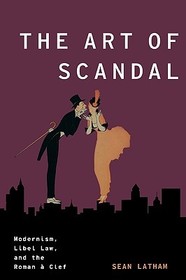
The Art of Scandal
Modernism, Libel Law, and the Roman a Clef
Sorozatcím: Modernist Literature & Culture;
-
10% KEDVEZMÉNY?
- A kedvezmény csak az 'Értesítés a kedvenc témákról' hírlevelünk címzettjeinek rendeléseire érvényes.
- Kiadói listaár GBP 32.99
-
15 760 Ft (15 010 Ft + 5% áfa)
Az ár azért becsült, mert a rendelés pillanatában nem lehet pontosan tudni, hogy a beérkezéskor milyen lesz a forint árfolyama az adott termék eredeti devizájához képest. Ha a forint romlana, kissé többet, ha javulna, kissé kevesebbet kell majd fizetnie.
- Kedvezmény(ek) 10% (cc. 1 576 Ft off)
- Kedvezményes ár 14 184 Ft (13 509 Ft + 5% áfa)
Iratkozzon fel most és részesüljön kedvezőbb árainkból!
Feliratkozom
15 760 Ft

Beszerezhetőség
Bizonytalan a beszerezhetőség. Érdemes még egyszer keresni szerzővel és címmel. Ha nem talál másik, kapható kiadást, forduljon ügyfélszolgálatunkhoz!
Why don't you give exact delivery time?
A beszerzés időigényét az eddigi tapasztalatokra alapozva adjuk meg. Azért becsült, mert a terméket külföldről hozzuk be, így a kiadó kiszolgálásának pillanatnyi gyorsaságától is függ. A megadottnál gyorsabb és lassabb szállítás is elképzelhető, de mindent megteszünk, hogy Ön a lehető leghamarabb jusson hozzá a termékhez.
A termék adatai:
- Kiadó OUP USA
- Megjelenés dátuma 2009. április 30.
- ISBN 9780195379990
- Kötéstípus Keménykötés
- Terjedelem224 oldal
- Méret 241x164x20 mm
- Súly 462 g
- Nyelv angol
- Illusztrációk 2 halftones 0
Kategóriák
Hosszú leírás:
The Art of Scandal advances a relatively simple claim with far-reaching consequences for modernist studies; writers and readers throughout the early twentieth century revived the long-despised codes and habits of the roman a clef as a key part of that larger assault on Victorian realism we now call modernism. In the process, this resurgent genre took on a life of its own, reconfiguring the intricate relationship between literature, celebrity, and the
law. Latham uses the genre to reconfigure modernism's development as a cultural practice diffused across texts and networks of reception and circulation in which they are embedded. Such a move means coming to terms with the ways in which producers as well as consumers used elements of the roman a clef to challenge
fiction's apparent autonomy from the social and political world. This widespread process provoked not only a generative aesthetic crisis, but a gradually unfolding legal quandary that led Britain's highest courts to worry that fiction itself might be illegal. Writers like James Joyce, Jean Rhys, Oscar Wilde, and D.H. Lawrence deliberately employed elements of the roman a clef, only to find that it possessed an uncanny and even dangerous agency of its own-one that resonated through a
complex system of publicity and constraint. Bringing these effects fully into view requires a mixture of close reading and archival excavation that proceeds here in chapters on the anonymous case study, Oscar Wilde's trial, libel law, celebrity salons, and Parisian bohemia. The Art of Scandal thus both salvages
the roman a clef and traces its weird itinerary through the early twentieth century. In the process, it elaborates an expansive concept of modernism that interweaves coterie culture with the mass media, psychology with celebrity, and literature with the law.
Tartalomjegyzék:
Series Editors' Foreword
Acknowledgments
Chapter I
Introduction: Fact, Fiction, Pleasure
Chapter II
True Fictions and False Histories: The Secret Rise of the Roman a clef
Chapter III
Open Secrets and Hidden Truths: Wilde and Freud
Chapter IV
Libel: Policing the Laws of Fiction
Appendix to Chapter IV
A Brief Digest of British and Irish Libel Law
Chapter V
The Novel at the Bar: Joyce, Lewis, and Libel
Chapter VI
The Coterie as Commodity: Huxley, Lawrence, Rhys and the Business of Revenge
Appendix
A Select Bibliography of the Modernist Roman a Clef

