

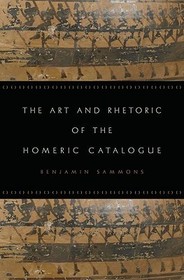
The Art and Rhetoric of the Homeric Catalogue
-
10% KEDVEZMÉNY?
- A kedvezmény csak az 'Értesítés a kedvenc témákról' hírlevelünk címzettjeinek rendeléseire érvényes.
- Kiadói listaár GBP 115.00
-
51 922 Ft (49 450 Ft + 5% áfa)
Az ár azért becsült, mert a rendelés pillanatában nem lehet pontosan tudni, hogy a beérkezéskor milyen lesz a forint árfolyama az adott termék eredeti devizájához képest. Ha a forint romlana, kissé többet, ha javulna, kissé kevesebbet kell majd fizetnie.
- Kedvezmény(ek) 10% (cc. 5 192 Ft off)
- Kedvezményes ár 46 730 Ft (44 505 Ft + 5% áfa)
Iratkozzon fel most és részesüljön kedvezőbb árainkból!
Feliratkozom
51 922 Ft

Beszerezhetőség
Megrendelésre a kiadó utánnyomja a könyvet. Rendelhető, de a szokásosnál kicsit lassabban érkezik meg.
Why don't you give exact delivery time?
A beszerzés időigényét az eddigi tapasztalatokra alapozva adjuk meg. Azért becsült, mert a terméket külföldről hozzuk be, így a kiadó kiszolgálásának pillanatnyi gyorsaságától is függ. A megadottnál gyorsabb és lassabb szállítás is elképzelhető, de mindent megteszünk, hogy Ön a lehető leghamarabb jusson hozzá a termékhez.
A termék adatai:
- Kiadó OUP USA
- Megjelenés dátuma 2010. július 1.
- ISBN 9780195375688
- Kötéstípus Keménykötés
- Terjedelem248 oldal
- Méret 160x234x17 mm
- Súly 499 g
- Nyelv angol 0
Kategóriák
Rövid leírás:
This book takes a fresh look at a familiar element of the Homeric epics - the poetic catalogue. It shows that in a variety of contexts, Homer uses catalogue poetry not only to develop his themes, but to comment on the ideals and limitations of the epic genre itself.
TöbbHosszú leírás:
In The Art and Rhetoric of the Homeric Catalogue, Benjamin Sammons takes a fresh look at a familiar element of the Homeric epics -- the poetic catalogue. This study uncovers the great variety of functions fulfilled by the catalogue as a manner of speech within very different contexts, ranging from celebrated examples such as the poet's famous "Catalogue of Ships," to others less commonly treated under this rubric, such as catalogues within the speech and rhetoric of Homer's characters. Sammons shows that catalogue poetry is no ossified or primitive relic of the old tradition, but a living subgenre of poetry that is used by Homer in a creative and original way. He finds that catalogues may be used by the poet or his characters to reflect -- or distort -- the themes of the poem at large, to impose an interpretation on events as they unfold, and possibly to allude to competing poetic traditions or even contemporaneous poems. Throughout, the study focuses on how Homer uses his catalogue to talk about the epic genre itself: to explore the boundaries of the heroic world, the limits of heroic glory, and the ideals and realities of his own traditional role as an epic bard. Building on a renewed interest in the "literary list" in other disciplines, Sammons shows that Homer is not only one of the earliest known practitioners of the poetic catalogue, but one of the subtlest and most skillful.
Sammon's book is a literary study for literary scholars, and as such I would recommend it. He has demonstrated with great persuasiveness why we as modern readers of Homer should be interested in Homeric catalogues.
Tartalomjegyzék:
Preface
INTRODUCTION
CHAPTER 1: Two Paradigmatic Catalogues
Dione
Kalypso
CHAPTER 2: Two Catalogues of Women
Zeus's Catalogue of Lovers
The Catalogue of the Nekyia
CHAPTER 3: Two Catalogues of Objects
Priam's Ransom
Agamemnon's Catalogue of Gifts
CHAPTER 4: The Iliadic Catalogue of Ships
CHAPTER 5: Three Catalogues of Suitors
CONCLUSIONS
BIBLIOGRAPHY

