

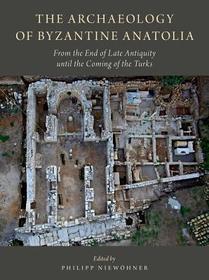
The Archaeology of Byzantine Anatolia
From the End of Late Antiquity until the Coming of the Turks
-
10% KEDVEZMÉNY?
- A kedvezmény csak az 'Értesítés a kedvenc témákról' hírlevelünk címzettjeinek rendeléseire érvényes.
- Kiadói listaár GBP 122.50
-
58 524 Ft (55 737 Ft + 5% áfa)
Az ár azért becsült, mert a rendelés pillanatában nem lehet pontosan tudni, hogy a beérkezéskor milyen lesz a forint árfolyama az adott termék eredeti devizájához képest. Ha a forint romlana, kissé többet, ha javulna, kissé kevesebbet kell majd fizetnie.
- Kedvezmény(ek) 10% (cc. 5 852 Ft off)
- Kedvezményes ár 52 671 Ft (50 163 Ft + 5% áfa)
Iratkozzon fel most és részesüljön kedvezőbb árainkból!
Feliratkozom
58 524 Ft

Beszerezhetőség
Megrendelésre a kiadó utánnyomja a könyvet. Rendelhető, de a szokásosnál kicsit lassabban érkezik meg.
Why don't you give exact delivery time?
A beszerzés időigényét az eddigi tapasztalatokra alapozva adjuk meg. Azért becsült, mert a terméket külföldről hozzuk be, így a kiadó kiszolgálásának pillanatnyi gyorsaságától is függ. A megadottnál gyorsabb és lassabb szállítás is elképzelhető, de mindent megteszünk, hogy Ön a lehető leghamarabb jusson hozzá a termékhez.
A termék adatai:
- Kiadó OUP USA
- Megjelenés dátuma 2017. április 27.
- ISBN 9780190610463
- Kötéstípus Keménykötés
- Terjedelem478 oldal
- Méret 201x257x33 mm
- Súly 1281 g
- Nyelv angol 0
Kategóriák
Rövid leírás:
The volume propounds a new understanding of the hitherto enigmatic medievalization of the Roman empire, provides English presentations of foreign-language research, and promises to serve as an essential compendium that may help to establish Anatolian archaeology more widely in academic curricula worldwide.
TöbbHosszú leírás:
This book accounts for the tumultuous period of the fifth to eleventh centuries from the Fall of Rome and the collapse of the Western Roman Empire through the breakup of the Eastern Roman Empire and loss of pan-Mediterranean rule, until the Turks arrived and seized Anatolia. The volume is divided into a dozen syntheses that each addresses an issue of intrigue for the archaeology of Anatolia, and two dozen case studies on single sites that exemplify its richness.
Anatolia was the only major part of the Roman Empire that did not fall in late antiquity; it remained steadfast under Roman rule through the eleventh century. Its personal history stands to elucidate both the emphatic impact of Roman administration in the wake of pan-Mediterranean collapse. Thanks to Byzantine archaeology, we now know that urban decline did not set in before the fifth century, after Anatolia had already be thoroughly Christianized in the course of the fourth century; we know now that urban decline, as it occurred from the fifth century onwards, was paired with rural prosperity, and an increase in the number, size, and quality of rural settlements and in rural population; that this ruralization was halted during the seventh to ninth centuries, when Anatolia was invaded first by the Persians, and then by the Arabs -- and the population appears to have sought shelter behind new urban fortifications and in large cathedrals. Further, it elucidates that once the Arab threat had ended in the ninth century, this ruralization set in once more, and most cities seem to have been abandoned or reduced to villages during the ensuing time of seeming tranquility, whilst the countryside experienced renewed prosperity; that this trend was reversed yet again, when the Seljuk Turks appeared on the scene in the eleventh century, devastated the countryside and led to a revival and refortification of the former cities. This dynamic historical thread, traced across its extremes through the lens of Byzantine archaeology, speaks not only to the torrid narrative of Byzantine Anatolia, but to the enigmatic medievalization.
Overall, this is an invaluable contribution to the history of Anatolia and Byzantine archaeology. The book is written with an eye towards nonspecialists,therefore unusual terms are followedby a full explanation and complex phenomenaare described in a clear and concise way. Yet, the experienced archaeologist working in Asia Minoror adjacent regions will find this book an equally invaluable companion. The chapters are written by authoritative scholars
Tartalomjegyzék:
Introduction: Philipp Niewöhner
Syntheses
1. Historical Geography: Johannes Koder
2. Transport and Communication: Klaus Belke
3. Urbanism: Philipp Niewöhner
4. Human Remains: F. Arzu Demirel
5. Coins: Cécile Morrisson
6. Rural Settlements: Adam Izdebski
7. Fortifications: James Crow
8. Houses: Philipp Niewöhner
9. Monasteries: Philipp Niewöhner
10. Churches: Hans Buchwald and Matthew Savage
11. Rock Cut Architecture: Fatma Gül Öztürk
12. Funerary Archaeology: Eric A. Ivison
13. Ceramics: Joanita Vroom
14. Small Finds: Andrea M. Pülz
Case Studies
15. Nicaea: Urs Peschlow
16. Assos: Beate Böhlendorf-Arslan
17. Pergamon: Thomas Otten
18. Sardis: Marcus Rautman
19. Ephesus: Sabine Ladstätter
20. Priene: Jesko Fildhuth
21. Miletus: Philipp Niewöhner
22. Mount Latmos: Urs Peschlow
23. Aphrodisias: Örgü Dalg?ç and Alexander Sokolicek
24. Patara: Urs Peschlow
25. Olympos: Yelda Olcay Uçkan
26. Side: Katja Piesker
27. Sagalassos: Jeroen Poblome, Peter Talloen, and Eva Kaptijn
28. Binbirkilise: Mark P. C. Jackson
29. Çanl? Kilise Settlement: Robert Ousterhout
30. Aezani: Fabian Stroth
31. Amorium: Christopher S. Lightfoot
32. Germia: Philipp Niewöhner
33. Ancyra: Urs Peschlow
34. Bo?azköy: Beate Böhlendorf-Arslan
35. Çad?r Höyük: Marica Cassis
36. Euchaita: John Haldon, Hugh Elton, and James Newhard
37. Amastris: James Crow
38. Sinope: James Crow
List of Contributors
Bibliography
Indices

