

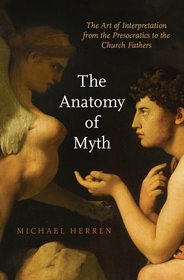
The Anatomy of Myth
The Art of Interpretation from the Presocratics to the Church Fathers
-
10% KEDVEZMÉNY?
- A kedvezmény csak az 'Értesítés a kedvenc témákról' hírlevelünk címzettjeinek rendeléseire érvényes.
- Kiadói listaár GBP 22.99
-
10 379 Ft (9 885 Ft + 5% áfa)
Az ár azért becsült, mert a rendelés pillanatában nem lehet pontosan tudni, hogy a beérkezéskor milyen lesz a forint árfolyama az adott termék eredeti devizájához képest. Ha a forint romlana, kissé többet, ha javulna, kissé kevesebbet kell majd fizetnie.
- Kedvezmény(ek) 10% (cc. 1 038 Ft off)
- Kedvezményes ár 9 341 Ft (8 897 Ft + 5% áfa)
Iratkozzon fel most és részesüljön kedvezőbb árainkból!
Feliratkozom
10 379 Ft

Beszerezhetőség
Megjelenése törölve vagy kivonva a forgalomból. Sajnos nem rendelhető.
Why don't you give exact delivery time?
A beszerzés időigényét az eddigi tapasztalatokra alapozva adjuk meg. Azért becsült, mert a terméket külföldről hozzuk be, így a kiadó kiszolgálásának pillanatnyi gyorsaságától is függ. A megadottnál gyorsabb és lassabb szállítás is elképzelhető, de mindent megteszünk, hogy Ön a lehető leghamarabb jusson hozzá a termékhez.
A termék adatai:
- Kiadó OUP USA
- Megjelenés dátuma 2017. február 1.
- ISBN 9780190606701
- Kötéstípus Puhakötés
- Terjedelem296 oldal
- Méret 235x156 mm
- Nyelv angol 0
Kategóriák
Rövid leírás:
The Anatomy of Myth is a comprehensive study of the methods of interpreting authoritative myths from the Presocratic philosophers to the Neoplatonists and their adoption by the Church Fathers.
TöbbHosszú leírás:
The Anatomy of Myth is a comprehensive study of the different methods of interpreting myths developed by the Greeks, adopted by the Romans, and eventually passed to Jewish and Christian interpreters of the Bible. Methods of myth interpretation are closely related to developments in Greek philosophy, beginning with the Presocratics in the 6th century B.C.E. and continuing to the Neoplatonists in the fifth century C.E. Greek thinkers only rarely saw 'myth' as
a category of thought in its own right. Most often they viewed myths as the creation of poets, especially Homer and Hesiod, or else as an ancient revelation that had been corrupted by them. In the first instance, critics attempted to find in the intention of the authors some deeper truth, whether physical or
spiritual; in the second, they deemed it necessary to clear away poetic falsehoods in order to recapture an ancient revelation. Parallel to the philosophical critiques were the efforts of early historians to explain myths as exaggerated history; myths could be purified by logos (reason) and rendered believable. Practically all of these early methods could be lumped under the term 'allegory' - to intend something different from what one expressed. Only occasionally did philosophers veer from a
concern for the literal truth of myths; but a few thinkers, while acknowledging myths as fictions, defended their value for the examples of good and bad human behavior they offered. These early efforts were invaluable for the development of critical thinking, enabling public criticism of even the most
authoritative texts. The Church Fathers Church took the interpretative methods of their pagan contemporaries and applied them vigorously to their reading of the scriptures. Pagan Greek methods of myth interpretation passed into the Middle Ages and beyond, serving as a perennial defense against the damaging effects of scriptural literalism and fundamentalism.
Tartalomjegyzék:
TABLE OF CONTENTS
Abbreviations
Introduction
Chapter 1: The Paradigm of the Poets
Chapter 2: What Makes a Work Authoritative?
Chapter 3: Physis - Redefining the Gods
Chapter 4: Flirting with Atheism
Chapter 5: Attacking Poetry
Chapter 6: The Beginnings of Allegory
Chapter 7: Finding History in Myth
Chapter 8: Theos - Rediscovering God
Chapter 9: The Growth of Allegory
Chapter 10: Saving the Poets without Allegory
Chapter 11: From Allegory to Symbolism
Chapter 12: Greek Exegesis and Judaeo-Christian Books
Reflection
Bibliography
Glossarial Index

