

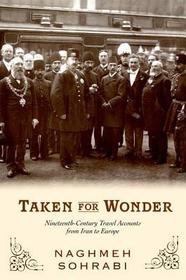
Taken for Wonder
Nineteenth Century Travel Accounts from Iran to Europe
-
10% KEDVEZMÉNY?
- A kedvezmény csak az 'Értesítés a kedvenc témákról' hírlevelünk címzettjeinek rendeléseire érvényes.
- Kiadói listaár GBP 107.50
-
48 536 Ft (46 225 Ft + 5% áfa)
Az ár azért becsült, mert a rendelés pillanatában nem lehet pontosan tudni, hogy a beérkezéskor milyen lesz a forint árfolyama az adott termék eredeti devizájához képest. Ha a forint romlana, kissé többet, ha javulna, kissé kevesebbet kell majd fizetnie.
- Kedvezmény(ek) 10% (kb. 4 853 Ft)
- Kedvezményes ár 43 683 Ft (41 603 Ft + 5% áfa)
Iratkozzon fel most és részesüljön kedvezőbb árainkból!
Feliratkozom
48 536 Ft

Beszerezhetőség
Megrendelésre a kiadó utánnyomja a könyvet. Rendelhető, de a szokásosnál kicsit lassabban érkezik meg.
Why don't you give exact delivery time?
A beszerzés időigényét az eddigi tapasztalatokra alapozva adjuk meg. Azért becsült, mert a terméket külföldről hozzuk be, így a kiadó kiszolgálásának pillanatnyi gyorsaságától is függ. A megadottnál gyorsabb és lassabb szállítás is elképzelhető, de mindent megteszünk, hogy Ön a lehető leghamarabb jusson hozzá a termékhez.
A termék adatai:
- Kiadó OUP USA
- Megjelenés dátuma 2012. május 31.
- ISBN 9780199829705
- Kötéstípus Keménykötés
- Terjedelem192 oldal
- Méret 236x157x20 mm
- Súly 376 g
- Nyelv angol
- Illusztrációk 6 illustrations 0
Kategóriák
Rövid leírás:
Taken for Wonder focuses on nineteenth-century travelogues authored by Iranians in Europe and argues for a methodological shift in the way scholars interpret travel writing.
TöbbHosszú leírás:
Taken for Wonder focuses on nineteenth century travelogues authored by Iranians in Europe and argues for a methodological shift from the study of travel to that of writing travel. This shift allows for a different interpretive framework that moves away from an over-emphasis on the destinations of travel (particularly in cases where the destination, like Europe, signifies larger meanings such as modernity) and which historicizes the travelogue itself as a rhetorical text in the service of its origin's concerns and developments. Within this framework, this book demonstrates the ways in which travel writings to Europe were used to position Qajar Iran (1917-1925) within a global context, i.e. narration of travel to Europe was also narrating the power of the Qajar court even when political events were tipped against it; and relatedly, how both travel to Europe and also translations of travel narratives into Persian should be included in our understanding of the importance of geography and mapping to the Qajars, especially during the latter half of the nineteenth century. In this process, it also re-examines the notion that Iranian modernity was the chief outcome of Iranians travelling in and writing about Europe.
Her in-depth,literary-historical treatment of each text is enhanced by a seamless comparison of thematic and stylistic intersections between writers from chapter to chapter, thus providing a convincing account of the changing political motivations determining the evolution of the safarnamah. This book should not only be a vital reference point for historians interested in the Qajar dynasty, but should also be considered an invaluable resource for Iranian literary studies in tracing the evolution of the safarnamah as a literary mode.
Tartalomjegyzék:
Acknowledgments
Notes on Transliteration
Chapter 1: Writing Travel, Making Genre
Chapter 2: The Reluctant Tourist: Mirza Abul Hasan Khan and his 'Book of Wonder'
Chapter 3: Long Day's Journey into Night: Mirza Fattah Khan Garmrudi's accounts of Europe 68
Chapter 4: The Traveling King: Nasir al-Din Shah and his Books of Travel
Chapter 5: A Darvish and a Merchant walk into Europe: The Popularization of Travel of Writing 155
Conclusion
Bibliography

