

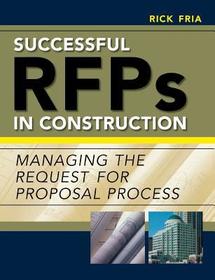
Successful RFPs in Construction
Managing the Request for Proposal Process
Sorozatcím: P/L CUSTOM SCORING SURVEY;
-
10% KEDVEZMÉNY?
- A kedvezmény csak az 'Értesítés a kedvenc témákról' hírlevelünk címzettjeinek rendeléseire érvényes.
- Kiadói listaár GBP 42.99
-
20 538 Ft (19 560 Ft + 5% áfa)
Az ár azért becsült, mert a rendelés pillanatában nem lehet pontosan tudni, hogy a beérkezéskor milyen lesz a forint árfolyama az adott termék eredeti devizájához képest. Ha a forint romlana, kissé többet, ha javulna, kissé kevesebbet kell majd fizetnie.
- Kedvezmény(ek) 10% (cc. 2 054 Ft off)
- Kedvezményes ár 18 484 Ft (17 604 Ft + 5% áfa)
Iratkozzon fel most és részesüljön kedvezőbb árainkból!
Feliratkozom
20 538 Ft

Beszerezhetőség
Megrendelésre a kiadó utánnyomja a könyvet. Rendelhető, de a szokásosnál kicsit lassabban érkezik meg.
Why don't you give exact delivery time?
A beszerzés időigényét az eddigi tapasztalatokra alapozva adjuk meg. Azért becsült, mert a terméket külföldről hozzuk be, így a kiadó kiszolgálásának pillanatnyi gyorsaságától is függ. A megadottnál gyorsabb és lassabb szállítás is elképzelhető, de mindent megteszünk, hogy Ön a lehető leghamarabb jusson hozzá a termékhez.
A termék adatai:
- Kiadó McGraw Hill
- Megjelenés dátuma 2005. április 16.
- ISBN 9780071449090
- Kötéstípus Puhakötés
- Terjedelem172 oldal
- Méret 226x182x13 mm
- Súly 324 g
- Nyelv angol 0
Kategóriák
Hosszú leírás:
Publisher's Note: Products purchased from Third Party sellers are not guaranteed by the publisher for quality, authenticity, or access to any online entitlements included with the product.
Managing the RFP process is a key ingredient for any successful construction project, yet few professionals know how to take full advantage of an RFP’s potential. This step-by-step guide is a roadmap for an efficient RFP process that will result in time- and cost-savings, optimal team collaboration, and the best possible quality in construction.
The negotiated contract method for RFPs is a rapidly growing trend in construction. Traditionally, RFPs have gone through a competitive bid method – meaning that 100% of the design work is done without the input of contractors and with very little real cost information. With the negotiated contract method, only about 10% of the design work is done before a contractor is brought to the table, which means less paperwork and lower up-front costs. There are several advantages to the negotiated contract method:• Because only a small part of the design work is done up-front (before a contractor is brought on board), no extensive re-design work has to be done when budget/schedule issues with the design become a factor.• A complete team – architect/designer and contractor – is assembled earlier, making for a much more efficient process and outcome.• The RFP process becomes a collaborative effort, rather than a competitive one.
There is no other book on the shelf that either focuses specifically on RFPs in the construction industry, or features a step-by-step method for implementing the negotiated contract method.This is a step-by-step guide for managing the RFP process in a way that saves time, money, enhances team collaboration, and assures quality in construction. Focusing on the negotiated contract method (as opposed to the competitive bid method), the book takes readers from articulating the needs/wish list for a construction project, to the analysis of responses and interviews, through negotiations and finalization of the deal. This is a roadmap for:• Preparing, understanding, and assessing the quality of information in an RFP.• Gathering critical, project-specific information from free and up-to-date local databases.• Adding value to the process by assisting consultants in marketing and project management capabilities.• Selecting and working with a team early in the process to stay on-schedule and on-budget.• Improving the materials selection process and the end-result overall quality of construction.• Example and template forms make it easy to create a successful RFP process.
Publisher's Note: Products purchased from Third Party sellers are not guaranteed by the publisher for quality, authenticity, or access to any online entitlements included with the product.
Managing the RFP process is a key ingredient for any successful construction project, yet few professionals know how to take full advantage of an RFP’s potential. This step-by-step guide is a roadmap for an efficient RFP process that will result in time- and cost-savings, optimal team collaboration, and the best possible quality in construction.
The negotiated contract method for RFPs is a rapidly growing trend in construction. Traditionally, RFPs have gone through a competitive bid method – meaning that 100% of the design work is done without the input of contractors and with very little real cost information. With the negotiated contract method, only about 10% of the design work is done before a contractor is brought to the table, which means less paperwork and lower up-front costs. There are several advantages to the negotiated contract method:• Because only a small part of the design work is done up-front (before a contractor is brought on board), no extensive re-design work has to be done when budget/schedule issues with the design become a factor.• A complete team – architect/designer and contractor – is assembled earlier, making for a much more efficient process and outcome.• The RFP process becomes a collaborative effort, rather than a competitive one.
There is no other book on the shelf that either focuses specifically on RFPs in the construction industry, or features a step-by-step method for implementing the negotiated contract method.This is a step-by-step guide for managing the RFP process in a way that saves time, money, enhances team collaboration, and assures quality in construction. Focusing on the negotiated contract method (as opposed to the competitive bid method), the book takes readers from articulating the needs/wish list for a construction project, to the analysis of responses and interviews, through negotiations and finalization of the deal. This is a roadmap for:• Preparing, understanding, and assessing the quality of information in an RFP.• Gathering critical, project-specific information from free and up-to-date local databases.• Adding value to the process by assisting consultants in marketing and project management capabilities.• Selecting and working with a team early in the process to stay on-schedule and on-budget.• Improving the materials selection process and the end-result overall quality of construction.• Example and template forms make it easy to create a successful RFP process.
Több

