

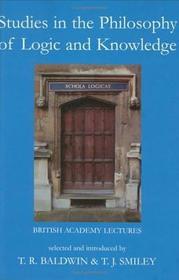
Studies in the Philosophy of Logic and Knowledge
Sorozatcím: Proceedings of the British Academy;
- Kiadói listaár GBP 60.00
-
28 665 Ft (27 300 Ft + 5% áfa)
Az ár azért becsült, mert a rendelés pillanatában nem lehet pontosan tudni, hogy a beérkezéskor milyen lesz a forint árfolyama az adott termék eredeti devizájához képest. Ha a forint romlana, kissé többet, ha javulna, kissé kevesebbet kell majd fizetnie.
28 665 Ft

Beszerezhetőség
A kiadónál véglegesen elfogyott, nem rendelhető. Érdemes újra keresni a címmel, hátha van újabb kiadás.
Why don't you give exact delivery time?
A beszerzés időigényét az eddigi tapasztalatokra alapozva adjuk meg. Azért becsült, mert a terméket külföldről hozzuk be, így a kiadó kiszolgálásának pillanatnyi gyorsaságától is függ. A megadottnál gyorsabb és lassabb szállítás is elképzelhető, de mindent megteszünk, hogy Ön a lehető leghamarabb jusson hozzá a termékhez.
A termék adatai:
- Kiadó The British Academy
- Megjelenés dátuma 2005. január 1.
- ISBN 9780197262917
- Kötéstípus Keménykötés
- Terjedelem306 oldal
- Méret 243x163x21 mm
- Súly 627 g
- Nyelv angol 0
Kategóriák
Rövid leírás:
Questions about knowledge, and the relation between logic and language, are at the heart of philosophy. In this book, eleven philosophers from Britain and America contribute papers on such questions. The first half offers a debate about knowledge, evidence and doubt. The second half tackles questions about logic and its relation to language.
TöbbHosszú leírás:
Eleven papers by distinguished British and American philosophers are brought together in this volume. Five of the contributors engage in effect in a running debate about knowledge. How does knowledge relate to evidence? How reliable need one be to have knowledge? Once sceptical doubt has been introduced is there any untainted evidence to show that it is misplaced? Does verificationism succeed in showing that scepticism is untenable? Or is there a natural propensity for belief which explains why we are not in fact sceptics? The other six tackle questions about logic and its relation to language. Can one give a 'realist' account of logical truth without supposing that logic has a subject-matter? How do theories of descriptions fare when tested by their handling of functions? How can indirect speech report someone's use of words like 'this'? Does our language count for or against adopting second-order logic? These papers, given in the British Academy Philosophical Lectures series, are all examples of recent philosophy at its best.
TöbbTartalomjegyzék:
Criteria, Defeasibility, and Knowledge ; Knowledge, Truth, and Reliability ; Facts and Certainty ; Advice to Philosophers: Three New Leaves to Turn Over ; Two Types of Naturalism ; The Theory of Descriptions ; Understanding Logical ConstantsL A Realist's Account ; Indexicals and Reported Speech ; Reported Indexicals ; On Higher-Order Logic and Natural Language ; On Motivating Higher-Order Logic
Több
