

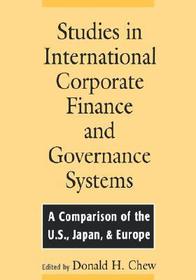
Studies in International Corporate Finance and Governance Systems
A Comparison of the US, Japan, and Europe
-
10% KEDVEZMÉNY?
- A kedvezmény csak az 'Értesítés a kedvenc témákról' hírlevelünk címzettjeinek rendeléseire érvényes.
- Kiadói listaár GBP 55.00
-
24 832 Ft (23 650 Ft + 5% áfa)
Az ár azért becsült, mert a rendelés pillanatában nem lehet pontosan tudni, hogy a beérkezéskor milyen lesz a forint árfolyama az adott termék eredeti devizájához képest. Ha a forint romlana, kissé többet, ha javulna, kissé kevesebbet kell majd fizetnie.
- Kedvezmény(ek) 10% (kb. 2 483 Ft)
- Kedvezményes ár 22 349 Ft (21 285 Ft + 5% áfa)
Iratkozzon fel most és részesüljön kedvezőbb árainkból!
Feliratkozom
24 832 Ft

Beszerezhetőség
Bizonytalan a beszerezhetőség. Érdemes még egyszer keresni szerzővel és címmel. Ha nem talál másik, kapható kiadást, forduljon ügyfélszolgálatunkhoz!
Why don't you give exact delivery time?
A beszerzés időigényét az eddigi tapasztalatokra alapozva adjuk meg. Azért becsült, mert a terméket külföldről hozzuk be, így a kiadó kiszolgálásának pillanatnyi gyorsaságától is függ. A megadottnál gyorsabb és lassabb szállítás is elképzelhető, de mindent megteszünk, hogy Ön a lehető leghamarabb jusson hozzá a termékhez.
A termék adatai:
- Kiadó OUP USA
- Megjelenés dátuma 1997. július 3.
- ISBN 9780195107951
- Kötéstípus Puhakötés
- Terjedelem384 oldal
- Méret 233x190x18 mm
- Súly 673 g
- Nyelv angol
- Illusztrációk halftones, line figures, tables 0
Kategóriák
Rövid leírás:
A key topic of interest in the world of finance is corporate governance, an area which covers the principal/agent problem dealing with the rights and obligations of shareholders and stakeholders, as well as regulation and corporate takeovers. Studies in Comparative Corporate Governance Systems takes an important look at this topic of growing interest by examining corporate governance internationally with eight articles on Europe, Japan, and South
Africa.
Hosszú leírás:
The past decade has given rise to a growing debate over the relative efficiency of different national economic systems. There are two basic corporate finance and governance systems that predominate in todays developed economies. One is the Anglo-American market based model, with widely dispersed shareholders and a fairly vigorous corporate control market. The other is the Japanese and German relationship based system, with its large bank and intercorporate holdings
(and conspicuous absence of takeovers). Given the increasing globalization of business, which of these two systems can be expected to prevail over time? Or will the most valuable aspects of each be blended into a single new system? The story now being told by economists and management experts — one
that this book attempts to present — is a complicated one. Here is a sampling of the arguments:
Corporate strategist Michael Porter states that the U.S. system of allocating capital both within and across companies appears to be failing because of both capital market and internal pressures on U.S. companies to underinvest in the relatively intangible assets that contribute to corporate capabilities. In contrast to Porter, financial economist Michael Jensen maintains that the most formidable challenge now facing the U.S. economy — and, indeed, the economies of all industrialized nations
— is the corporate overinvestment problem, a problem that was addressed in the U.S. by the leveraged restructuring of the 1980s. Nobel-Prize economist Merton Miller answers both Porters concern about U.S. underinvestment and Jensens pessimism about U.S. control systems with a classic defense of the
shareholder-value principle. Corporate strategist C.K. Prahalad, unconvinced by the arguments of both Miller and Jensen, challenges the wisdom of corporate Americas commitment to maximizing shareholder value. In a roundtable discussion, Prahalad debates with shareholder value advocate Bennett Stewart about the effects of shareholder primacy in the U.S. and its absence in Japan.
Studies in International Corporate Finance and Governance Systems consists of 27 articles (and two roundtable discussions) written by academic and management experts in the fields of corporate finance and governance. Given its commitment to translating outstanding academic research into relatively plain English for practicing businessmen, this book should prove especially useful for corporate executives as well as students in MBA and executive development programs.
Tartalomjegyzék:
I. INTRODUCTION 1
CAPITAL CHOICES: CHANGING THE WAY AMERICA INVESTS IN INDUSTRY,
THE MODERN INDUSTRIAL REVOLUTION, EXIT, AND THE FAILURE OF INTERNAL CONTROL SYSTEMS,
IS AMERICAN CORPORATE GOVERNANCE FATALLY FLAWED?
CORPORATE GOVERNANCE OR CORPORATE VALUE ADDED?: RETHINKING THE PRIMACY OF SHAREHOLDER VALUE
CONTINENTAL BANK ROUNDTABLE ON GLOBAL COMPETITION IN THE '90s
Moderated by Bennett Stewart. Panelists: C. K. Prahalad, University of Michigan; Charles Clough, CEO, Wyle Laboratories; Dennis Eck, CEO, The Vons Companies; Frank Perna, CEO, Magnetek; Edward Thompson, CFO, Amdahl Corporation; and Len Williams, CEO, MacFrugal's.
II. THE U.S.
Corporate Restructuring: The 1980s
THE CORPORATE RESTRUCTURING OF THE 19802—AND ITS IMPORT FOR THE 1990S
THE TAKEOVER WAVE OF THE 1980s
REVERSING CORPORATE DIVERSIFICATION
MANAGING FOR SHAREHOLDERS IN A SHRINKING INDUSTRY: THE CASE OF GRUMMAN,
CORPORATE GOVERNANCE LESSONS FROM A MIDDLE MARKET LBO: THE CASE OF OM SCOTT,
THE STAYING POWER OF LBOs,
Relationship Investing: The 1990s
RAIDERS, TARGETS, AND POLITICS: THE HISTORY AND FUTURE OF AMERICAN CORPORATE CONTROL
INSTITUTIONAL INVESTORS AND CORPORATE GOVERNANCE: THE CASE FOR INSTITUTIONAL VOICE
MUTUAL FUNDS IN THE BOARDROOM
REGULATING THE EQUITY COMPONENT OF CAPITAL STRUCTURE: THE SEC'S RESPONSE TO THE ONE SHARE-ONE VOTE CONTROVERSY,
BUILDING RELATIONSHIPS WITH MAJOR SHAREHOLDERS: A CASE STUDY OF LOCKHEED
STERN STEWART ROUNDTABLE ON RELATIONSHIP INVESTING AND SHAREHOLDER COMMUNICATION
Panelists: Basil Anderson, Scott Paper Co.; Carolyn Brancato, Columbia Law School; Geoffrey Colvin, Fortune; Judith Dobrzynski, Business Week; Alex Lehmann; Nell Minow, The Lens Fund; Krishna Palepu, Harvard University; Edward Reagan, New York State Comptroller; Joseph Shelton, OLC Corp.; Derek Smith, Equifax Inc.; Eugene Vesell, Oppenheimer Capital; Jerold Zimmerman, University of Rochester Moderated by Joel Stern and Bennett Stewart.
JAPAN (AND GERMANY)
GOVERNANCE, CONTRACTING, AND INVESTMENT HORIZONS: A LOOK AND JAPAN AND GERMANY
TO WHOM DOES THE COMPANY BELONG?: A NEW MANAGEMENT MISSION FOR THE INFORMATION AGE,
CORPORATE GOVERNANCE AND CORPORATE PERFORMANCE,
THE HIDDEN COSTS OF JAPANESE SUCCESS,
REDRESSING STRUCTURAL IMBALANCES IN JAPANESE CORPORATE GOVERANCE: AN INTERNATIONAL PERSPECTIVE,
IV. EUROPE (AND SOUTH AFRICA)
CORPORATE OWNERSHIP STRUCTURE IN THE U.K., FRANCE, AND GERMANY,
SHAREHOLDERS AS AGENTS AND PRINCIPALS: THE CASE FOR SOUTH AFRICA'S CORPORATE GOVERNANCE SYSTEM,
CORPORATE RESTRUCTURING, BUY-OUTS, AND MANAGERIAL EQUITY: THE EUROPEAN DIMENSION,
PERSPECTIVES ON RESTRUCTURING IN EUROPE: INTERVIEWS WITH FOUR EUROPEAN EXECUTIVES,
THE ECONOMIC IMPORT OF EUROPE 1992, by Alan C. Shapiro, University of Southern California
CORPORATE GOVERNANCE CHANGES MAKE INROADS IN EUROPE
V. EVA: A NEW APPROACH TO CORPORATE GOVERNANCE
THE EVA FINANCIAL MANAGEMENT SYSTEM,
TOTAL COMPENSATION STRATEGY,

