

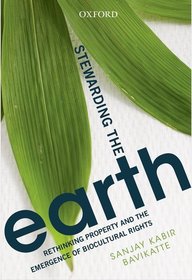
Stewarding The Earth
Rethinking Property and the Emergence of Biocultural Rights
-
10% KEDVEZMÉNY?
- A kedvezmény csak az 'Értesítés a kedvenc témákról' hírlevelünk címzettjeinek rendeléseire érvényes.
- Kiadói listaár GBP 20.99
-
9 476 Ft (9 025 Ft + 5% áfa)
Az ár azért becsült, mert a rendelés pillanatában nem lehet pontosan tudni, hogy a beérkezéskor milyen lesz a forint árfolyama az adott termék eredeti devizájához képest. Ha a forint romlana, kissé többet, ha javulna, kissé kevesebbet kell majd fizetnie.
- Kedvezmény(ek) 10% (kb. 947 Ft)
- Kedvezményes ár 8 529 Ft (8 123 Ft + 5% áfa)
Iratkozzon fel most és részesüljön kedvezőbb árainkból!
Feliratkozom
9 476 Ft

Beszerezhetőség
Csak rendelésre kapható a kiadónál, kissé időigényes.
Why don't you give exact delivery time?
A beszerzés időigényét az eddigi tapasztalatokra alapozva adjuk meg. Azért becsült, mert a terméket külföldről hozzuk be, így a kiadó kiszolgálásának pillanatnyi gyorsaságától is függ. A megadottnál gyorsabb és lassabb szállítás is elképzelhető, de mindent megteszünk, hogy Ön a lehető leghamarabb jusson hozzá a termékhez.
A termék adatai:
- Kiadó OUP India
- Megjelenés dátuma 2014. szeptember 11.
- ISBN 9780198098669
- Kötéstípus Keménykötés
- Terjedelem256 oldal
- Méret 228x147x22 mm
- Súly 434 g
- Nyelv angol 0
Kategóriák
Rövid leírás:
Do communities that care for the land have the right to protect it against destruction? Do the rights of such communities to act as trustees of the land override the rights of the government or the owners of the land? Written in an engaging style, rich with examples and theoretical insights, from law, economics and anthropology, Stewarding the Earth maps the emergence of a new set of community rights to stewardship called 'biocultural rights'.
TöbbHosszú leírás:
The book analyses the emergence of biocultural rights as a sub-set of third generation group rights in environmental law. It argues that these rights, which advocate people's duty of stewardship over nature, have arisen as a response to the world's ecological crisis. The book uses a multipronged approach, relying upon economic, anthropological, political, and legal theories, to deconstruct the current concepts of private property from the perspective of indigenous peoples and traditional communities. It further presents evidence that this discursive shift is gaining formal legal recognition by referring to negotiations of multilateral environmental agreements, judicial decisions of regional, and domestic courts and community initiatives. The book also gives a description of the new biocultural jurisprudence including its application through innovative, community-developed instruments such as biocultural community protocols.
TöbbTartalomjegyzék:
Preface
List of Abbreviations
Introduction
Self-Determination as Political Ecology: The Roots of Biocultural Rights
Homo Economicus on Trial: Towards an Ethic of Stewardship
Fighting Fetishism: Biocultural Readings of Social Hieroglyphs
Reification: The Law as a Collective Conspiracy
Fighting Reification: Towards a Peoples' History of the Law
Rethinking Property: A Biocultural Approach
A Jurisprudence of Stewardship: Creating Biocultural Precedents
Biocultural Rights in Anglo-American Jurisprudence
Biocultural Community Protocols: Towards a Pluralism of Property
Bibliography
Case Index
Index

