

-
8% KEDVEZMÉNY?
- A kedvezmény csak az 'Értesítés a kedvenc témákról' hírlevelünk címzettjeinek rendeléseire érvényes.
- Kiadói listaár GBP 115.00
-
51 922 Ft (49 450 Ft + 5% áfa)
Az ár azért becsült, mert a rendelés pillanatában nem lehet pontosan tudni, hogy a beérkezéskor milyen lesz a forint árfolyama az adott termék eredeti devizájához képest. Ha a forint romlana, kissé többet, ha javulna, kissé kevesebbet kell majd fizetnie.
- Kedvezmény(ek) 8% (cc. 4 154 Ft off)
- Kedvezményes ár 47 769 Ft (45 494 Ft + 5% áfa)
Iratkozzon fel most és részesüljön kedvezőbb árainkból!
Feliratkozom
51 922 Ft

Beszerezhetőség
Becsült beszerzési idő: A Prosperónál jelenleg nincsen raktáron, de a kiadónál igen. Beszerzés kb. 3-5 hét..
A Prosperónál jelenleg nincsen raktáron.
Why don't you give exact delivery time?
A beszerzés időigényét az eddigi tapasztalatokra alapozva adjuk meg. Azért becsült, mert a terméket külföldről hozzuk be, így a kiadó kiszolgálásának pillanatnyi gyorsaságától is függ. A megadottnál gyorsabb és lassabb szállítás is elképzelhető, de mindent megteszünk, hogy Ön a lehető leghamarabb jusson hozzá a termékhez.
A termék adatai:
- Kiadó Edinburgh University Press
- Megjelenés dátuma 2026. március 31.
- ISBN 9781399548007
- Kötéstípus Keménykötés
- Terjedelem288 oldal
- Méret 234x156 mm
- Nyelv angol 700
Kategóriák
Rövid leírás:
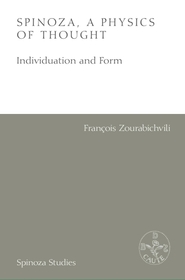
Offers a detailed study of Spinoza’s philosophical analysis and reformulation of the concept of form and his novel theory of individuation.
TöbbHosszú leírás:
François Zourabichvili (1965-2006) wrote two of the most important books on Spinoza in the past 20 years. The first book, Spinoza’s Paradoxical Conservatism (EUP, 2023) focuses on Spinoza’s political philosophy. This second book studies Spinoza’s metaphysics and the way he uses it to produce a ‘physics of thought’.
Zourabichvili suggests that Spinoza completely revises the concept of form and develops a novel theory of individuation. He argues that Spinoza specifically focuses on the problem of the individuation of ideas, whereas most thinkers only consider the problem of the individuation of bodies. In turn, he draws out the ethical implications of these new Spinozist conceptions.
Tartalomjegyzék:
Reference Conventions
Notes on Translation and Acknowledgments
Introduction to Spinozist Modernism, by Eric Aldieri and Gil Morejón
Introduction
Chapter I: The New Concept of Form
1. Simultaneous Transport: The Inconsistency of the Cartesian Composite
2. The Piece of Wax: Quantity of Matter and Identity
3. Individual and Species in Spinoza
4. Chemical and Political Community
5. What Happens to the Notion of Form in Descartes
Chapter II: The Concept of ‘Relation of Motion and Rest’ and Its Polysemy
1. Which Relation between Motion and Rest? (the Short Treatise)
2. The Relation of Motion and Rest between Parts (the Ethics)
3. The Interpretation of the Four Lemmas Concerning the Conservation of Form
4. The Status of Sickness in the Ethics
Chapter III: Extension and Conatus (Power and Causality)
1. The Power of Essence
2. From Finite Forms to the Infinite Form; The Status of Transformation
3. Self-Affirmation and Exteriority
4. The Union of Conatus
Chapter IV: What is a Physics of Thought?
1. The Problem of the Status of the Infinite Idea
2. The Mirage of Splitting (The Relation between Essence and Existence)
3. The Thesis of the Real Identity of the Idea and Its Object, and Its Ambiguities
4. Lineaments of Cogitative Physics
5. Mental Transformations and a Hypothesis Concerning Amnesia
6. The Status of Sensation
7. The Unity of the Mind
Chapter V: Speaking Spinozan
1. What ‘Having’ Means in Spinozan
2. Ideal Composition: Genetic Definition
3. Sketch of a Grammar of the Idea
4. In What Sense Common Notions Are Ideas
5. Once Again, Concerning Essences, and Concerning Readers Afflicted by Double Vision
Chapter VI: Mental Transmutations, Eternity, and Death
1. In What Sense the Mind is Eternal (and, Once Again, In What Sense Common Notions are Ideas)
2. A Return to Two Sequences [Enchaînements], and the Case of Love
Chapter VII: The Dream of Supernatural Transformations
1. The Logic of the Chimera
2. The Paradox of the Being of Non-Being
2.1. The Power of Impotence: Confusion
2.2. Imaging a Negation?
3. Dreaming with Open Eyes
3.1 Don Quixote and the Rabbis
3.2. Spells of Ignorance (The Banality of Hallucination)
3.3. The Confusion between Affections and Things, and the Dream of Free Will
Epilogue: Involving and Dying
Conclusion
Works Cited
Index

