

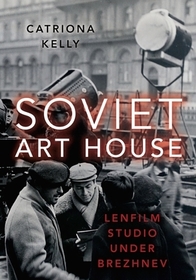
Soviet Art House
Lenfilm Studio under Brezhnev
-
10% KEDVEZMÉNY?
- A kedvezmény csak az 'Értesítés a kedvenc témákról' hírlevelünk címzettjeinek rendeléseire érvényes.
- Kiadói listaár GBP 45.99
-
20 764 Ft (19 775 Ft + 5% áfa)
Az ár azért becsült, mert a rendelés pillanatában nem lehet pontosan tudni, hogy a beérkezéskor milyen lesz a forint árfolyama az adott termék eredeti devizájához képest. Ha a forint romlana, kissé többet, ha javulna, kissé kevesebbet kell majd fizetnie.
- Kedvezmény(ek) 10% (kb. 2 077 Ft)
- Kedvezményes ár 18 687 Ft (17 798 Ft + 5% áfa)
Iratkozzon fel most és részesüljön kedvezőbb árainkból!
Feliratkozom
20 764 Ft

Beszerezhetőség
Becsült beszerzési idő: A Prosperónál jelenleg nincsen raktáron, de a kiadónál igen. Beszerzés kb. 3-5 hét..
A Prosperónál jelenleg nincsen raktáron.
Why don't you give exact delivery time?
A beszerzés időigényét az eddigi tapasztalatokra alapozva adjuk meg. Azért becsült, mert a terméket külföldről hozzuk be, így a kiadó kiszolgálásának pillanatnyi gyorsaságától is függ. A megadottnál gyorsabb és lassabb szállítás is elképzelhető, de mindent megteszünk, hogy Ön a lehető leghamarabb jusson hozzá a termékhez.
A termék adatai:
- Kiadó OUP USA
- Megjelenés dátuma 2021. március 31.
- ISBN 9780197548370
- Kötéstípus Puhakötés
- Terjedelem536 oldal
- Méret 175x251x33 mm
- Súly 898 g
- Nyelv angol
- Illusztrációk 90 illustrations and production stills 75
Kategóriák
Rövid leírás:
Soviet Art House provides a unique look into a Soviet film studio from the 1960s to the years leading up to the collapse of the Soviet Union. It tells the story of how filmmakers struggled with and overcame ideological and economic constraints to create oppositional and highly original movies in an authoritarian society.
TöbbHosszú leírás:
Its unique ability to sway the masses has led many observers to consider cinema the artform with the greatest political force. The images it produces can bolster leaders or contribute to their undoing. Soviet filmmakers often had to face great obstacles as they struggled to make art in an authoritarian society that put them not only under ideological pressure but also imposed rigid economic constraints on the industry. But while the Brezhnev era of Soviet filmmaking is often depicted as a period of great repression, Soviet Art House reveals that the films made at the prestigious Lenfilm studio in this period were far more imaginative than is usually suspected.
In this pioneering study of a Soviet film studio, author Catriona Kelly delves into previously unpublished archival documents and interviews, memoirs, and the films themselves to illuminate the ideological, economic, and aesthetic dimensions of filmmaking in the Brezhnev era. She argues that especially the young filmmakers who joined the studio after its restructuring in 1961 revitalized its output and helped establish Leningrad as a leading center of oppositional art. This unique insight into Soviet film production shows not only the inner workings of Soviet institutions before the system collapsed but also traces how filmmakers tirelessly dodged and negotiated contradictory demands to create sophisticated and highly original movies.
In Soviet Art House, Kelly takes a studio-centric approach to Soviet film history, looking at the Lenfilm Studio from the mid-1960s to the mid-1980s. This studio view provides an opportunity to look beyond common ways in which film historians viewed the Brezhnev years.
Tartalomjegyzék:
Preface and Acknowledgments
Terminology, Abbreviations, and Transliteration
List of Illustrations
Introduction: The Art House
Chapter 1. Big Hopes and Trouble, 1961-1969
Chapter 2. "Serious" Movies and the Box Office, 1970-1985
Chapter 3. The Cinema-Centaur: Lenfilm as Film Factory
Chapter 4. Non-Existent Reality: The Lenfilm Aesthetic
Chapter 5. Pleasure and Danger: Yuly Fait, A Boy and a Girl (1966)
Chapter 6. The Indifference of Time: Gennady Shpalikov, A Long Happy Life (1967)
Chapter 7. Regulated Immediacy: Viktor Sokolov, A Day of Sunshine and Rain (1967)
Chapter 8. More in Expectation than Hope: Naum Birman, Chronicle of a Divebomber (1968)
Chapter 9. Cold War Fears: Savva Kulish, The Dead Season (1968)
Chapter 10. Personal Happiness: Vitaly Melnikov, Mother's Got Married (1969)
Chapter 11. Trust in Talent: Ilya Averbakh, Monologue (1972)
Chapter 12. Spontaneous Music: Dinara Asanova, Woodpeckers Don't Get Headaches (1974)
Chapter 13. Fervor and Tenderness: Gleb Panfilov, May I Speak? (1976)
Chapter 14. Private Grief, Public Mourning: Sergei Mikaelyan, The Widows (1977)
Chapter 15. Ludic Love: Kira Muratova, Getting to Know the Wide World (1978)
Chapter 16. Cast a Cold Eye: Boris Frumin, Errors of Youth (1978)
Chapter 17. Socialist Embarrassment: Viktor Tregubovich, Go If You're Going (1978)
Chapter 18. The Powers of Irony: Igor Maslennikov, The Queen of Spades (1982)
Chapter 19. Hystoria: Aleksei German, My Friend Ivan Lapshin (1984)
Conclusion: Arthouse Beyond the Art House
Filmography

