

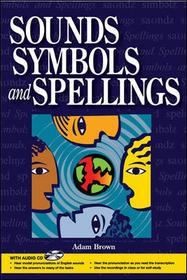
Sounds, Symbols and Spellings
-
10% KEDVEZMÉNY?
- A kedvezmény csak az 'Értesítés a kedvenc témákról' hírlevelünk címzettjeinek rendeléseire érvényes.
- Kiadói listaár GBP 18.98
-
8 569 Ft (8 161 Ft + 5% áfa)
Az ár azért becsült, mert a rendelés pillanatában nem lehet pontosan tudni, hogy a beérkezéskor milyen lesz a forint árfolyama az adott termék eredeti devizájához képest. Ha a forint romlana, kissé többet, ha javulna, kissé kevesebbet kell majd fizetnie.
- Kedvezmény(ek) 10% (cc. 857 Ft off)
- Kedvezményes ár 7 712 Ft (7 345 Ft + 5% áfa)
Iratkozzon fel most és részesüljön kedvezőbb árainkból!
Feliratkozom
8 569 Ft

Beszerezhetőség
Bizonytalan a beszerezhetőség. Érdemes még egyszer keresni szerzővel és címmel. Ha nem talál másik, kapható kiadást, forduljon ügyfélszolgálatunkhoz!
Why don't you give exact delivery time?
A beszerzés időigényét az eddigi tapasztalatokra alapozva adjuk meg. Azért becsült, mert a terméket külföldről hozzuk be, így a kiadó kiszolgálásának pillanatnyi gyorsaságától is függ. A megadottnál gyorsabb és lassabb szállítás is elképzelhető, de mindent megteszünk, hogy Ön a lehető leghamarabb jusson hozzá a termékhez.
A termék adatai:
- Kiadó McGraw-Hill Higher Education
- Megjelenés dátuma 2005. május 1.
- ISBN 9780071247726
- Kötéstípus Kötés ismeretlen
- Terjedelem160 oldal
- Méret 230x153x10 mm
- Súly 255 g
- Nyelv angol 0
Kategóriák
Hosszú leírás:
The English spelling system is based on the alphabetic principle, that letters in the spelling represent individual consonant and vowel sounds in the pronunciation. However, for various reasons, many of them related to the history of the language, the English spelling system is perhaps the worst example of an alphabetic system in existence. As a result, transcription systems for representing the pronunciation of English in a one-to-one way have had to be devised. Sounds, Symbols and Spellings explains the rationale for, and gives familiarisation practice in the symbols of the transcription system used in all good modern British English dictionaries. The book ? deals exclusively with British English, and varieties of English that pattern like British English;? explains and practises phonemic symbols, without delving into phonetic description more deeply than most readers will need;? covers individual consonant and vowels sounds, syllable structure and stress, all of which have a bearing on phonemic transcriptions;? includes the major sound-to-spelling correspondences of English;? comprises many fun and interesting tasks with answer keys to help readers learn the symbols and the sounds they represent;? has an accompanying audio CD, with examples of the sounds, and answer keys; and? contains tips for readers who are teachers to compose similar tasks. Non-native learners of the English language as well as native speakers who need to be familiar with transcription, will find this book useful.
The English spelling system is based on the alphabetic principle, that letters in the spelling represent individual consonant and vowel sounds in the pronunciation. However, for various reasons, many of them related to the history of the language, the English spelling system is perhaps the worst example of an alphabetic system in existence. As a result, transcription systems for representing the pronunciation of English in a one-to-one way have had to be devised. Sounds, Symbols and Spellings explains the rationale for, and gives familiarisation practice in the symbols of the transcription system used in all good modern British English dictionaries. The book ? deals exclusively with British English, and varieties of English that pattern like British English;? explains and practises phonemic symbols, without delving into phonetic description more deeply than most readers will need;? covers individual consonant and vowels sounds, syllable structure and stress, all of which have a bearing on phonemic transcriptions;? includes the major sound-to-spelling correspondences of English;? comprises many fun and interesting tasks with answer keys to help readers learn the symbols and the sounds they represent;? has an accompanying audio CD, with examples of the sounds, and answer keys; and? contains tips for readers who are teachers to compose similar tasks. Non-native learners of the English language as well as native speakers who need to be familiar with transcription, will find this book useful.
Tartalomjegyzék:
Preface
1 Consonant and vowel sounds
Consonants
Vowels
Names of letters of the alphabet
2 Background
The priority of spoken language
The alphabetic principle
The history of English spelling
Confusing letters with sounds
Strategies for finding the pronunciation of unfamiliar words
British English as a reference accent
'The IPA'
3 Minimal pairs
Definition
Sounds and frequencies
4 Homophones and homographs
Homophones
Homographs
Homonyms
5 Stress and schwa
Word stress
Secondary stress
The schwa vowel
Stress in grammatical words
Schwa in connected speech
6 Syllable structure
Parts of a syllable
Alliteration
Rhyme
Reduplication
Onsets and slips of the tongue
Syllable structure rules
7 Practice tasks
8 Tips for correct transcription
General pointers
Consonants
Vowels
Stress
9 Literacy and spelling reform
Literacy
Spelling reform
Conclusion
Answer keys
Further reading and websites
References
Contents of the CD
Több

