

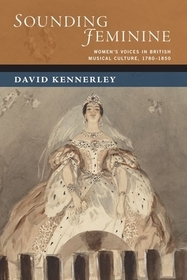
Sounding Feminine
Women's Voices in British Musical Culture, 1780-1850
Sorozatcím: New Cultural History of Music;
-
10% KEDVEZMÉNY?
- A kedvezmény csak az 'Értesítés a kedvenc témákról' hírlevelünk címzettjeinek rendeléseire érvényes.
- Kiadói listaár GBP 73.00
-
32 959 Ft (31 390 Ft + 5% áfa)
Az ár azért becsült, mert a rendelés pillanatában nem lehet pontosan tudni, hogy a beérkezéskor milyen lesz a forint árfolyama az adott termék eredeti devizájához képest. Ha a forint romlana, kissé többet, ha javulna, kissé kevesebbet kell majd fizetnie.
- Kedvezmény(ek) 10% (cc. 3 296 Ft off)
- Kedvezményes ár 29 664 Ft (28 251 Ft + 5% áfa)
Iratkozzon fel most és részesüljön kedvezőbb árainkból!
Feliratkozom
32 959 Ft

Beszerezhetőség
Megrendelésre a kiadó utánnyomja a könyvet. Rendelhető, de a szokásosnál kicsit lassabban érkezik meg.
Why don't you give exact delivery time?
A beszerzés időigényét az eddigi tapasztalatokra alapozva adjuk meg. Azért becsült, mert a terméket külföldről hozzuk be, így a kiadó kiszolgálásának pillanatnyi gyorsaságától is függ. A megadottnál gyorsabb és lassabb szállítás is elképzelhető, de mindent megteszünk, hogy Ön a lehető leghamarabb jusson hozzá a termékhez.
A termék adatai:
- Kiadó OUP USA
- Megjelenés dátuma 2020. július 21.
- ISBN 9780190097561
- Kötéstípus Keménykötés
- Terjedelem236 oldal
- Méret 155x236x17 mm
- Súly 476 g
- Nyelv angol
- Illusztrációk 3 figures; 6 music examples 5
Kategóriák
Rövid leírás:
Sounding Feminine traces the development of attitudes towards the female voice that have decisively shaped modern British society and culture, examining how the responses of late 18th- and early 19th-century audiences to the sounds of women's singing exposed the intricate links between gender, nationality, class, and religion in a pivotal era of change.
TöbbHosszú leírás:
Between 1780 and 1850, the growing prominence of female singers in Britain's professional and amateur spheres opened a fraught discourse about women's engagement with musical culture. Protestant evangelical gender ideology framed the powerful, well-trained, and expressive female voice as a sign of inner moral corruption, while more restrained and delicate vocal styles were seen as indicative of the performer's virtuous femininity. Yet far from everyone was of this persuasion, and those from alternative class and religious milieux responded in more affirmative ways to the sound of professional female voices. The meanings listeners ascribed to women's voices reflect crucial developments in the musical world of the period, such as the popularity of particular genres with audiences of certain social backgrounds, and the reasons underpinning the development of prevalent types of nineteenth-century professional female vocality.
Sounding Feminine traces the development of attitudes towards the female voice that have decisively shaped modern British society and culture. Arguing for the importance of the aural dimension of the past, author David Kennerley draws from a variety of fields-including sound studies, sensory histories, and gender theory-to examine how audiences heard different kinds of femininities in the voices of British female singers. Sounding Feminine explores the intense divisions over the "correct" use of the female voice, and the intricate links between gender, nationality, class, and religion in ascribing status, purpose, and morality to female singing. Through this lens, Kennerley also explores the formation of British middle-class identities and the cultural impact of the evangelical revival-deepening our understanding of this period of transformational change in British culture.
One of the most important books on this topic to have emerged in recent years. David Kennerley's sensitivity to different kinds of evidence offers an important corrective to some earlier volumes on the topic, indeed it's an object lesson on how to write histories of the human voice in song.
Tartalomjegyzék:
Acknowledgements
Abbreviations
Introduction: Sounding Feminine
Chapter 1: Instructing women's voices in conduct literature
Chapter 2: Encountering women's voices in letters, diaries, and life-writing
Chapter 3: Criticising women's voices in the musical press
Chapter 4: Dorothea Solly's musical world: Class, religion, and the cultivation of the female voice
Chapter 5: The lives and voices of professional female singers: three vignettes
Epilogue: Voicing a new femininity
Bibliography
Index

