

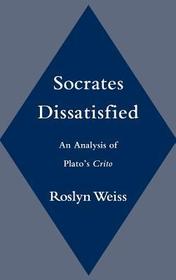
Socrates Dissatisfied
An Analysis of Plato's Crito
-
10% KEDVEZMÉNY?
- A kedvezmény csak az 'Értesítés a kedvenc témákról' hírlevelünk címzettjeinek rendeléseire érvényes.
- Kiadói listaár GBP 142.50
-
64 338 Ft (61 275 Ft + 5% áfa)
Az ár azért becsült, mert a rendelés pillanatában nem lehet pontosan tudni, hogy a beérkezéskor milyen lesz a forint árfolyama az adott termék eredeti devizájához képest. Ha a forint romlana, kissé többet, ha javulna, kissé kevesebbet kell majd fizetnie.
- Kedvezmény(ek) 10% (kb. 6 433 Ft)
- Kedvezményes ár 57 905 Ft (55 148 Ft + 5% áfa)
Iratkozzon fel most és részesüljön kedvezőbb árainkból!
Feliratkozom
64 338 Ft

Beszerezhetőség
Megrendelésre a kiadó utánnyomja a könyvet. Rendelhető, de a szokásosnál kicsit lassabban érkezik meg.
Why don't you give exact delivery time?
A beszerzés időigényét az eddigi tapasztalatokra alapozva adjuk meg. Azért becsült, mert a terméket külföldről hozzuk be, így a kiadó kiszolgálásának pillanatnyi gyorsaságától is függ. A megadottnál gyorsabb és lassabb szállítás is elképzelhető, de mindent megteszünk, hogy Ön a lehető leghamarabb jusson hozzá a termékhez.
A termék adatai:
- Kiadó OUP USA
- Megjelenés dátuma 1998. március 19.
- ISBN 9780195116847
- Kötéstípus Keménykötés
- Terjedelem200 oldal
- Méret 235x157x22 mm
- Súly 499 g
- Nyelv angol 0
Kategóriák
Rövid leírás:
Roslyn Weiss contends that, contrary to prevailing notions, Plato's Crito does not show an allegiance between Socrates and the state that condemned him. Weiss argues that Socrates considers the laws of the state to be more concerned with creating deference than justice, and asserts that, by submitting to his judgement, Socrates acts from a personal sense of justice rather than a set of imposed rules.
TöbbHosszú leírás:
Roslyn Weiss contends that, contrary to prevailing notions, Plato's Crito does not show an allegiance between Socrates and the state that condemned him. Denying that the speech of the Laws represents the views of Socrates, Weiss deftly brings to light numerous indications that Socrates provides to the attentive reader that he and the Laws are not partners but antagonists in the argument and that he is singularly unimpressed by the case against escaping prison presented by the Laws. Weiss's greatest innovation is her contention that the Laws are very much like the judges who preside at Socrates' trial--interested not in justice and truth but in being shown deference and submission. If Weiss's argument is correct, then the standard conception of the history of political thought is in error--political philosophy begins not with the primacy of the state over the citizen but with the affirmation of the individual's duty to act in accordance with his own careful determination of what justice demands.
I find much to admire in her book. Her interpretation of the Crito is as detailed and thorough as any that exists. Her attention to the text is meticulous, and her discussion of the secondary literature is full and fair. Anyone who tries to understand the Crito must come to terms with Socrates Dissatisfied .

