

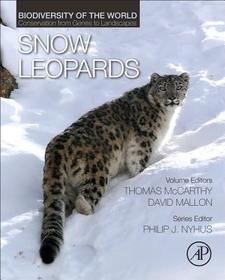
Snow Leopards
Biodiversity of the World: Conservation from Genes to Landscapes
Sorozatcím: Biodiversity of the World: Conservation from Genes to Landscapes;
-
10% KEDVEZMÉNY?
- A kedvezmény csak az 'Értesítés a kedvenc témákról' hírlevelünk címzettjeinek rendeléseire érvényes.
- Kiadói listaár EUR 82.95
-
32 400 Ft (30 857 Ft + 5% áfa)
Az ár azért becsült, mert a rendelés pillanatában nem lehet pontosan tudni, hogy a beérkezéskor milyen lesz a forint árfolyama az adott termék eredeti devizájához képest. Ha a forint romlana, kissé többet, ha javulna, kissé kevesebbet kell majd fizetnie.
- Kedvezmény(ek) % (cc. 0 Ft off)
- Kedvezményes ár 0 Ft (0 Ft + 5% áfa)
Iratkozzon fel most és részesüljön kedvezőbb árainkból!
Feliratkozom
32 400 Ft

Beszerezhetőség
A kiadónál véglegesen elfogyott, nem rendelhető. Érdemes újra keresni a címmel, hátha van újabb kiadás.
Why don't you give exact delivery time?
A beszerzés időigényét az eddigi tapasztalatokra alapozva adjuk meg. Azért becsült, mert a terméket külföldről hozzuk be, így a kiadó kiszolgálásának pillanatnyi gyorsaságától is függ. A megadottnál gyorsabb és lassabb szállítás is elképzelhető, de mindent megteszünk, hogy Ön a lehető leghamarabb jusson hozzá a termékhez.
A termék adatai:
- Kiadó Elsevier Science
- Megjelenés dátuma 2016. augusztus 10.
- ISBN 9780128022139
- Kötéstípus Keménykötés
- Terjedelem644 oldal
- Méret 234x190 mm
- Súly 1470 g
- Nyelv angol 0
Kategóriák
Hosszú leírás:
Snow Leopards: Biodiversity of the World: Conservation from Genes to Landscapes is the only comprehensive work on the biology, behavior, and conservation status of the snow leopard, a species that has long been one of the least studied, and hence poorly understood, of the large cats.
Breakthroughs in technologies and methodologies to study this elusive cat have come rapidly, including non-invasive genetics, camera traps, and GPS-satellite collaring. The book begins with chapters on the genetic standing and taxonomy of the snow leopard, followed by chapters on their behavior and ecology. Additional contributions follow on the current and emerging threats to the species, which include longstanding concerns, such as poaching and conflicts with livestock, and new and emerging threats such as mining and climate change.
A section on conservation solutions, backed by valuable case studies, starts with an overview of the important role mountain communities play in assuring the snow leopard's long-term persistence. In addition, chapters on the role of captive snow leopards for the conservation of the species, state-of-the-art techniques and technologies for studying and monitoring snow leopards, status reports from around the region, and future perspectives, such as transboundary conservation initiatives, international conventions (CITES, CMS, etc.), the role of the IUCN Cat Specialist Group and the Snow Leopard Network, and undertakings such as the Global Snow Leopard Forum facilitated by the World Bank are also included.
TöbbTartalomjegyzék:
"
Section I - Defining the Snow Leopard
1 What Is A Snow Leopard? Taxonomy, Morphology, and Phylogeny
2 What Is A Snow Leopard? Behavior and Ecology
3 What Is A Snow Leopard? Biogeography and Status Overview
4 Snow Leopard's Prey and Diet
Section II - Conservation Concerns
5 Livestock Predation by Snow Leopards: Conflicts and the Search for Solutions
6 Living on the Edge: Depletion of Wild Prey and Survival of the Snow Leopard
7 Monitoring Illegal Trade in Snow leopards (2003-2012)
8 Climate Change Impacts on Snow Leopard Range
9 Diseases of Free-ranging Snow Leopards and Primary Prey Species
10 Resource Extraction
10a Introduction
10b Emerging Threats to Snow Leopards from Energy and Mineral Development
10c Linear Infrastructure and Snow Leopard Conservation
10d Harvesting of Caterpillar Fungus and Wood by Local People
10e Synthesis
Section III - Conservation Solutions In situ
11 The Role of Mountain Communities in Snow Leopard Conservation
12 Building Community Governance Structures and Institutions for Snow Leopard Conservation
13 Incentive and Reward Programs in Snow Leopard Conservation
13a Himalayan Homestays: Fostering Human-Snow Leopard Coexistence
13b Handicrafts - Snow Leopard Enterprise in Mongolia
13c A Review of Lessons, Successes and Pitfalls of Livestock Insurance Schemes
13d Synthesis
14 Livestock Husbandry and Snow Leopard Conservation
14a Corral Improvements
14b The Role of Village Reserves in Revitalizing the Natural Prey Base of the Snow Leopard
14c The Ecosystem Health Program: A Tool to Promote the Co-Existence of Livestock Owners and Snow Leopards
14d Synthesis
15 Religion and Cultural Impacts on Snow Leopards Conservation
15a Introduction
15b Tibetan Buddhist Monastery-based Snow Leopard Conservation
15c Shamanism in Central Asian Snow Leopard Cultures
15d Snow Leopards in Art and Legend of the Pamir
15e The Snow Leopard in Symbolism, Heraldry and Numismatics: The Order ""Barys"" and Title ""Snow Leopard""
16 Trophy Hunting as a Conservation Tool for Snow Leopards
16a The Trophy Hunting Program: Enhancing Snow Leopard Prey Populations through Community Participation
16b Argali Sheep (Ovis ammon) and Siberian Ibex (Capra sibirica) Trophy Hunting in Mongolia
16c Hunting of prey species - a review of lessons, successes and pitfalls. Experiences from Kyrgyzstan and Tajikistan
16d Synthesis
17 Environmental Education for Snow Leopard Conservation
18 Law Enforcement in Snow Leopard Conservation
19 Transboundary Initiatives and Snow Leopard Conservation
20 Corporate Business and the Conservation of the Snow Leopard: Worlds that Need not Collide
Section IV - Conservation Solutions Ex situ
21 The Role of Zoos in Snow Leopard Conservation: Management of Captive Snow Leopards in the EAZA Region
22 The Role of Zoos in Snow Leopard Conservation: The Species Survival Plan in North America
23 The Role of Zoos in Snow Leopard Conservation: Captive Snow Leopards as Ambassadors of Wild Kin
23a Kolm-rden Wildlife Park: Supporting Snow Leopards in the Wild, Sharing the Message at Home
23b Woodland Park Zoo: From a Zoo Came a True Snow Leopard Champion
23c Bronx Zoo: Ambassadors from the Roof of the World
24 Rescue/rehab Centres and Reintroductions to the Wild
24a Tigers, Lynx and Jags: Implications for Snow Leopards
24b The NABU Kyrgyz Experience
Section V - Techniques and Technologies for the Study of a Cryptic Felid
25 Snow Leopard Research: A Historical Perspective
26 From VHF to Satellite GPS Collars: Advancements in Snow Leopard Telemetry
27 The Role of Genetics
27a Conservation Genetics of Snow Leopards
27b Diet Reconstruction of Snow Leopard Using Genetic Techniques
28 Camera Trapping: Advancing the Technology
29 Landscape Ecology: Linking Landscape Metrics to Ecological Processes
Section VI - Snow Leopard Status and Conservation: Regional Reviews and Updates
30 Central Asia: Afghanistan
31 Central Asia: Kyrgyzstan
32 Central Asia: Kazakhstan
33 Central Asia: Tajikistan
34 Central Asia: Uzbekistan
35 South Asia: Bhutan
36 South Asia: India
37 South Asia: Nepal
38 South Asia: Pakistan
38a Snow Leopard Conservation in Pakistan: A Historical Perspective
38b The Current State of Snow Leopard Conservation in Pakistan
39 Northern Range: Mongolia
40 Northern Range: Russia
41 China: The Tibetan Plateau, Sanjiangyuan Region
42 China: Current State of Snow Leopard Conservation in China
Section VII - The Future of Snow Leopards
43 Sharing the Conservation Message
44 Global Strategies for Snow Leopard Conservation: A Synthesis
45 The Global Snow Leopard and Ecosystem Protection Program
46 Joining Up the Spots: Aligning Approaches to Big Cat Conservation from Policy to the Field
47 Future Prospects for Snow Leopard Survival
" Több
