

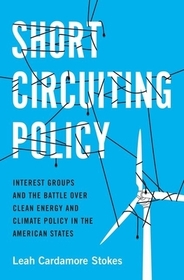
Short Circuiting Policy
Interest Groups and the Battle Over Clean Energy and Climate Policy in the American States
Sorozatcím: Studies in Postwar American Political Development;
-
10% KEDVEZMÉNY?
- A kedvezmény csak az 'Értesítés a kedvenc témákról' hírlevelünk címzettjeinek rendeléseire érvényes.
- Kiadói listaár GBP 27.49
-
12 411 Ft (11 820 Ft + 5% áfa)
Az ár azért becsült, mert a rendelés pillanatában nem lehet pontosan tudni, hogy a beérkezéskor milyen lesz a forint árfolyama az adott termék eredeti devizájához képest. Ha a forint romlana, kissé többet, ha javulna, kissé kevesebbet kell majd fizetnie.
- Kedvezmény(ek) 10% (kb. 1 241 Ft)
- Kedvezményes ár 11 170 Ft (10 638 Ft + 5% áfa)
Iratkozzon fel most és részesüljön kedvezőbb árainkból!
Feliratkozom
12 411 Ft

Beszerezhetőség
Becsült beszerzési idő: A Prosperónál jelenleg nincsen raktáron, de a kiadónál igen. Beszerzés kb. 3-5 hét..
A Prosperónál jelenleg nincsen raktáron.
Why don't you give exact delivery time?
A beszerzés időigényét az eddigi tapasztalatokra alapozva adjuk meg. Azért becsült, mert a terméket külföldről hozzuk be, így a kiadó kiszolgálásának pillanatnyi gyorsaságától is függ. A megadottnál gyorsabb és lassabb szállítás is elképzelhető, de mindent megteszünk, hogy Ön a lehető leghamarabb jusson hozzá a termékhez.
A termék adatai:
- Kiadó OUP USA
- Megjelenés dátuma 2020. június 5.
- ISBN 9780190074265
- Kötéstípus Puhakötés
- Terjedelem336 oldal
- Méret 231x155x22 mm
- Súly 476 g
- Nyelv angol
- Illusztrációk 21 black and white line drawings 0
Kategóriák
Rövid leírás:
Short Circuiting Policy examines climate and energy politics over several decades to understand why US states are not on track to meet the climate crisis. It argues that electric utilities and clean energy companies battle over policy, and their relative power explains why US states have stopped expanding-and even started weakening-their renewable energy policies. The book explains key US clean energy policies, including Renewable Portfolio Standards and net metering, in detail.
TöbbHosszú leírás:
In 1999, Texas passed a landmark clean energy law, beginning a groundswell of new policies that promised to make the US a world leader in renewable energy. As Leah Stokes shows in Short Circuiting Policy, however, that policy did not lead to momentum in Texas, which failed to implement its solar laws or clean up its electricity system. Examining clean energy laws in Texas, Kansas, Arizona, and Ohio over a thirty-year time frame, Stokes argues that organized combat between advocate and opponent interest groups is central to explaining why states are not on track to address the climate crisis. She tells the political history of our energy institutions, explaining how fossil fuel companies and electric utilities have promoted climate denial and delay. Stokes further explains the limits of policy feedback theory, showing the ways that interest groups drive retrenchment through lobbying, public opinion, political parties and the courts. More than a history of renewable energy policy in modern America, Short Circuiting Policy offers a bold new argument about how the policy process works, and why seeming victories can turn into losses when the opposition has enough resources to roll back laws.
Stokes has written a highly readable and compelling book that will be of interest to environmental policy scholars and the general public alike
Tartalomjegyzék:
Acknowledgements
List of Abbreviations
List of Figures
Chapter 1. Introduction
Chapter 2. When New Policies Fail to Create a New Politics
Chapter 3. An Institutional History of Electricity Politics and Climate Inaction
Chapter 4. Policy Feedback: Networked and Influential Advocates Use the Public to Drive Clean Energy Leadership in Texas
Chapter 5. A Direct Line to Legislators and Regulators: Fossil Fuel Corporations and the Limitations of Texas's Renewable Energy Laws
Chapter 6. Retrenchment by a Thousand Cuts: Fossil Fuel Opponents Drive Polarization on Clean Energy in Kansas
Chapter 7. Regulatory Capture: Electric Utilities Retrench Arizona's Net Metering Laws
Chapter 8. When the Fog of Enactment Lifts: Late Action brings Rapid Retrenchment of Ohio's Renewable Energy Laws
Chapter 9. Conclusion
References
Appendix:List of Interviews

