

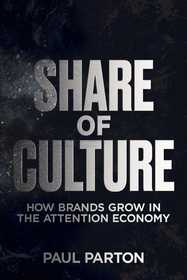
Share of Culture
How Brands Grow in the Attention Economy
-
20% KEDVEZMÉNY?
- Kiadói listaár GBP 16.99
-
8 116 Ft (7 730 Ft + 5% áfa)
Az ár azért becsült, mert a rendelés pillanatában nem lehet pontosan tudni, hogy a beérkezéskor milyen lesz a forint árfolyama az adott termék eredeti devizájához képest. Ha a forint romlana, kissé többet, ha javulna, kissé kevesebbet kell majd fizetnie.
- Kedvezmény(ek) 20% (cc. 1 623 Ft off)
- Kedvezményes ár 6 493 Ft (6 184 Ft + 5% áfa)
- A kedvezmény érvényes eddig: 2026. március 31.
6 493 Ft

Beszerezhetőség
Még nem jelent meg, de rendelhető. A megjelenéstől számított néhány héten belül megérkezik.
Why don't you give exact delivery time?
A beszerzés időigényét az eddigi tapasztalatokra alapozva adjuk meg. Azért becsült, mert a terméket külföldről hozzuk be, így a kiadó kiszolgálásának pillanatnyi gyorsaságától is függ. A megadottnál gyorsabb és lassabb szállítás is elképzelhető, de mindent megteszünk, hogy Ön a lehető leghamarabb jusson hozzá a termékhez.
A termék adatai:
- Kiadó Post Hill Press
- Megjelenés dátuma 2026. április 23.
- Kötetek száma Trade Paperback
- ISBN 9798895654330
- Kötéstípus Puhakötés
- Terjedelem272 oldal
- Méret 209x139x17 mm
- Súly 250 g
- Nyelv angol 700
Kategóriák
Rövid leírás:
How progressive marketers build brands in a post-advertising world.
TöbbHosszú leírás:
How progressive marketers build brands in a post-advertising world.
The rules of marketing and brand building have fundamentally changed.
While traditional marketers compete for diminishing TV audiences, a new generation of brands have stopped trying to buy attention; instead, they earn it. They don’t interrupt culture&&&8212;they become part of it.
The most successful brands today aren’t necessarily the ones with the biggest marketing budgets. A multi-million-dollar ad campaign isn’t worth what it once was, and progressive marketers know that and have adopted different strategies. The brands that dominate aren’t just seen&&&8212;they’re discussed. This isn’t just changing how brands communicate&&&8212;it’s transforming the very nature of how they’re built and what plants them into the public consciousness.
Tesla built a billion-dollar business without a dollar of traditional advertising. Glossier transformed beauty by engaging communities rather than preaching to them. K-Pop band BTS generated billions of dollars in sales by using social media to build an army of fans.
What unites these successes is a shift from competing for share of market to competing for share of culture.
Share of Culture reveals the principles behind their success: How they connect with their audience and get them talking. Drawing on marketing science and real-world case studies, renowned brand strategist Paul Parton outlines a practical model for building brands in the new attention economy where a surplus of goods is mirrored by a deficit of attention, and where conversation is currency.

