

-
18% KEDVEZMÉNY?
- Kiadói listaár GBP 19.99
-
9 025 Ft (8 595 Ft + 5% áfa)
Az ár azért becsült, mert a rendelés pillanatában nem lehet pontosan tudni, hogy a beérkezéskor milyen lesz a forint árfolyama az adott termék eredeti devizájához képest. Ha a forint romlana, kissé többet, ha javulna, kissé kevesebbet kell majd fizetnie.
- Kedvezmény(ek) 18% (kb. 1 625 Ft)
- Kedvezményes ár 7 400 Ft (7 048 Ft + 5% áfa)
- A kedvezmény érvényes eddig: 2026. augusztus 31.
7 400 Ft

Beszerezhetőség
Még nem jelent meg, de rendelhető. A megjelenéstől számított néhány héten belül megérkezik.
Why don't you give exact delivery time?
A beszerzés időigényét az eddigi tapasztalatokra alapozva adjuk meg. Azért becsült, mert a terméket külföldről hozzuk be, így a kiadó kiszolgálásának pillanatnyi gyorsaságától is függ. A megadottnál gyorsabb és lassabb szállítás is elképzelhető, de mindent megteszünk, hogy Ön a lehető leghamarabb jusson hozzá a termékhez.
A termék adatai:
- Kiadó Bloomsbury Publishing (UK)
- Megjelenés dátuma 2026. július 23.
- ISBN 9781350123564
- Kötéstípus Puhakötés
- Terjedelem312 oldal
- Méret 214x136x18 mm
- Súly 434 g
- Nyelv
- Illusztrációk 60 colour illustrations 700
Kategóriák
Rövid leírás:
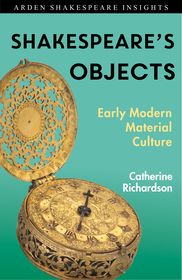
This short companion to the Arden Shakespeare Fourth series of editions, is an illustrated introduction to the rich materiality, uses and social meanings of 33 significant things which appear in the plays of Shakespeare.
TöbbHosszú leírás:
The world in which Shakespeare lived and wrote was a material one before it was a textual one - made up of people's interactions with a wide variety of things. Shakespeare's plays were first experienced as a rich mixture of objects, language, spaces and actors' bodies. This accessible and fascinating book delves into the lives of 33 significant things through full-colour images and an easy-to-read analysis of their significance.
Objects include beds and perfumes, doublets and torches, lutes, spurs, clocks and handkerchiefs, all explored in relation to social status, gender, race, economics and manufacture. Individually and together, they reveal the rich cultural and physical geography within which the playwright, his characters and audiences lived their lives. Shakespeare's Objects asks who owned these things and how were they used? It considers the diverse reality of trade, exchange and conquest which meant some individuals in early modern England could encounter carpets from Turkey and China, dyes from the Americas and paper from Venice, alongside woods and fabrics from their local communities.
Whether you are an actor thinking about how to use props, a student wanting to understand early modern drama, a theatrical designer considering a period setting, a museum professional wanting to understand the significance of objects in your care, or someone curious about objects from the past which are unfamiliar, you will find something useful in this essential guide to early modern things.
Tartalomjegyzék:
Introduction
List of Illustrations
1. Bed
2. Book
3. Carpet
4. Chamber
5. Chest/Coffer/Trunk
6. Chimney/Hearth/Fireplace
7. Clock/Watch
8. Closet/Study
9. Codpiece/Points
10. Dinner/Supper
11. Doublet
12. Gift
13. Gown
14. Handkerchief
15. Hat/Cap
16. Hose/Stockings
17. House
18. Ink
19. Letter
20. Lights/Lanterns/Lamps/Links/Torches
21. Linen
22. Lute
23. Perfume/Sweet
24. Picture/Painting/Portrait
25. Ship/Boat/Bark
26. Silk/Satin/Velvet
27. Spoon
28. Spur
29. Stool
30. Sword
31. Table
32. Tapestry/Arras
33. Token
Index

