

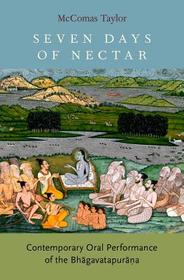
Seven Days of Nectar
Contemporary Oral Performance of the Bhagavatapurana
-
10% KEDVEZMÉNY?
- A kedvezmény csak az 'Értesítés a kedvenc témákról' hírlevelünk címzettjeinek rendeléseire érvényes.
- Kiadói listaár GBP 105.00
-
47 407 Ft (45 150 Ft + 5% áfa)
Az ár azért becsült, mert a rendelés pillanatában nem lehet pontosan tudni, hogy a beérkezéskor milyen lesz a forint árfolyama az adott termék eredeti devizájához képest. Ha a forint romlana, kissé többet, ha javulna, kissé kevesebbet kell majd fizetnie.
- Kedvezmény(ek) 10% (kb. 4 740 Ft)
- Kedvezményes ár 42 667 Ft (40 635 Ft + 5% áfa)
Iratkozzon fel most és részesüljön kedvezőbb árainkból!
Feliratkozom
47 407 Ft

Beszerezhetőség
Megrendelésre a kiadó utánnyomja a könyvet. Rendelhető, de a szokásosnál kicsit lassabban érkezik meg.
Why don't you give exact delivery time?
A beszerzés időigényét az eddigi tapasztalatokra alapozva adjuk meg. Azért becsült, mert a terméket külföldről hozzuk be, így a kiadó kiszolgálásának pillanatnyi gyorsaságától is függ. A megadottnál gyorsabb és lassabb szállítás is elképzelhető, de mindent megteszünk, hogy Ön a lehető leghamarabb jusson hozzá a termékhez.
A termék adatai:
- Kiadó OUP USA
- Megjelenés dátuma 2016. augusztus 18.
- ISBN 9780190611910
- Kötéstípus Keménykötés
- Terjedelem248 oldal
- Méret 163x236x22 mm
- Súly 508 g
- Nyelv angol
- Illusztrációk 23 illus. 0
Kategóriák
Rövid leírás:
The thousand-year-old Sanskrit classic the Bhagavatapurana, or 'Stories of the Lord', is the foundational source of narratives concerning the beloved Hindu deity Krishna. For centuries pious individuals, families, and community groups have engaged specialist scholar-orators to give week-long oral performances based on this text. These events have grown in number, scale, and popularity, filling vast public arenas, such as sports stadiums, and attracting live audiences in the tens of thousands while being simulcast around the world. In Seven Days of Nectar, McComas Taylor uncovers the factors that contribute to the explosive growth of this tradition.
TöbbHosszú leírás:
The thousand-year-old Sanskrit classic the Bhagavatapurana, or "Stories of the Lord," is the foundational source of narratives concerning the beloved Hindu deity Krishna. For centuries pious individuals, families, and community groups have engaged specialist scholar-orators to give week-long oral performances based on this text. Seated on a dais in front of the audience, the orator intones selected Sanskrit verses from the text and narrates the story of Krishna in the local language. These sacred performances are thought to bring blessings and good fortune to those who sponsor, perform, or attend them. Devotees believe that the narratives of Krishna are like the nectar of immortality for those who can appreciate them.
In recent years, these events have grown in number, scale, and popularity. Once confined to private homes or temple spaces, contemporary performances now fill vast public arenas, such as sports stadiums, and attract live audiences in the tens of thousands while being simulcast around the world. In Seven Days of Nectar, McComas Taylor uncovers the factors that contribute to the explosive growth of this tradition. He explores these events through the lens of performance theory, integrating the text with the intersecting worlds of sponsors, exponents and audiences.
This innovative approach, which draws on close textual reading, philology, and ethnography, casts new light on the ways in which narratives are experienced as authentic and transformative, and more broadly, how texts shape societies.
Owing to Taylor's success in combining the fields of textual studies and the social sciences in his research, this work is an original and much needed methodological contribution to South Asian studies that undoubtedly helps move the discipline forward.
Tartalomjegyzék:
Preface
Acknowledgements
Note on transliteration
1. Introduction-Ksetropadhana
2. The Saptaha-Yajña
3. The Sponsor-Yajamana
4. The Exponent-Hotr
5. The Text-Veda
6. The Verses-Mantra
7. The Audience-Vis
8. Results-Phala
9. Conclusion-Purnahuti
Glossary
Bibliography

