

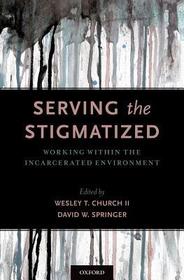
Serving the Stigmatized
Working within the Incarcerated Environment
-
10% KEDVEZMÉNY?
- A kedvezmény csak az 'Értesítés a kedvenc témákról' hírlevelünk címzettjeinek rendeléseire érvényes.
- Kiadói listaár GBP 76.00
-
36 309 Ft (34 580 Ft + 5% áfa)
Az ár azért becsült, mert a rendelés pillanatában nem lehet pontosan tudni, hogy a beérkezéskor milyen lesz a forint árfolyama az adott termék eredeti devizájához képest. Ha a forint romlana, kissé többet, ha javulna, kissé kevesebbet kell majd fizetnie.
- Kedvezmény(ek) 10% (cc. 3 631 Ft off)
- Kedvezményes ár 32 678 Ft (31 122 Ft + 5% áfa)
Iratkozzon fel most és részesüljön kedvezőbb árainkból!
Feliratkozom
36 309 Ft

Beszerezhetőség
Megrendelésre a kiadó utánnyomja a könyvet. Rendelhető, de a szokásosnál kicsit lassabban érkezik meg.
Why don't you give exact delivery time?
A beszerzés időigényét az eddigi tapasztalatokra alapozva adjuk meg. Azért becsült, mert a terméket külföldről hozzuk be, így a kiadó kiszolgálásának pillanatnyi gyorsaságától is függ. A megadottnál gyorsabb és lassabb szállítás is elképzelhető, de mindent megteszünk, hogy Ön a lehető leghamarabb jusson hozzá a termékhez.
A termék adatai:
- Kiadó OUP USA
- Megjelenés dátuma 2018. augusztus 16.
- ISBN 9780190678753
- Kötéstípus Keménykötés
- Terjedelem400 oldal
- Méret 160x239x25 mm
- Súly 703 g
- Nyelv angol 0
Kategóriák
Rövid leírás:
Serving the Stigmatized is the first book of its kind that explores best practices when dealing with a specific prison population while under some form of institutional control. If the established goal of a correctional facility is to "rehabilitate," then it is imperative that the rehabilitation is effective and does not simply serve as a political buzz word. The timing of releasing this book coincides with a real movement in the United States, supported by both conservative and liberal advocates and foundations, to decrease the size of the prison population by returning more offenders to their communities. The text examines 14 specific populations and how to effectively treat them in order to better serve them and our communities.
TöbbHosszú leírás:
America's incarceration rate was roughly constant from 1925 to 1973, with an average of 110 people behind bars for every 100,000 residents. By 2013, however, the rate of incarceration in state and federal prisons had increased sevenfold to 716. Compared with 102 for Canada, 132 for England and Wales, 85 for France, and a paltry 48 in Japan, the United States is the worlds' most aggressive jailer. When one factors in those on parole or probation, the American correctional system is in control of more than 7.3 million Americans, or one in every 31 U.S. adults. This means that 6.7 million adult men and women -- about 3.1 percent of the total U.S. adult population -- are now very non-voluntary members of America's "correctional community."
Some key questions that need to be addressed are: "What are we doing with those 7.3 million Americans? How are they being treated while they are incarcerated? How can we best prepare them to return to their communities?" More than 650,000 offenders are released back into our communities every year; however, 70% are rearrested within three years of their release. Serving the Stigmatized is the first book of its kind that explores best practices when dealing with a specific prison population while under some form of institutional control. If the established goal of a correctional facility is to "rehabilitate," then it is imperative that the rehabilitation is effective and does not simply serve as a political buzz word. The timing of releasing this book coincides with a real movement in the United States, supported by both conservative and liberal advocates and foundations, to decrease the size of the prison population by returning more offenders to their communities. The text examines 14 specific populations and how to effectively treat them in order to better serve them and our communities.
A major strength of this book is its presentation of information in a way that is useful and easily understood by professionals from a variety of fields, including criminal justice, social work, and psychology. I recommend this book for readers interested in learning about special populations in correctional facilities, options to provide evidence-based treatment, current policies impacting them and prevention strategies to potentially avoid their incarceration.
Tartalomjegyzék:
Chapter 1--Mental Illness in Prison Populations: Policy, Practice, and Challenges
Eprise R. Armstrong, Drew E. Winters, and Jeremiah W. Jaggers
Chapter 2--Suicide Risk Among Adolescents Involved in the Justice System: Risk and Suggestions for Prevention
Susan Deluca and Daley DiCorcia
Chapter 3--Sex Offenders as Prison Inmates
David Patrick Connor
Chapter 4--HIV/AIDS and the Incarcerated Population
Elizabeth C. Pomeroy
Chapter 5--Aging, Stigma, and Criminal Justice: Toward Human Rights Based Assessment and Intervention
Tina Maschi and George Leibowitz
Chapter 6--Parents in Prison: Promoting Success During Reentry to the Community
J. Mark Eddy and Jean E. Schumer
Chapter 7--Youth Certified as Adults and Serving Adult Sentences
Stephen W. Phillippi Jr. and Ellen P. McCann
Chapter 8--Substance Abuse Treatment in Prison: The Therapeutic Community
Matthew Hiller and Christine Saum
Chapter 9--Sexuality on the Inside: Lesbian, Gay, and Bisexual Inmates
James Roffee and Andrea Waling
Chapter 10--Trans People and Responding to Need: Improving Carceral Management
James Roffee
Chapter 11--The Role of Race/Ethnicity in Criminal and Juvenile Justice
Susan McCarter
Chapter 12--Coming Home: Challenges and Opportunities to Enhance Reentry Success
Katie Berry, Matt Gilmour, Stephanie C. Kennedy, and Stephen J. Tripodi
Chapter 13--Incarcerated Veterans
Evan R. Seamone, Kate H. Thomas, and David L. Albright
Chapter 14--Immigrant Inmates in the Correctional System
Khadija Khaja and Jeremiah W. Jaggers
Chapter 15--Terminal Illness in Correctional Settings
Stephanie Grace Prost

