

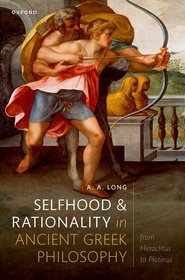
Selfhood and Rationality in Ancient Greek Philosophy
From Heraclitus to Plotinus
-
10% KEDVEZMÉNY?
- A kedvezmény csak az 'Értesítés a kedvenc témákról' hírlevelünk címzettjeinek rendeléseire érvényes.
- Kiadói listaár GBP 98.00
-
44 247 Ft (42 140 Ft + 5% áfa)
Az ár azért becsült, mert a rendelés pillanatában nem lehet pontosan tudni, hogy a beérkezéskor milyen lesz a forint árfolyama az adott termék eredeti devizájához képest. Ha a forint romlana, kissé többet, ha javulna, kissé kevesebbet kell majd fizetnie.
- Kedvezmény(ek) 10% (kb. 4 425 Ft)
- Kedvezményes ár 39 822 Ft (37 926 Ft + 5% áfa)
Iratkozzon fel most és részesüljön kedvezőbb árainkból!
Feliratkozom
44 247 Ft

Beszerezhetőség
Becsült beszerzési idő: A Prosperónál jelenleg nincsen raktáron, de a kiadónál igen. Beszerzés kb. 3-5 hét..
A Prosperónál jelenleg nincsen raktáron.
Why don't you give exact delivery time?
A beszerzés időigényét az eddigi tapasztalatokra alapozva adjuk meg. Azért becsült, mert a terméket külföldről hozzuk be, így a kiadó kiszolgálásának pillanatnyi gyorsaságától is függ. A megadottnál gyorsabb és lassabb szállítás is elképzelhető, de mindent megteszünk, hogy Ön a lehető leghamarabb jusson hozzá a termékhez.
A termék adatai:
- Kiadó OUP Oxford
- Megjelenés dátuma 2022. október 27.
- ISBN 9780198803393
- Kötéstípus Keménykötés
- Terjedelem282 oldal
- Méret 241x163x22 mm
- Súly 584 g
- Nyelv angol 232
Kategóriák
Rövid leírás:
A. A. Long presents fourteen essays on the themes of selfhood and rationality in ancient Greek philosophy, ranging over seven centuries of innovative thought. He shows how the notion of a rational self was bound up with questions about divinity and happiness, and draws out the relevance of the book's themes for modern discussions of the self.
TöbbHosszú leírás:
A. A. Long presents fourteen essays on the themes of selfhood and rationality in ancient Greek philosophy. The discussion ranges over seven centuries of innovative thought, starting with Heraclitus' injunction to listen to the cosmic logos, and concluding with Plotinus' criticism of those who make embodiment essential to human identity. For the Greek philosophers the notion of a rational self was bound up with questions about divinity and happiness called eudaimonia, meaning a god-favoured life or a life of likeness to the divine. While these questions are remote from current thought, Long also situates the book's themes in modern discussions of the self and the self's normative relation to other people and the world at large. Ideas and behaviour attributed to Socrates and developed by Plato are at the book's centre. They are preceded by essays that explore general facets of the soul's rationality. Later chapters bring in salient contributions made by Aristotle and Stoic philosophers. All but one of these pieces has been previously published in periodicals or conference volumes, but the author has revised and updated everything. The book is written in a style that makes it accessible to many kinds of reader, not only professors and graduate students but also anyone interested in the history of our identity as rational animals.
In Selfhood and Rationality in Ancient Greek Philosophy, a sequel to Greek Models of Mind and Self, the reader is given the privilege to peer into the laboratory of A. A. Long's scholarly life, in which he spent many years traveling the highways and byways of ancient Greek thought. This book gives the reader the opportunity to become acquainted with the author's hitherto unfinished project, the fruit of his personal, extended, and productive scholarly adventure in the vast Greek world.
Tartalomjegyzék:
Introduction
Finding Oneself in Greek Philosophy
Ancient Philosophy's Hardest Question: What to make of Oneself?
Eudaimonism, Divinity, and Rationality in Greek Ethics
Heraclitus on Measure and the Explicit Emergence of Rationality
Parmenides on Thinking Being
Socratic Idiosyncrasy and Cynic Exhibitionism
Socrates' Divine Sign
Politics and Divinity in Plato's Republic: The Form of the Good
Platonic Souls as Persons
Cosmic Craftsmanship in Plato and Stoicism
Aristotle on Eudaimonia, Nous, and Divinity
Second Selves and Stoic Friends
Marcus Aurelius on the Self
Plotinus On Self and Happiness
Epilogue

