

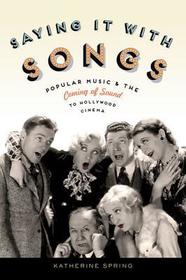
Saying It With Songs
Popular Music and the Coming of Sound to Hollywood Cinema
Sorozatcím: Oxford Music/Media Series;
-
10% KEDVEZMÉNY?
- A kedvezmény csak az 'Értesítés a kedvenc témákról' hírlevelünk címzettjeinek rendeléseire érvényes.
- Kiadói listaár GBP 32.49
-
15 522 Ft (14 782 Ft + 5% áfa)
Az ár azért becsült, mert a rendelés pillanatában nem lehet pontosan tudni, hogy a beérkezéskor milyen lesz a forint árfolyama az adott termék eredeti devizájához képest. Ha a forint romlana, kissé többet, ha javulna, kissé kevesebbet kell majd fizetnie.
- Kedvezmény(ek) 10% (cc. 1 552 Ft off)
- Kedvezményes ár 13 969 Ft (13 304 Ft + 5% áfa)
Iratkozzon fel most és részesüljön kedvezőbb árainkból!
Feliratkozom
15 522 Ft

Beszerezhetőség
Megrendelésre a kiadó utánnyomja a könyvet. Rendelhető, de a szokásosnál kicsit lassabban érkezik meg.
Why don't you give exact delivery time?
A beszerzés időigényét az eddigi tapasztalatokra alapozva adjuk meg. Azért becsült, mert a terméket külföldről hozzuk be, így a kiadó kiszolgálásának pillanatnyi gyorsaságától is függ. A megadottnál gyorsabb és lassabb szállítás is elképzelhető, de mindent megteszünk, hogy Ön a lehető leghamarabb jusson hozzá a termékhez.
A termék adatai:
- Kiadó OUP USA
- Megjelenés dátuma 2013. november 28.
- ISBN 9780199842223
- Kötéstípus Puhakötés
- Terjedelem256 oldal
- Méret 157x234x17 mm
- Súly 380 g
- Nyelv angol
- Illusztrációk 28 illustrations 0
Kategóriák
Rövid leírás:
Saying It With Songs is a groundbreaking study of the ways in which Hollywood's conversion to synchronized-sound filmmaking in the late 1920s gave rise not only to enduring partnerships between the film and popular music industries, but also to a rich and exciting period of song use in American cinema.
TöbbHosszú leírás:
In the late 1920s, Hollywood's conversion from silent to synchronized-sound film production not only instigated the convergence of the film and music industries but also gave rise to an extraordinary period of song use in American cinema. Saying It With Songs considers how the increasing interdependence of Hollywood studios and Tin Pan Alley music publishing firms influenced the commercial and narrative functions of popular songs in a variety of film genres. Whereas most scholarship on film music of the period focuses on adaptations of Broadway musicals, Saying It With Songs examines the functions of songs in a variety of non-musical genres, including melodramas, romantic comedies, Westerns, prison dramas, and action-adventure films, and shows how filmmakers tested and refined their approach to songs in order to reconcile the tension produced by three competing forces: the spectacle of song performance, the classical norms of storytelling, and the established conventions of background orchestral scoring inherited from the period of silent cinema. By 1931, a so-called "song glut" led the studios to curtail their use of popular music in favor of a growing alternative -- the classical film score -- but popular songs continued to fulfill critical functions of narration in Hollywood films of subsequent decades. Written in language accessible to film and music scholars as well as general readers, Saying It With Songs illuminates the seminal origins of the popular song score aesthetic of American cinema.
Springs emphasis on songs during the conversion periodmatters not just because it helps us better grasp corporate relationships and cinematic storytelling, but also because it complicates the generally accepted reading of classical Hollywoods romantic score. Indeed, Spring claims that conversion-era film offers early examples of both the popular song score and orchestral score thatwould become typicalmuch later. Her careful retelling of this periods history is therefore important for anyone who wants to understand Hollywood film music in any era.
Tartalomjegyzék:
Acknowledgments
Introduction
Chapter 1. Singing a Song: The Culture and Conventions of Popular Music in the 1920s
Chapter 2. Owning a Song: The Restructuring of Hollywood and Tin Pan Alley
Chapter 3. Plugging a Song: The Discrete Charm of the Popular Song, From Broadway to Hollywood
Chapter 4. Integrating a Song: The Threat to Narrative Plausibility
Chapter 5. Curtailing a Song: Toward the Classical Background Score
Conclusion: The Fate of the Motion Picture Song
Appendix 1: Confirmatory License Issued by Music Publishers Protective Association (1929)
Appendix 2: "Tieups of Film and Music" as Reported by Variety
Appendix 3: Timeline of Relationships Between Film and Music Companies
Appendix 4: Agreement between Al Dubin, The Vitaphone Corp., and Music Publishers Holding Corporation
Appendix 5: Summary of Agreement between Vitaphone Corporation, M. Witmark & Sons, and Ray Perkins
Bibliography
Credits
Index

