

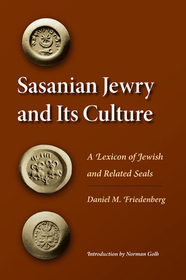
Sasanian Jewry and Its Culture – A Lexicon of Jewish and Related Seals
A Lexicon of Jewish and Related Seals
-
10% KEDVEZMÉNY?
- A kedvezmény csak az 'Értesítés a kedvenc témákról' hírlevelünk címzettjeinek rendeléseire érvényes.
- Kiadói listaár GBP 36.00
-
17 199 Ft (16 380 Ft + 5% áfa)
Az ár azért becsült, mert a rendelés pillanatában nem lehet pontosan tudni, hogy a beérkezéskor milyen lesz a forint árfolyama az adott termék eredeti devizájához képest. Ha a forint romlana, kissé többet, ha javulna, kissé kevesebbet kell majd fizetnie.
- Kedvezmény(ek) 10% (cc. 1 720 Ft off)
- Kedvezményes ár 15 479 Ft (14 742 Ft + 5% áfa)
Iratkozzon fel most és részesüljön kedvezőbb árainkból!
Feliratkozom
17 199 Ft

Beszerezhetőség
Becsült beszerzési idő: A Prosperónál jelenleg nincsen raktáron, de a kiadónál igen. Beszerzés kb. 3-5 hét..
A Prosperónál jelenleg nincsen raktáron.
Why don't you give exact delivery time?
A beszerzés időigényét az eddigi tapasztalatokra alapozva adjuk meg. Azért becsült, mert a terméket külföldről hozzuk be, így a kiadó kiszolgálásának pillanatnyi gyorsaságától is függ. A megadottnál gyorsabb és lassabb szállítás is elképzelhető, de mindent megteszünk, hogy Ön a lehető leghamarabb jusson hozzá a termékhez.
A termék adatai:
- Kiadó MO – University of Illinois Press
- Megjelenés dátuma 2009. március 24.
- Kötetek száma Hardback
- ISBN 9780252033674
- Kötéstípus Keménykötés
- Terjedelem96 oldal
- Méret 242x162x14 mm
- Súly 348 g
- Nyelv angol
- Illusztrációk 58 black and white photographs; 1 line drawing 0
Kategóriák
Hosszú leírás:
The Sasanian Empire began in 226 C.E., when Ardashir, a Persian satrap, revolted against his Parthian overlords. Occupying the territories now divided among Iran and Iraq, and for brief periods Syria and Armenia, the empire engaged in intermittent warfare with Rome and Byzantium and was beset by internal strife as kings sought to impose Zoroastrianism upon the population and fought each other for power. In 640 C.E. the empire succumbed to the Arab invaders.
Within the empire lived large communities of Jews, whose sheer numbers were considerably greater than the Jewish population of Byzantium. It was within the Sasanian Empire that the great Babylonian Talmud was assembled, yet Jewish relics are scarce. One of the most significant material remnants of Jewish life are seals, almost all of which are signet whose styles, inscriptions, and sites of discovery provide important clues about the size and status of Jewish populations throughout the empire. Seals show how Jews within the empire adopted or resisted certain Sasanian symbols and sustained traditional Jewish motifs such as the lulab and etrog.
This volume presents fifty-seven Jewish seals from the Sasanian Empire, as well as comparative Zoroastrian and Christian seals. The text identifies their provenance (if known), translates their inscriptions, and organizes them by their depiction or reference.
Több
