

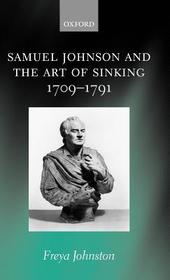
Samuel Johnson and the Art of Sinking 1709-1791
-
10% KEDVEZMÉNY?
- A kedvezmény csak az 'Értesítés a kedvenc témákról' hírlevelünk címzettjeinek rendeléseire érvényes.
- Kiadói listaár GBP 61.00
-
27 541 Ft (26 230 Ft + 5% áfa)
Az ár azért becsült, mert a rendelés pillanatában nem lehet pontosan tudni, hogy a beérkezéskor milyen lesz a forint árfolyama az adott termék eredeti devizájához képest. Ha a forint romlana, kissé többet, ha javulna, kissé kevesebbet kell majd fizetnie.
- Kedvezmény(ek) 10% (kb. 2 754 Ft)
- Kedvezményes ár 24 787 Ft (23 607 Ft + 5% áfa)
Iratkozzon fel most és részesüljön kedvezőbb árainkból!
Feliratkozom
27 541 Ft

Beszerezhetőség
Megrendelésre a kiadó utánnyomja a könyvet. Rendelhető, de a szokásosnál kicsit lassabban érkezik meg.
Why don't you give exact delivery time?
A beszerzés időigényét az eddigi tapasztalatokra alapozva adjuk meg. Azért becsült, mert a terméket külföldről hozzuk be, így a kiadó kiszolgálásának pillanatnyi gyorsaságától is függ. A megadottnál gyorsabb és lassabb szállítás is elképzelhető, de mindent megteszünk, hogy Ön a lehető leghamarabb jusson hozzá a termékhez.
A termék adatai:
- Kiadó OUP Oxford
- Megjelenés dátuma 2005. február 17.
- ISBN 9780199251827
- Kötéstípus Keménykötés
- Terjedelem284 oldal
- Méret 224x145x20 mm
- Súly 477 g
- Nyelv angol 0
Kategóriák
Rövid leírás:
Johnson's centrality in the late eighteenth century makes his fretfulness about the social and aesthetic boundaries of writing especially fertile and influential. This book suggests that literary taxonomies, inventories, and canons simultaneously construct and reject a hierarchy of ethical as well as aesthetic values, and examines how figures of cultural authority conceive of their relationships to and with the margins of writing and of society.
TöbbHosszú leírás:
The traditional view of Samuel Johnson as hostile to particulars, trifles, and aesthetic mediocrity only half-explains his authorial character. Samuel Johnson and the Art of Sinking 1709-1791 argues that, in a period dominated by social and literary hierarchies, Johnson's works reveal a defining interest in 'little', 'mean', or 'low' topics and people.
Freya Johnston moves away from a critical emphasis on what literature of this period excludes, to consider its modes of including recalcitrant material. Of necessity finite, any piece of writing is informed by the subject matter it omits or to which it indirectly alludes. How can we identify the peripheral topics or characters purportedly 'excluded' from a text, unless it provides compelling inferences that oblige us to supply the omission? In which case, something subtler is at work than barefaced proscription.
Rehearsing the comparative merits of great and little things, Johnson and his contemporaries tested the opposing claims of pagan and Christian authority. Ancient criticism, and its eighteenth-century adherents, held that each subject required an appropriate style: little matters call for the low, lofty ones for the high. Yet Gospel writers stressed Christ's incarnation as a praiseworthy and imitable descent to the humanly little -- one that is compatible with the most sublime style.
Through a series of close readings, this book examines how Johnson conceived of his relationships to and with the margins of writing and of society. It proposes that his literary and critical practice is neither inclusive nor exclusive in its attitudes towards peripheral things.
...subtle, intricately illuminating ... This book about small things is large in interest and consequence. It brings a fresh eye and keen critical intelligence to the important issues it engages, and leaves us with a more deeply textured sense of Johnson's works and values.
Tartalomjegyzék:
Introduction
Inclusion and Exclusion
'Voluntary Degradation': Johnson's Prefaces and Dedications
Diminishing Returns: A Journey to the Western Islands of Scotland'
Stooping to Conquer: Johnsonian Biography

