

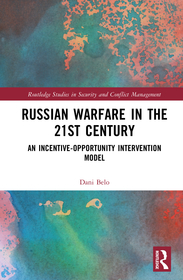
Russian Warfare in the 21st Century
An Incentive-Opportunity Intervention Model
Sorozatcím: Routledge Studies in Security and Conflict Management;
-
10% KEDVEZMÉNY?
- Kiadói listaár GBP 155.00
-
69 982 Ft (66 650 Ft + 5% áfa)
Az ár azért becsült, mert a rendelés pillanatában nem lehet pontosan tudni, hogy a beérkezéskor milyen lesz a forint árfolyama az adott termék eredeti devizájához képest. Ha a forint romlana, kissé többet, ha javulna, kissé kevesebbet kell majd fizetnie.
- Kedvezmény(ek) 10% (cc. 6 998 Ft off)
- Kedvezményes ár 62 984 Ft (59 985 Ft + 5% áfa)
62 984 Ft

Beszerezhetőség
Becsült beszerzési idő: A Prosperónál jelenleg nincsen raktáron, de a kiadónál igen. Beszerzés kb. 3-5 hét..
A Prosperónál jelenleg nincsen raktáron.
Why don't you give exact delivery time?
A beszerzés időigényét az eddigi tapasztalatokra alapozva adjuk meg. Azért becsült, mert a terméket külföldről hozzuk be, így a kiadó kiszolgálásának pillanatnyi gyorsaságától is függ. A megadottnál gyorsabb és lassabb szállítás is elképzelhető, de mindent megteszünk, hogy Ön a lehető leghamarabb jusson hozzá a termékhez.
A termék adatai:
- Kiadás sorszáma 1
- Kiadó Routledge
- Megjelenés dátuma 2025. július 18.
- ISBN 9781032759173
- Kötéstípus Keménykötés
- Terjedelem292 oldal
- Méret 234x156 mm
- Súly 600 g
- Nyelv angol
- Illusztrációk 26 Illustrations, black & white; 26 Line drawings, black & white; 24 Tables, black & white 740
Kategóriák
Rövid leírás:
This book provides a comprehensive analysis of Russia's foreign policy in gray zone conflicts, with a particular focus on its interventions in Ukraine.
TöbbHosszú leírás:
This book provides a comprehensive analysis of Russia's foreign policy in gray zone conflicts, with a particular focus on its interventions in Ukraine.
Challenging conventional views, the book contends that Russia's use of varied gray zone tactics is influenced by both system-level incentives and domestic-level opportunities, which are integrated here into the Incentive-Opportunity Intervention (IOI) Model. The book examines case studies including Abkhazia, Crimea, Odesa, Kharkiv, and the Donbas, demonstrating how local ethnic-based movements and perceptions of regional retreat shape Moscow's coercive strategies. It highlights the reactive nature of Russia's tactics, driven by perceived threats to its protector role, and the significant role of ethnic and political dynamics in the region. The study underscores the importance of understanding these motivations for effective conflict resolution and suggests that protecting minority rights could mitigate such interventions. Policy recommendations emphasize the need for nuanced approaches that address both geopolitical and local dynamics. Ultimately, the book calls for future research to apply the IOI Model to other great powers, enhance the generalizability and applicability of the findings, and highlight the potential for multilateral coordination in promoting minority rights as a strategy for conflict prevention.
This book will be of much interest to students and policy practitioners working on Russian foreign policy, international security, Eastern European politics, and International Relations
TöbbTartalomjegyzék:
Chapter 1: The Value of Combining System and Domestic Dimensions to Explain Gray Zone Conflict Behavior Chapter 2: Incentive-Opportunity Intervention Model: Combining System Incentives and Domestic Costs of Gray Zone Coercion Chapter 3: Russia’s Campaign in Abkhazia: Assessing the High Incentive and Opportunity for Gray Zone Coercion Chapter 4: Russia’s Gray Zone Engagement in Crimea: The Cost-Benefit Analysis of Deploying the “Little Green Men” Chapter 5: Russia’s Gray Zone Activities in Odesa: Assessing the Low Incentive and Opportunity for Coercion Chapter 6: Russia’s Gray Zone Engagement in Kharkiv: Assessing the Low Incentive and Opportunity for Coercion Chapter 7: Russia’s Restrained Gray Zone Coercion in the Donbas: A Function of Moderate Benefits and Uncertain Costs Chapter 8: Russia’s Militarized Campaign in Ukraine After 2022: A Continuation of an Old Pattern Chapter 9: Conclusion
Több
