

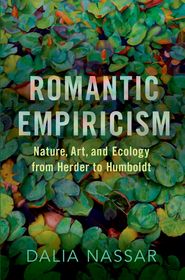
Romantic Empiricism
Nature, Art, and Ecology from Herder to Humboldt
-
10% KEDVEZMÉNY?
- A kedvezmény csak az 'Értesítés a kedvenc témákról' hírlevelünk címzettjeinek rendeléseire érvényes.
- Kiadói listaár GBP 22.99
-
10 379 Ft (9 885 Ft + 5% áfa)
Az ár azért becsült, mert a rendelés pillanatában nem lehet pontosan tudni, hogy a beérkezéskor milyen lesz a forint árfolyama az adott termék eredeti devizájához képest. Ha a forint romlana, kissé többet, ha javulna, kissé kevesebbet kell majd fizetnie.
- Kedvezmény(ek) 10% (cc. 1 038 Ft off)
- Kedvezményes ár 9 341 Ft (8 897 Ft + 5% áfa)
Iratkozzon fel most és részesüljön kedvezőbb árainkból!
Feliratkozom
10 379 Ft

Beszerezhetőség
Becsült beszerzési idő: A Prosperónál jelenleg nincsen raktáron, de a kiadónál igen. Beszerzés kb. 3-5 hét..
A Prosperónál jelenleg nincsen raktáron.
Why don't you give exact delivery time?
A beszerzés időigényét az eddigi tapasztalatokra alapozva adjuk meg. Azért becsült, mert a terméket külföldről hozzuk be, így a kiadó kiszolgálásának pillanatnyi gyorsaságától is függ. A megadottnál gyorsabb és lassabb szállítás is elképzelhető, de mindent megteszünk, hogy Ön a lehető leghamarabb jusson hozzá a termékhez.
A termék adatai:
- Kiadó OUP USA
- Megjelenés dátuma 2026. január 12.
- ISBN 9780197841358
- Kötéstípus Puhakötés
- Terjedelem328 oldal
- Méret 226x150x22 mm
- Súly 454 g
- Nyelv angol 653
Kategóriák
Rövid leírás:
In Romantic Empiricism, Dalia Nassar distinguishes an understudied philosophical tradition that emerged in Germany in the late eighteenth and early nineteenth centuries, traces its development, and argues for its continued significance. Nassar shows how four key thinkers, whom she calls the "romantic empiricists," developed a distinctive approach to the study of nature, which culminated in a new, ecological understanding of nature and the human place within it. Nassar contends that the romantic empiricist insights and approaches remain crucial for us today, as we seek to address the environmental crisis.
TöbbHosszú leírás:
In Romantic Empiricism, Dalia Nassar distinguishes and explores an understudied philosophical tradition that emerged in Germany in the late eighteenth and early nineteenth centuries, traces its development, and argues for its continued significance. Moving from the late Kant's notion of reflecting judgment, to Herder's articulation of the idea of "animal worlds," Goethe's explication of the obligations of the scientist, and Alexander von Humboldt's aesthetic science, Nassar demonstrates how these thinkers developed a sophisticated empirical approach to the natural world, which focuses on the phenomenon while also recognizing the creative role of the knowing subject and the cognitive value of art and aesthetic experience. She explores how these four thinkers worked together-sometimes as rivals, but more often than not as teachers and collaborators-and illustrates how their search for a new methodology culminated in a new, ecological understanding of the world and the human place within it.
Revisiting their thought, especially their distinctive approach to the study of nature, Nassar demonstrates, has the potential to redirect contemporary environmental debates and respond to urgent ecological questions in new and productive ways.
A sea change is taking place in the understanding of German Romantic science, and Nassar's study adds significantly to that impulse. She traces the line that originates in Herder's controversial relation with Kant and flows into Goethe and Alexander von Humboldt, giving it a provocative name: Romantic empiricism. Moreover, she highlights the contemporary importance of this line for new ideas in environmentalism and the practice of natural science. All of this I find both cogent and propitious.
Tartalomjegyzék:
Introduction
Chapter 1: Setting the Stage: Kant and the Critique of the Power of Judgment
Chapter 2: The Hermeneutics of Nature: Herder on Animal and Human Worlds
Chapter 3: The Science of Describing: Herder, Goethe and the Hauptform
Chapter 4: Aesthetic Education and the Transformation of the Scientist
Chapter 5: Intuitive Judgment and Goethe's Ethics of Knowledge
Chapter 6: Organism and Environment: The Aesthetic Foundations of Humboldt's Ecological Insight
Chapter 7: Embodied Cognition: Humboldt and the Art of Science
Conclusion: The Relevance of Romantic Empiricism

