

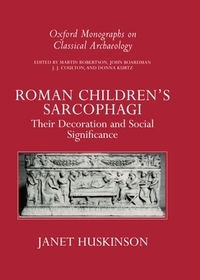
Roman Children's Sarcophagi
Their Decoration and its Social Significance
Sorozatcím: Oxford Monographs on Classical Archaeology;
-
10% KEDVEZMÉNY?
- A kedvezmény csak az 'Értesítés a kedvenc témákról' hírlevelünk címzettjeinek rendeléseire érvényes.
- Kiadói listaár GBP 280.00
-
126 420 Ft (120 400 Ft + 5% áfa)
Az ár azért becsült, mert a rendelés pillanatában nem lehet pontosan tudni, hogy a beérkezéskor milyen lesz a forint árfolyama az adott termék eredeti devizájához képest. Ha a forint romlana, kissé többet, ha javulna, kissé kevesebbet kell majd fizetnie.
- Kedvezmény(ek) 10% (kb. 12 642 Ft)
- Kedvezményes ár 113 778 Ft (108 360 Ft + 5% áfa)
Iratkozzon fel most és részesüljön kedvezőbb árainkból!
Feliratkozom
126 420 Ft

Beszerezhetőség
Megrendelésre a kiadó utánnyomja a könyvet. Rendelhető, de a szokásosnál kicsit lassabban érkezik meg.
Why don't you give exact delivery time?
A beszerzés időigényét az eddigi tapasztalatokra alapozva adjuk meg. Azért becsült, mert a terméket külföldről hozzuk be, így a kiadó kiszolgálásának pillanatnyi gyorsaságától is függ. A megadottnál gyorsabb és lassabb szállítás is elképzelhető, de mindent megteszünk, hogy Ön a lehető leghamarabb jusson hozzá a termékhez.
A termék adatai:
- Kiadó OUP Oxford
- Megjelenés dátuma 1996. március 28.
- ISBN 9780198140863
- Kötéstípus Keménykötés
- Terjedelem162 oldal
- Méret 286x225x19 mm
- Súly 590 g
- Nyelv angol
- Illusztrációk 16 pp plates 0
Kategóriák
Rövid leírás:
The first major study of the themes used in the decoration of sarcophagi for children in Rome and Ostia from the late first to early fourth century AD, by an acknowledged expert on classical art and archaeology.
TöbbHosszú leírás:
This book is the first major study of the themes which were used in the decoration of sarcophagi made for children in Rome and Ostia from the late first to early fourth century AD. It provides a selective catalogue of examples of each type, followed by discussion of how these fit into the general pattern. This allows certain themes to be identified which are virtually exclusive to childre's sarcophagi.
The second part of the book discusses the choice of subjects and how these reflect the standing of children in Roman society: to what extent, for instance, was childhood shown as a differentiated stage of life, or was it dominated by aspirations of the adult world? How is the death of a child treated in art? There are separate sections on the role of workshops and customers in the development of child-specific imagery, and on material from the early Christian era, providing some interesting differences resulting from differing attitudes towards children and beliefs about life and death.
This is a substantial contribution ... H. presents a wealth of material ... Art History and Archaeology will long benefit from this useful contribution.

