

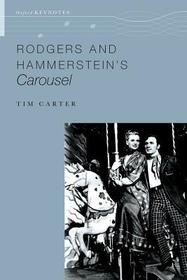
Rodgers and Hammerstein's Carousel
Sorozatcím: Oxford Keynotes;
-
10% KEDVEZMÉNY?
- A kedvezmény csak az 'Értesítés a kedvenc témákról' hírlevelünk címzettjeinek rendeléseire érvényes.
- Kiadói listaár GBP 19.49
-
8 799 Ft (8 380 Ft + 5% áfa)
Az ár azért becsült, mert a rendelés pillanatában nem lehet pontosan tudni, hogy a beérkezéskor milyen lesz a forint árfolyama az adott termék eredeti devizájához képest. Ha a forint romlana, kissé többet, ha javulna, kissé kevesebbet kell majd fizetnie.
- Kedvezmény(ek) 10% (cc. 880 Ft off)
- Kedvezményes ár 7 919 Ft (7 542 Ft + 5% áfa)
Iratkozzon fel most és részesüljön kedvezőbb árainkból!
Feliratkozom
8 799 Ft

Beszerezhetőség
Megrendelésre a kiadó utánnyomja a könyvet. Rendelhető, de a szokásosnál kicsit lassabban érkezik meg.
Why don't you give exact delivery time?
A beszerzés időigényét az eddigi tapasztalatokra alapozva adjuk meg. Azért becsült, mert a terméket külföldről hozzuk be, így a kiadó kiszolgálásának pillanatnyi gyorsaságától is függ. A megadottnál gyorsabb és lassabb szállítás is elképzelhető, de mindent megteszünk, hogy Ön a lehető leghamarabb jusson hozzá a termékhez.
A termék adatai:
- Kiadó OUP USA
- Megjelenés dátuma 2017. november 9.
- ISBN 9780190693442
- Kötéstípus Puhakötés
- Terjedelem160 oldal
- Méret 206x140x15 mm
- Súly 204 g
- Nyelv angol
- Illusztrációk 16 line art; 8 halftone 0
Kategóriák
Rövid leírás:
Carousel (1945) was Rodgers and Hammerstein's second collaboration following their hugely successful Oklahoma! (1943). Based on Ferenc Molnár's play, Liliom (1909), it took Broadway musical theater in far darker directions given its subject and extensive music. Here we discover how it came about, and what it was trying to achieve.
TöbbHosszú leírás:
Carousel (1945), with music by Richard Rodgers and the book and lyrics by Oscar Hammerstein II, was their second collaboration following the surprising success of Oklahoma! (1943). They worked again with Theresa Helburn and Lawrence Langner of the Theatre Guild (producers), Rouben Mamoulian (director), and Agnes de Mille (choreographer). But with Oklahoma! still running to sell-out houses, they needed to do something quite different.
Based on a play, Liliom (1909), by the Hungarian playwright Ferenc Molnár, Carousel took Broadway musical theater in far darker directions because of its subject matter-the protagonist, Billy Bigelow, is wholly an anti-hero-and also given its extensive music that some claimed came close to opera. The action is shifted from a gritty working-class suburb of Budapest to the New England coast (Maine), but the themes remain the same as two social misfits try to survive harsh economic times. Billy Bigelow is unemployed, prone to domestic violence, and dies in the course of committing a robbery; Julie Jordan sticks by him through thick and thin; and the show seeks some manner of redemption for both of them as Billy is given a day back on earth to do some good for his wife and their daughter. Troubling though these matters are nowadays, they fit squarely in the context of a country moving through the end of World War II to an uncertain future.
Not for nothing had composers such as Giacomo Puccini and Kurt Weill already tried to persuade Molnár to release his play. It also led Rodgers and Hammerstein to new heights: songs such as "If I Loved You," Billy's "Soliloquy," and "You'll Never Walk Alone" transformed the American musical. In this book, we discover how and why they came about, and exactly what Carousel was trying to achieve.
Through his careful analysis and compelling reading of new sources, Carter makes a compelling case for scholars and performers to reconsider a work that might otherwise be dismissed, and provides a fascinating historical narrative in the process.
Tartalomjegyzék:
Contents
Acknowledgments
Sources and permissions
List of illustrations, tables, and music examples
1: Carousel in Context
2: Molnár's Liliom: From Budapest to Broadway (and Beyond)
Three film versions
The Theatre Guild, American musical theater, and a would-be Carousel
Molnár sees Oklahoma!
3: Creating Carousel
Some dilemmas
Hammerstein's draft scenario
Casting, rehearsals, and tryouts
4: A Duet, a Soliloquy, and a Ballet
The "Bench scene"
"Soliloquy"
"Louise's Ballet"
5: The Problems of an Ending
Up or down?
A post-war message
6: From Stage to Screen (and Back)
The search for "American opera"
Carousel on film
Restoring Carousel
Appendix: Hammerstein's Scenario for Carousel
Further Reading, Listening, and Viewing
Notes
Index

