

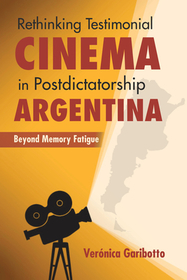
Rethinking Testimonial Cinema in Postdictatorshi – Beyond Memory Fatigue
Beyond Memory Fatigue
Sorozatcím: New Directions in National Cinemas;
-
10% KEDVEZMÉNY?
- A kedvezmény csak az 'Értesítés a kedvenc témákról' hírlevelünk címzettjeinek rendeléseire érvényes.
- Kiadói listaár GBP 23.99
-
11 461 Ft (10 915 Ft + 5% áfa)
Az ár azért becsült, mert a rendelés pillanatában nem lehet pontosan tudni, hogy a beérkezéskor milyen lesz a forint árfolyama az adott termék eredeti devizájához képest. Ha a forint romlana, kissé többet, ha javulna, kissé kevesebbet kell majd fizetnie.
- Kedvezmény(ek) 10% (cc. 1 146 Ft off)
- Kedvezményes ár 10 315 Ft (9 824 Ft + 5% áfa)
Iratkozzon fel most és részesüljön kedvezőbb árainkból!
Feliratkozom
11 461 Ft

Beszerezhetőség
Becsült beszerzési idő: A Prosperónál jelenleg nincsen raktáron, de a kiadónál igen. Beszerzés kb. 3-5 hét..
A Prosperónál jelenleg nincsen raktáron.
Why don't you give exact delivery time?
A beszerzés időigényét az eddigi tapasztalatokra alapozva adjuk meg. Azért becsült, mert a terméket külföldről hozzuk be, így a kiadó kiszolgálásának pillanatnyi gyorsaságától is függ. A megadottnál gyorsabb és lassabb szállítás is elképzelhető, de mindent megteszünk, hogy Ön a lehető leghamarabb jusson hozzá a termékhez.
A termék adatai:
- Kiadó MH – Indiana University Press
- Megjelenés dátuma 2019. január 7.
- Kötetek száma Print PDF
- ISBN 9780253038517
- Kötéstípus Puhakötés
- Terjedelem216 oldal
- Méret 229x152x12 mm
- Súly 316 g
- Nyelv angol
- Illusztrációk 9 b&w illus. Illustrations, black & white 0
Kategóriák
Hosszú leírás:
"
For roughly two decades after the collapse of the military regime in 1983, testimonial narrative was viewed and received as a privileged genre in Argentina. Today, however, academics and public intellectuals are experiencing ""memory fatigue,"" a backlash against the concepts of memory and trauma, just as memory and testimonial films have reached the center of Argentinian public discourse. In Rethinking Testimonial Cinema in Postdictatorship Argentina, Verónica Garibotto looks at the causes for this reticence and argues that, rather than discarding memory texts for their repetitive excess, it is necessary to acknowledge them and their exhaustion as discourses of the present.
By critically examining how trauma theory and subaltern studies have previously been applied to testimonial cinema, Garibotto rereads Argentinian films produced since 1983 and calls for an alternate interpretive framework at the intersection of semiotics, theories of affect, scholarship on hegemony, and the ideological uses of documentary and fiction. She argues that recurrent concepts—such as trauma, mourning, memory, and subalternity—miss how testimonial films have changed over time, shifting from subaltern narratives to official, hegemonic, and iconic accounts. Her work highlights the urgent need to continue to study these types of narratives, particularly at a time when military dictatorships have become entrenched in Latin America and memory narratives proliferate worldwide. Although Argentina is Garibotto's focus, her theory can be adapted to other contexts in which narratives about recent political conflicts have shifted from alternative versions of history to official, hegemonic accounts—such as in Spanish, Chilean, Uruguayan, Brazilian, South African, and Holocaust testimonies. Garibotto's study of testimonial cinema moves us to pursue a broader ideological analysis of the links between film and historical representation.

