

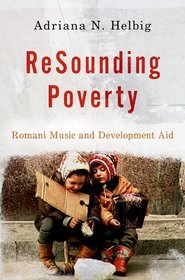
ReSounding Poverty
Romani Music and Development Aid
-
10% KEDVEZMÉNY?
- A kedvezmény csak az 'Értesítés a kedvenc témákról' hírlevelünk címzettjeinek rendeléseire érvényes.
- Kiadói listaár GBP 86.00
-
38 829 Ft (36 980 Ft + 5% áfa)
Az ár azért becsült, mert a rendelés pillanatában nem lehet pontosan tudni, hogy a beérkezéskor milyen lesz a forint árfolyama az adott termék eredeti devizájához képest. Ha a forint romlana, kissé többet, ha javulna, kissé kevesebbet kell majd fizetnie.
- Kedvezmény(ek) 10% (kb. 3 883 Ft)
- Kedvezményes ár 34 946 Ft (33 282 Ft + 5% áfa)
Iratkozzon fel most és részesüljön kedvezőbb árainkból!
Feliratkozom
38 829 Ft

Beszerezhetőség
Megrendelésre a kiadó utánnyomja a könyvet. Rendelhető, de a szokásosnál kicsit lassabban érkezik meg.
Why don't you give exact delivery time?
A beszerzés időigényét az eddigi tapasztalatokra alapozva adjuk meg. Azért becsült, mert a terméket külföldről hozzuk be, így a kiadó kiszolgálásának pillanatnyi gyorsaságától is függ. A megadottnál gyorsabb és lassabb szállítás is elképzelhető, de mindent megteszünk, hogy Ön a lehető leghamarabb jusson hozzá a termékhez.
A termék adatai:
- Kiadó OUP USA
- Megjelenés dátuma 2023. augusztus 7.
- ISBN 9780197631768
- Kötéstípus Keménykötés
- Terjedelem240 oldal
- Méret 156x235x18 mm
- Súly 476 g
- Nyelv angol
- Illusztrációk 27 halftones 410
Kategóriák
Rövid leírás:
In ReSounding Poverty, author Adriana N. Helbig refocuses studies of Roma communities and explores the failures of Western-funded economic aid programs by studying musicians' representation of their operations.
TöbbHosszú leírás:
ReSounding Poverty: Romani Music and Development Aid engages with global scholarship on development, poverty, and applied research. It addresses the role of non-governmental organizations (NGOs) within postsocialist neoliberal processes and analyzes the economic structures within which Romani musics circulate. Specifically, ReSounding Poverty offers a micro ethnography of economic networks that impact the daily lives of Romani musicians on the borders of the former Soviet Union and the European Union. It argues that the development aid allotted to provide economic assistance to Romani communities, when analyzed from the perspective of the performance arts, continues to marginalize the poorest among them. Through their structure and programming, NGOs choose which segments of the population are the most vulnerable and in the greatest need of assistance. Drawing on ethnographic research in development contexts, ReSounding Poverty asks who speaks for whom within the Romani rights movement today. Framing the critique of development aid in musical terms, it engages with Romani marginalization and economic deprivation through a closer listening to vocal inflections, physical vocalizations of health and disease, and emotional affect. ReSounding Poverty brings us into the back rooms of saman, mud and straw brick, houses not visited by media reporters and politicians, amplifying the cultural expressions of the Romani poor, silenced in the business of development.
Although the current volume could easily be two books, it is powerful and provocative as one...Recommended. Upper-division undergraduates through faculty; professionals; general readers.
Tartalomjegyzék:
Preface
Acknowledgements
Introduction
1. Transitions
2. Interventions
3. Accountability
4. Networks
5. Mobilities
6. Tuning In
7. Sound Health
8. Release
Epilogue

