

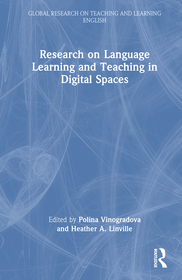
Research on Language Learning and Teaching in Digital Spaces
Sorozatcím: Global Research on Teaching and Learning English;
-
10% KEDVEZMÉNY?
- Kiadói listaár GBP 145.00
-
69 273 Ft (65 975 Ft + 5% áfa)
Az ár azért becsült, mert a rendelés pillanatában nem lehet pontosan tudni, hogy a beérkezéskor milyen lesz a forint árfolyama az adott termék eredeti devizájához képest. Ha a forint romlana, kissé többet, ha javulna, kissé kevesebbet kell majd fizetnie.
- Kedvezmény(ek) 10% (cc. 6 927 Ft off)
- Kedvezményes ár 62 346 Ft (59 378 Ft + 5% áfa)
62 346 Ft

Beszerezhetőség
Még nem jelent meg, de rendelhető. A megjelenéstől számított néhány héten belül megérkezik.
Why don't you give exact delivery time?
A beszerzés időigényét az eddigi tapasztalatokra alapozva adjuk meg. Azért becsült, mert a terméket külföldről hozzuk be, így a kiadó kiszolgálásának pillanatnyi gyorsaságától is függ. A megadottnál gyorsabb és lassabb szállítás is elképzelhető, de mindent megteszünk, hogy Ön a lehető leghamarabb jusson hozzá a termékhez.
A termék adatai:
- Kiadás sorszáma 1
- Kiadó Routledge
- Megjelenés dátuma 2026. május 14.
- ISBN 9781041091639
- Kötéstípus Keménykötés
- Terjedelem232 oldal
- Méret 229x152 mm
- Nyelv angol
- Illusztrációk 34 Illustrations, black & white; 15 Halftones, black & white; 19 Line drawings, black & white; 20 Tables, black & white 700
Kategóriák
Rövid leírás:
The 12th volume in the Routledge-TIRF series Global Research on Teaching and Learning English presents research on teaching English as an additional language in various global digital spaces. Language educators and researchers will benefit from up-to-date research findings on language learning and teaching shaped by digital spaces.
TöbbHosszú leírás:
The twelfth volume in the Routledge-TIRF series presents research on the use of technology and digital learning in English as an additional language (EAL) instruction.
With chapters written by TESOL scholars, including senior scholars as well as TIRF Doctoral Dissertation Grant (DDG) awardees, the book explores various aspects of teaching and learning English in digital spaces. The term digital spaces refers to any space or environment where technology and digital tools (e.g., applications, social media, video-editing software, to name just a few) are used to facilitate and advance language learning. The use of digital tools and spaces has become a prominent topic in TESOL and language education in general. Various scholars have highlighted the importance of digital literacy and multiliteracies development among language learners and have demonstrated how learner engagement with digital spaces and tools can facilitate productive, collaborative, and ultimately more successful language learning at various levels.
The readers of this volume – language educators and researchers – need up-to-date research findings on various approaches to language learning and teaching shaped by digital spaces present in various educational settings. This volume will offer readers examples of how researchers and teachers in language education utilize digital spaces in order to impact approaches to classroom practices.
“Grounded in empirical studies spanning a wide range of theoretical frameworks and methodologies, Research on Language Learning and Teaching in Digital Spaces provides a compelling map of how digital environments are reshaping English language education. Tracing language learning and teaching across social media, games, VR and AI, the volume offers nuanced, context-sensitive insights into equity, intercultural collaboration, and culturally responsive practice for educators, researchers, and policymakers worldwide.”
Ron Darvin, PhD., Associate Professor of the Department of Language and Literacy Education at the University of British Columbia, Co-author of Identity and a Model of Investment in Applied Linguistics and Intercultural Communication and Identity
TöbbTartalomjegyzék:
Part 1: Practicality: Language Learning in Digital Spaces 1. Self-Regulated Learning Prompts for Vocabulary Acquisition in Online L2 Contexts: How do They Affect Task Completion? 2. Bimodal Reading in Digital Spaces: How Reading While Listening Changes Reading of Familiar and Unfamiliar Words 3. Learner Perceptions of Task-Based Digital Simulations with Feedback for Pragmatic Development 4. The Impact of Playing a Massively Multiplayer Online Role-Playing Game on Chinese English Learners’ L2 Pragmatic Competence in Making Requests Part 2: Possibility: Digital Spaces in Language Learning 5. Digital Spaces, Global Connections: Reshaping English Language Education With Integrating an Online Community in the Classroom 6. Parallel Literacies: Transdisciplinary Reflections on Language Teaching and Learning in the Age of AI 7. ‘We are cookin’, love’ or ‘We’re a crooked love’?: Swifties’ Language Learning Experiences on Reddit 8. A Multimodal Perspective on Online VR-Integrated Content-and-Language-Integrated-Learning (CLIL) Lesson Design 9. “Smells as Tesol”: Use of Multimedia in a Messaging App by English Language Teachers in Uzbekistan to Establish Their Social Presence During Professional Development Program
Több
