

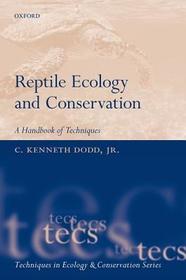
Reptile Ecology and Conservation
A Handbook of Techniques
Sorozatcím: Techniques in Ecology & Conservation;
-
10% KEDVEZMÉNY?
- A kedvezmény csak az 'Értesítés a kedvenc témákról' hírlevelünk címzettjeinek rendeléseire érvényes.
- Kiadói listaár GBP 132.50
-
59 823 Ft (56 975 Ft + 5% áfa)
Az ár azért becsült, mert a rendelés pillanatában nem lehet pontosan tudni, hogy a beérkezéskor milyen lesz a forint árfolyama az adott termék eredeti devizájához képest. Ha a forint romlana, kissé többet, ha javulna, kissé kevesebbet kell majd fizetnie.
- Kedvezmény(ek) 10% (kb. 5 982 Ft)
- Kedvezményes ár 53 841 Ft (51 278 Ft + 5% áfa)
Iratkozzon fel most és részesüljön kedvezőbb árainkból!
Feliratkozom
59 823 Ft

Beszerezhetőség
Megrendelésre a kiadó utánnyomja a könyvet. Rendelhető, de a szokásosnál kicsit lassabban érkezik meg.
Why don't you give exact delivery time?
A beszerzés időigényét az eddigi tapasztalatokra alapozva adjuk meg. Azért becsült, mert a terméket külföldről hozzuk be, így a kiadó kiszolgálásának pillanatnyi gyorsaságától is függ. A megadottnál gyorsabb és lassabb szállítás is elképzelhető, de mindent megteszünk, hogy Ön a lehető leghamarabb jusson hozzá a termékhez.
A termék adatai:
- Kiadó OUP Oxford
- Megjelenés dátuma 2016. május 5.
- ISBN 9780198726135
- Kötéstípus Keménykötés
- Terjedelem496 oldal
- Méret 244x160x30 mm
- Súly 988 g
- Nyelv angol 0
Kategóriák
Rövid leírás:
This practical manual of reptile field ecology and conservation brings together a distinguished, international group of reptile researchers to provide a state-of-the-art review of the many new and exciting techniques used to study reptiles and to track their conservation status and population trends.
TöbbHosszú leírás:
This practical handbook of reptile field ecology and conservation brings together a distinguished, international group of reptile researchers to provide a state-of-the-art review of the many new and exciting techniques used to study reptiles. The authors describe ecological sampling techniques and how they are implemented to monitor the conservation status and population trends of snakes, lizards, tuatara, turtles, and crocodilians throughout the world. Emphasis is placed on the extent of statistical inference and the biases associated with different techniques and analyses.
The chapters focus on the application of field research and data analysis for achieving an understanding of reptile life history, population dynamics, movement patterns, thermal ecology, conservation status, and the relationship between reptiles and their environment. The book emphasises the need for thorough planning, and demonstrates how a multi-dimensional approach incorporates information related to morphology, genetics, molecular biology, epidemiology, statistical modelling, animal welfare, and biosecurity. Although accentuating field sampling, sections on experimental applications in laboratories and zoos, thermal ecology, genetics, landscape ecology, disease and biosecurity, and management options are included. Much of this information is scattered in the scientific literature or not readily available, and the intention is to provide an affordable, comprehensive synthesis for use by graduate students, researchers, and practising conservationists worldwide.
The book not only contains a wealth of information, but is extremely well produced. This is an important collection of methods for all student of reptile ecology and conservation.
Tartalomjegyzék:
Part 1. Introduction
Reptile diversity and life history
Planning and setting objectives in field studies
Data collection and storage
Part 2. The Individual
Measuring and marking reptiles
Digital identification and analysis
Preserving specimens for additional study
Reproduction
Diet
Movement patterns and telemetry
Part 3. Sampling Reptiles
Surface-dwelling reptiles: coverboards, drift fences and arrays
Arboreal and fossorial reptiles
Sea snakes
Freshwater turtles
Terrestrial turtles and tortoises
Sea turtles
Crocodilians
Part 4. Reptiles in the Community
Plot and transect censuses
Rapid assessments of reptile diversity
Measuring microhabitats used by non-avian reptiles
Water quality and toxicology
Richness, diversity and similarity
Landscape ecology, biogeography and GIS methods
Part 5. Experimental Applications, Physiological Ecology, Genetics
Experimental applications
Body temperatures and the thermal environment
Genetics in field ecology and conservation
Part 6. Trends Analysis and Conservation Options
Occupancy models
Estimating abundance
Disease, parasites, and biosecurity protocols
Conservation management of reptiles
Education and outreach

