

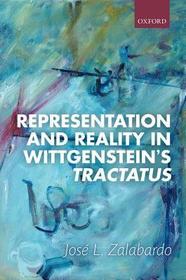
Representation and Reality in Wittgenstein's Tractatus
-
10% KEDVEZMÉNY?
- A kedvezmény csak az 'Értesítés a kedvenc témákról' hírlevelünk címzettjeinek rendeléseire érvényes.
- Kiadói listaár GBP 93.00
-
41 989 Ft (39 990 Ft + 5% áfa)
Az ár azért becsült, mert a rendelés pillanatában nem lehet pontosan tudni, hogy a beérkezéskor milyen lesz a forint árfolyama az adott termék eredeti devizájához képest. Ha a forint romlana, kissé többet, ha javulna, kissé kevesebbet kell majd fizetnie.
- Kedvezmény(ek) 10% (cc. 4 199 Ft off)
- Kedvezményes ár 37 791 Ft (35 991 Ft + 5% áfa)
Iratkozzon fel most és részesüljön kedvezőbb árainkból!
Feliratkozom
41 989 Ft

Beszerezhetőség
Megrendelésre a kiadó utánnyomja a könyvet. Rendelhető, de a szokásosnál kicsit lassabban érkezik meg.
Why don't you give exact delivery time?
A beszerzés időigényét az eddigi tapasztalatokra alapozva adjuk meg. Azért becsült, mert a terméket külföldről hozzuk be, így a kiadó kiszolgálásának pillanatnyi gyorsaságától is függ. A megadottnál gyorsabb és lassabb szállítás is elképzelhető, de mindent megteszünk, hogy Ön a lehető leghamarabb jusson hozzá a termékhez.
A termék adatai:
- Kiadó OUP Oxford
- Megjelenés dátuma 2015. július 30.
- ISBN 9780198743941
- Kötéstípus Keménykötés
- Terjedelem272 oldal
- Méret 240x173x21 mm
- Súly 550 g
- Nyelv angol 0
Kategóriák
Rövid leírás:
José L. Zalabardo presents a new account of central ideas in Wittgenstein's Tractatus Logico-Philosophicus on the structure of reality and our representations of it in thought and language. He explores Wittgenstein's picture theory of propositional representation, the unity of facts and propositions, and the nature of everyday propositions.
TöbbHosszú leírás:
José L. Zalabardo puts forward a new interpretation of central ideas in Wittgenstein's Tractatus Logico-Philosophicus concerning the structure of reality and our representations of it in thought and language. He shows the origins of Wittgenstein's picture theory of propositional representation in Russell's theories of judgment, arguing that the picture theory is Wittgenstein's solution to some of the problems that he found in Russell's position. Zalabardo defends the view that, for Wittgenstein, facts in general, and the facts that play the role of propositions in particular, are not composite items, arising from the combination of their constituents. They are ultimate, irreducible units, and what we think of as their constituents are features that facts have in common with one another. These common features have built into them their possibilities of combination with other features into possible situations. This is the source of the Tractarian account of non-actual possibilities. It is also the source of the idea that it is not possible to produce propositions answering to certain descriptions, including those that would give rise to Russell's paradox. Zalabardo then considers Wittgenstein's view that every proposition is a truth function of elementary propositions. He argues that this view is motivated by Wittgenstein's epistemology of logic, according to which we should be able to see logical relations by inspecting the structures of propositions. Finally, Zalabardo considers the problems that we face if we try to extend the application of the picture theory from elementary propositions to truth functions of these.
Zalabardo's book is overall a valuable contribution to the existing literature on the Tractatus with many illuminating discussions and careful arguments. It must be read by anyone who is seriously interested in Wittgenstein's early philosophy.
Tartalomjegyzék:
Introduction
Russell's theories of judgment
Wittgenstein and forms
The vanishing subject
Propositions and facts
The limits of representation
Logic and analysis
Conclusion
APPENDIX I: Other readings of the nonsense objection
APPENDIX II: The empty-name reading of the substance passage

