

-
10% KEDVEZMÉNY?
- A kedvezmény csak az 'Értesítés a kedvenc témákról' hírlevelünk címzettjeinek rendeléseire érvényes.
- Kiadói listaár GBP 34.99
-
15 797 Ft (15 045 Ft + 5% áfa)
Az ár azért becsült, mert a rendelés pillanatában nem lehet pontosan tudni, hogy a beérkezéskor milyen lesz a forint árfolyama az adott termék eredeti devizájához képest. Ha a forint romlana, kissé többet, ha javulna, kissé kevesebbet kell majd fizetnie.
- Kedvezmény(ek) 10% (cc. 1 580 Ft off)
- Kedvezményes ár 14 218 Ft (13 541 Ft + 5% áfa)
Iratkozzon fel most és részesüljön kedvezőbb árainkból!
Feliratkozom
15 797 Ft

Beszerezhetőség
Csak rendelésre kapható a kiadónál, kissé időigényes.
Why don't you give exact delivery time?
A beszerzés időigényét az eddigi tapasztalatokra alapozva adjuk meg. Azért becsült, mert a terméket külföldről hozzuk be, így a kiadó kiszolgálásának pillanatnyi gyorsaságától is függ. A megadottnál gyorsabb és lassabb szállítás is elképzelhető, de mindent megteszünk, hogy Ön a lehető leghamarabb jusson hozzá a termékhez.
A termék adatai:
- Kiadó OUP Canada
- Megjelenés dátuma 2010. július 8.
- ISBN 9780195438307
- Kötéstípus Puhakötés
- Terjedelem344 oldal
- Méret 228x152x14 mm
- Súly 320 g
- Nyelv angol
- Illusztrációk No illustrations 0
Kategóriák
Hosszú leírás:
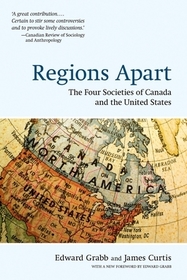
Regions Apart: The Four Societies of Canada and the United States provides an invaluable social, cultural, and political comparison of the two countries that share the world's longest undefended border. General readers and students alike will find Regions Apart an insightful analysis of how and why Americans and Canadians differ, not only from each other but from region to region within each country. Recognizing the inevitability of the comparison - at least for Canadians! - the authors explore the myths about the historical development of the two nations and provide their own thought-provoking interpretation. They argue that the original American colonies and English Canada were very similar societies and that the differences that emerged as the countries developed resulted not simply because of the rupture caused by the American Revolution, but because of internal divisions in each country - between English and French Canada and between the American North and South - that set the two nations on different paths. The Wynford edition includes a new introduction by Edward Grabb bringing this groundbreaking study fully up to date.
an exemplary and fascinating synthesis of research. Regions Apart will delight history buffs, even those not initially interested in the CanadaâU.S. differences, and it is a must read for those of us studying those difference. It could be used as a text in sociology courses on American or Canadian society, or as an example of a historical comparative study in graduate level courses.
Tartalomjegyzék:
Introduction to the Wynford Edition
Preface
Introduction
Plan of the Book
Part I: Canada and the United States: Theoretical Perspectives
Introduction
Previous Perspectives: Founding Fragements and Revolutionary Origins
Hartz's Theory of European Founding Fragements
Lipset's Origins Thesis: The Defining Moment of the American Revolution
Summary
An Alternative Perspective: Deep Structures and the Four Sub-societies of Canada and the United States
The Concept of Deep Structures
Deep Structures and the English Heritage
Identifying the Deep Structures of the English Societies
Canada and the United States as Four Sub-societies
Summary and Conclusion to Part I
Part II: Historical Myths and Historical Evidence
Introduction
Liberty, Liberalism, and the Myth of American Individualism
The Concept of Liberty in Pre-revolutionary America
The Myth of American Individualism
Summary
English Canada and the Loyalist Myth
The Loyalist Migration and Canadian Toryism
Counting the Loyalists
How Loyal Were the Loyalists?
Were the English-Canadian Colonists 'Americans'?
Tory Values: Comparing the Elite and the Larger Population
Summary
Canadians and Americans: Historical Comparisons
Class Structure and Economic Background
Ethnic Composition and Sources of Immigration
Religion in Canada and the United States
Patterns of Urbanization
Political Culture and Organization
Summary
Conclusion to Part II
Part III: Enduring Myths and Contemporary Realities
Introduction
Samples and Data Sources
Research Questions
Moral Issues: Religion, Family Values, and Crime
Religion and Religiosity
Family and Sexual Values
Crime and the Law
Summary
Individualism, Collectivism, and the State
Collectivism and the Role of the State
Attitudes about Individualism, Statism, and Collectivism
Summary
Social Inclusion and Tolerance toward Minorities
Mosaic and Melting Pot
Patterns of Immigration and Racial Composition
Socioeconomic Attainments of Immigrants and Ethnic Minorities
Comparative Research on Attitudes toward Minorities
Summary
Political Attitudes and Political Action
Political Interest and Political Behaviour
Political Trust and Confidence in Government
Feelings of Interpersonal Trust and National Pride
Summary
Voluntary-Association Involvement and Activity
Previous Research
Results from the World Values Surveys
Summary
Conclusion to Part III
Conclusion
Deep Structures Revisited
How Many 'Nations' Are There?
Elites and Masses
National Differences: Comparing the Extremes
Past, Present, and Future: Convergence, Divergence, or Both?
Appendix I
Appendix II
Appendix III
References
Index

