

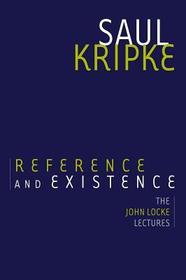
Reference and Existence
The John Locke Lectures
-
10% KEDVEZMÉNY?
- A kedvezmény csak az 'Értesítés a kedvenc témákról' hírlevelünk címzettjeinek rendeléseire érvényes.
- Kiadói listaár GBP 31.49
-
14 217 Ft (13 540 Ft + 5% áfa)
Az ár azért becsült, mert a rendelés pillanatában nem lehet pontosan tudni, hogy a beérkezéskor milyen lesz a forint árfolyama az adott termék eredeti devizájához képest. Ha a forint romlana, kissé többet, ha javulna, kissé kevesebbet kell majd fizetnie.
- Kedvezmény(ek) 10% (cc. 1 422 Ft off)
- Kedvezményes ár 12 795 Ft (12 186 Ft + 5% áfa)
Iratkozzon fel most és részesüljön kedvezőbb árainkból!
Feliratkozom
14 217 Ft

Beszerezhetőség
Megrendelésre a kiadó utánnyomja a könyvet. Rendelhető, de a szokásosnál kicsit lassabban érkezik meg.
Why don't you give exact delivery time?
A beszerzés időigényét az eddigi tapasztalatokra alapozva adjuk meg. Azért becsült, mert a terméket külföldről hozzuk be, így a kiadó kiszolgálásának pillanatnyi gyorsaságától is függ. A megadottnál gyorsabb és lassabb szállítás is elképzelhető, de mindent megteszünk, hogy Ön a lehető leghamarabb jusson hozzá a termékhez.
A termék adatai:
- Kiadó OUP USA
- Megjelenés dátuma 2018. február 8.
- ISBN 9780190660611
- Kötéstípus Puhakötés
- Terjedelem186 oldal
- Méret 208x140x15 mm
- Súly 136 g
- Nyelv angol 0
Kategóriák
Rövid leírás:
This work can be read as a sequel to Kripke's classic Naming and Necessity, confronting important issues left open in that work and developing a novel approach to questions concerning empty names and existence. It provides along the way novel treatments of fictional and mythological discourse, the pragmatics of definite and indefinite descriptions and the language of sense data.
TöbbHosszú leírás:
Reference and Existence, Saul Kripke's John Locke Lectures for 1973, can be read as a sequel to his classic Naming and Necessity. It confronts important issues left open in that work -- among them, the semantics of proper names and natural kind terms as they occur in fiction and in myth; negative existential statements; the ontology of fiction and myth (whether it is true that fictional characters like Hamlet, or mythical kinds like bandersnatches, might have existed). In treating these questions, he makes a number of methodological observations that go beyond the framework of his earlier book -- including the striking claim that fiction cannot provide a test for theories of reference and naming. In addition, these lectures provide a glimpse into the transition to the pragmatics of singular reference that dominated his influential paper, "Speaker's Reference and Semantic Reference" -- a paper that helped reorient linguistic and philosophical semantics. Some of the themes have been worked out in later writings by other philosophers -- many influenced by typescripts of the lectures in circulation -- but none have approached the careful, systematic treatment provided here. The virtuosity of Naming and Necessity -- the colloquial ease of the tone, the dazzling, on-the-spot formulations, the logical structure of the overall view gradually emerging over the course of the lectures -- is on display here as well.
The clarity, openness and, indeed, the honesty of his lectures is impressive, as are the recurring flashes of laconic humor
Tartalomjegyzék:
Preface
Lecture I: October 30th, 1973
Lecture II: November 6th, 1973
Lecture III: November 13, 1973
Lecture IV: November 20th, 1973
Lecture V: November 27th, 1973
Lecture VI: December 4th, 1973
References
Index

