

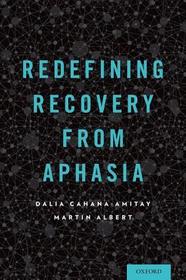
Redefining Recovery from Aphasia
-
10% KEDVEZMÉNY?
- A kedvezmény csak az 'Értesítés a kedvenc témákról' hírlevelünk címzettjeinek rendeléseire érvényes.
- Kiadói listaár GBP 115.00
-
51 922 Ft (49 450 Ft + 5% áfa)
Az ár azért becsült, mert a rendelés pillanatában nem lehet pontosan tudni, hogy a beérkezéskor milyen lesz a forint árfolyama az adott termék eredeti devizájához képest. Ha a forint romlana, kissé többet, ha javulna, kissé kevesebbet kell majd fizetnie.
- Kedvezmény(ek) 10% (kb. 5 192 Ft)
- Kedvezményes ár 46 730 Ft (44 505 Ft + 5% áfa)
Iratkozzon fel most és részesüljön kedvezőbb árainkból!
Feliratkozom
51 922 Ft

Beszerezhetőség
Megrendelésre a kiadó utánnyomja a könyvet. Rendelhető, de a szokásosnál kicsit lassabban érkezik meg.
Why don't you give exact delivery time?
A beszerzés időigényét az eddigi tapasztalatokra alapozva adjuk meg. Azért becsült, mert a terméket külföldről hozzuk be, így a kiadó kiszolgálásának pillanatnyi gyorsaságától is függ. A megadottnál gyorsabb és lassabb szállítás is elképzelhető, de mindent megteszünk, hogy Ön a lehető leghamarabb jusson hozzá a termékhez.
A termék adatai:
- Kiadó OUP USA
- Megjelenés dátuma 2015. március 12.
- ISBN 9780199811939
- Kötéstípus Keménykötés
- Terjedelem296 oldal
- Méret 160x239x17 mm
- Súly 576 g
- Nyelv angol 0
Kategóriák
Rövid leírás:
This book concerns the neural organization of language in the healthy brain and in persons with aphasia. The novel concept of neural multifunctionality explains how language is created in the healthy brain, resolves contradictions between classical aphasiology and contemporary understandings of brain-language relations, and serves as the neurobiological basis for development of new approaches to aphasia therapy.
TöbbHosszú leírás:
This book focuses on two fundamental aspects of brain-language relations: one concerns the neural organization of language in the healthy brain; the other challenges current approaches to treatment of aphasia and offers a new theory for recovery from aphasia. The essence of the book lies in the phrase neural multifunctionality: the constant and dynamic incorporation of non-linguistic functions into language models of the intact brain. The book makes the claim that language is a construction, created as we use it, and cannot be understood as being supported by neurally based linguistic networks only. Rather, language emerges from the constant and dynamic interaction among neural networks subserving cognitive, affective, and praxic functions with neural networks subserving lexical retrieval (naming), sentence processing (comprehension), and discourse (communication, conversation). In persons with stroke-induced aphasia, neural networks for executive system function, attention, memory, motor system function, visual system function, and emotion interact with neural networks for language to produce the aphasia profile and to influence recovery from aphasia. Consequently, neural multifunctionality in aphasia explains individual differences in the lesion-deficit model and continued recovery over time, redefining the concept of recovery from aphasia and offering new opportunities for treatment.
Aphasia, an impairment of propositional language caused by brain dysfunction, is one of the most common and disabling disorders afflicting humans. This important book, written by two world renowned aphasiologists, makes a paradigmatic shift. These authors address aphasic disorders and recovery by examining nonlinguistic neurobehavioral factors, such as emotions, praxis, and executive functions. These nonlinguistic functions are mediated by functional networks that are independent, but strongly interconnected with the primary language areas and thus play an import role in supporting recovery and adaptation. This important book is critical reading for those clinicians, educators and investigators who deal with people who are suffering with aphasia.
Tartalomjegyzék:
What we know and do not know about recovery from aphasia
Language in the healthy brain: evidence for multifunctionality
Executive functions and aphasia recovery
Attention systems and aphasia recovery
The role of memory functions in aphasia recovery
The role of emotion in recovery from aphasia
Praxis in aphasia recovery
Visual processing in aphasia recovery
Redefining recovery from aphasia

