

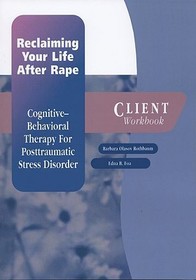
Reclaiming Your Life After Rape: Client Workbook
Cognitive-behavioral therapy for post-traumatic stress disorder
Sorozatcím: Treatments That Work;
-
10% KEDVEZMÉNY?
- A kedvezmény csak az 'Értesítés a kedvenc témákról' hírlevelünk címzettjeinek rendeléseire érvényes.
- Kiadói listaár GBP 52.00
-
23 478 Ft (22 360 Ft + 5% áfa)
Az ár azért becsült, mert a rendelés pillanatában nem lehet pontosan tudni, hogy a beérkezéskor milyen lesz a forint árfolyama az adott termék eredeti devizájához képest. Ha a forint romlana, kissé többet, ha javulna, kissé kevesebbet kell majd fizetnie.
- Kedvezmény(ek) 10% (cc. 2 348 Ft off)
- Kedvezményes ár 21 130 Ft (20 124 Ft + 5% áfa)
Iratkozzon fel most és részesüljön kedvezőbb árainkból!
Feliratkozom
23 478 Ft

Beszerezhetőség
Megrendelésre a kiadó utánnyomja a könyvet. Rendelhető, de a szokásosnál kicsit lassabban érkezik meg.
Why don't you give exact delivery time?
A beszerzés időigényét az eddigi tapasztalatokra alapozva adjuk meg. Azért becsült, mert a terméket külföldről hozzuk be, így a kiadó kiszolgálásának pillanatnyi gyorsaságától is függ. A megadottnál gyorsabb és lassabb szállítás is elképzelhető, de mindent megteszünk, hogy Ön a lehető leghamarabb jusson hozzá a termékhez.
A termék adatai:
- Kiadó Graywind Publications
- Megjelenés dátuma 1999. január 1.
- ISBN 9780195183764
- Kötéstípus Puhakötés
- Terjedelem158 oldal
- Méret 278x214x10 mm
- Súly 381 g
- Nyelv angol 0
Kategóriák
Rövid leírás:
This powerful client workbook is written in an encouraging and easy-to-understand style specifically for women who have been sexually assaulted and have developed chronic symptoms of posttraumatic stress disorder (PTSD). Clients learn how cognitive-behavioral therapy has helped other victims and how it can work for them. This book explains how to distinguish PTSD symptoms from other disorders and teaches powerful techniques for overcoming these symptoms.
In writing this book, the authors aim to address two goals. First, they want to present information about PTSD and related problems in language understandable to nonprofessionals. This information will include a review of the studies on posttrauma problems and on the effectiveness of different treatments. They also describe why some survivors develop PTSD and others do not.
The second goal of the book is to provide a detailed client workbook for the treatment of trauma-related problems, especially PTSD, to assist clients working with a therapist. The authors are aware of the fact that people have different problems and different needs. What works for one person may not work for another. Therefore, they describe several different treatment techniques. The book is organized around the different cognitive-behavioral techniques that have been studied and proven effective with women sufferers of PTSD following an assault.
Throughout the book, the authors focus mainly on women who have been sexually assaulted and as a result developed chronic symptoms of PTSD, which have disturbed their daily functioning and cause them emotional distress. Most of the examples they use to demonstrate the cognitive-behavioral techniques are drawn from their experience in treating rape survivors. However, the cognitive-behavioral procedures outlined here have been as successful in helping women who have been sexually abused in childhood and adult female survivors of nonsexual assaults, like aggravated assault and robbery. Other survivors of traumas such as natural disasters and car accidents were also helped by this cognitive-behavioral approach.
Hosszú leírás:
This powerful client workbook is written in an encouraging and easy-to-understand style specifically for women who have been sexually assaulted and have developed chronic symptoms of posttraumatic stress disorder (PTSD). Clients learn how cognitive-behavioral therapy has helped other victims and how it can work for them. This book explains how to distinguish PTSD symptoms from other disorders and teaches powerful techniques for overcoming these symptoms.
In writing this book, the authors aim to address two goals. First, they want to present information about PTSD and related problems in language understandable to nonprofessionals. This information will include a review of the studies on posttrauma problems and on the effectiveness of different treatments. They also describe why some survivors develop PTSD and others do not.
The second goal of the book is to provide a detailed client workbook for the treatment of trauma-related problems, especially PTSD, to assist clients working with a therapist. The authors are aware of the fact that people have different problems and different needs. What works for one person may not work for another. Therefore, they describe several different treatment techniques. The book is organized around the different cognitive-behavioral techniques that have been studied and proven effective with women sufferers of PTSD following an assault.
Throughout the book, the authors focus mainly on women who have been sexually assaulted and as a result developed chronic symptoms of PTSD, which have disturbed their daily functioning and cause them emotional distress. Most of the examples they use to demonstrate the cognitive-behavioral techniques are drawn from their experience in treating rape survivors. However, the cognitive-behavioral procedures outlined here have been as successful in helping women who have been sexually abused in childhood and adult female survivors of nonsexual assaults, like aggravated assault and robbery. Other survivors of traumas such as natural disasters and car accidents were also helped by this cognitive-behavioral approach.
Tartalomjegyzék:
Section 1: After the Assault
Case Descriptions
Posttraumatic Stress Disorder Following Assault
Other Reactions to Assault
Section 2: Assessing Personal Reactions
Common Reactions to Assault
Assessing My PTSD
What Do We Know About the Treatment of PTSD
Designing My Treatment Program
Section 3: Cognitive-Behavioral Program
Relaxation Training: Breathing Retraining, Deep Muscle Relaxation, Differential Relaxation
Real-Life Exposure: Confrontation of Feared Situations
Imaginal Exposure: Reliving the Trauma Memory in Imagination
Section 4: Cognitive-Behavioural Program
Cognitive Techniques 1: Cognitive Restructuring
Other Cognitive Techniques
Role-play, Assertive Behaviour and Covert Modelling
Section 5: Cognitive-Behavioural Program
Putting the Techniques Together: Common Problems and Complications
Where Do I Go From Here?

