

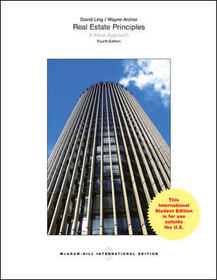
Real Estate Principles: A Value Approach
Sorozatcím: COLLEGE IE OVERRUNS;
-
10% KEDVEZMÉNY?
- A kedvezmény csak az 'Értesítés a kedvenc témákról' hírlevelünk címzettjeinek rendeléseire érvényes.
- Kiadói listaár GBP 64.99
-
29 342 Ft (27 945 Ft + 5% áfa)
Az ár azért becsült, mert a rendelés pillanatában nem lehet pontosan tudni, hogy a beérkezéskor milyen lesz a forint árfolyama az adott termék eredeti devizájához képest. Ha a forint romlana, kissé többet, ha javulna, kissé kevesebbet kell majd fizetnie.
- Kedvezmény(ek) 10% (kb. 2 934 Ft)
- Kedvezményes ár 26 408 Ft (25 151 Ft + 5% áfa)
Iratkozzon fel most és részesüljön kedvezőbb árainkból!
Feliratkozom
29 342 Ft

Beszerezhetőség
A kiadónál véglegesen elfogyott, nem rendelhető. Érdemes újra keresni a címmel, hátha van újabb kiadás.
Why don't you give exact delivery time?
A beszerzés időigényét az eddigi tapasztalatokra alapozva adjuk meg. Azért becsült, mert a terméket külföldről hozzuk be, így a kiadó kiszolgálásának pillanatnyi gyorsaságától is függ. A megadottnál gyorsabb és lassabb szállítás is elképzelhető, de mindent megteszünk, hogy Ön a lehető leghamarabb jusson hozzá a termékhez.
A termék adatai:
- Kiadás sorszáma 4
- Kiadó McGraw-Hill
- Megjelenés dátuma 2013. február 16.
- ISBN 9780071318440
- Kötéstípus Puhakötés
- Terjedelem704 oldal
- Méret 281x223x30 mm
- Súly 1667 g
- Nyelv angol 0
Kategóriák
Hosszú leírás:
Real Estate Principles: A Value Approach demonstrates how value is central to virtually all real estate decision-making. Students using Ling and Archer should finish the course with a value-oriented framework and a set of valuation and decision making tools that can be applied in a variety of real-world situations. The key to making sound investment decision is to understand how property values are created, maintained, increased or destroyed.
Since the launch of Real Estate Principles: A Value Approach, significant and lasting changes have come upon the world of real estate. This is very true in real estate finance and capital sources where most of the traditional lenders have been transformed or displaced, giving way to a radically different set of players in mortgage finance. There has been change with profound and far-reaching implications in a world where it is understandable that property values can go down as well as up. This realization will color every aspect of real estate investment, finance and transactions for the foreseeable future.
Real Estate Principles: A Value Approach demonstrates how value is central to virtually all real estate decision-making. Students using Ling and Archer should finish the course with a value-oriented framework and a set of valuation and decision making tools that can be applied in a variety of real-world situations. The key to making sound investment decision is to understand how property values are created, maintained, increased or destroyed.
Since the launch of Real Estate Principles: A Value Approach, significant and lasting changes have come upon the world of real estate. This is very true in real estate finance and capital sources where most of the traditional lenders have been transformed or displaced, giving way to a radically different set of players in mortgage finance. There has been change with profound and far-reaching implications in a world where it is understandable that property values can go down as well as up. This realization will color every aspect of real estate investment, finance and transactions for the foreseeable future.
Több
