

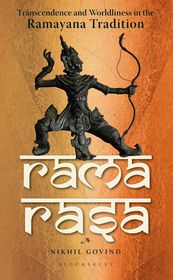
Rama Rasa
Transcendence and Worldliness in the Ramayana Tradition
-
18% KEDVEZMÉNY?
- Kiadói listaár GBP 85.00
-
38 377 Ft (36 550 Ft + 5% áfa)
Az ár azért becsült, mert a rendelés pillanatában nem lehet pontosan tudni, hogy a beérkezéskor milyen lesz a forint árfolyama az adott termék eredeti devizájához képest. Ha a forint romlana, kissé többet, ha javulna, kissé kevesebbet kell majd fizetnie.
- Kedvezmény(ek) 18% (cc. 6 908 Ft off)
- Kedvezményes ár 31 470 Ft (29 971 Ft + 5% áfa)
- A kedvezmény érvényes eddig: 2026. május 31.
31 470 Ft

Beszerezhetőség
Még nem jelent meg, de rendelhető. A megjelenéstől számított néhány héten belül megérkezik.
Why don't you give exact delivery time?
A beszerzés időigényét az eddigi tapasztalatokra alapozva adjuk meg. Azért becsült, mert a terméket külföldről hozzuk be, így a kiadó kiszolgálásának pillanatnyi gyorsaságától is függ. A megadottnál gyorsabb és lassabb szállítás is elképzelhető, de mindent megteszünk, hogy Ön a lehető leghamarabb jusson hozzá a termékhez.
A termék adatai:
- Kiadó Bloomsbury Publishing (UK)
- Megjelenés dátuma 2026. április 30.
- ISBN 9789361313097
- Kötéstípus Keménykötés
- Terjedelem200 oldal
- Méret 222x142x16 mm
- Súly 340 g
- Nyelv 700
Kategóriák
Rövid leírás:
Given the enormous interest in the religious and cultural figure of Rama, this book analyzes key classical texts that bring forth unusual dimensions (aesthetics, morality, emotion, spirituality) to this central South Asian personage.
TöbbHosszú leírás:
The Ramayana tradition, with its multifarious aesthetic and spiritual claims, reveals its depth and versatility in this study of three influential texts: Bhavabhuthi's Uttara Rama Carita, the anonymous Adhyatma Ramayana, and Tulsidas' Ramcaritmanas.
The eighth-century Uttara Rama Carita (Rama's Last Act) is a culmination of the Rama-tradition's aesthetic dimension. It showcases the tradition as crystallizing a pathos of viraha in myriad modes: separation between self and beloved, between parents and children, between royalty and populace, between life and after-life, between bereavement and memory. Drawing from this dramatic tradition, the fourteenth-century Adhyatma Ramayana and Tulsidas' epochal sixteenth-century Ramcaritmanas develop the Rama-narratives in the
more soteriological directions of Advaita and Bhakti.
Throughout the tradition, Rama's self is understood in both the dimension of time (learning and growth, despite all the wounds the world inflicts), as well as that which exists in the moment in the heated everyday encounter with partner, parents, children, and citizens. Taken together, these three texts provide a refreshing vantage into the Rama-tradition as it boldly takes on humanity's deepest quest for love, justice, and spiritual freedom. This book is written in a style that invites one to respectfully inhabit the tradition and allow the Rama-narrative to emerge, query, and ennoble our shared contemporary moment.
Tartalomjegyzék:
Introduction
Chapter One: Bhavabhuti's Rama's Last Act
Chapter Two: Adhyatma Ramayana
Chapter Three: Tulsidas' The Epic of Rama
Conclusion
Select Bibliography
Index
About the Author

