

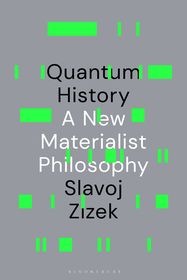
Quantum History
A New Materialist Philosophy
-
18% KEDVEZMÉNY?
- Kiadói listaár GBP 20.00
-
9 030 Ft (8 600 Ft + 5% áfa)
Az ár azért becsült, mert a rendelés pillanatában nem lehet pontosan tudni, hogy a beérkezéskor milyen lesz a forint árfolyama az adott termék eredeti devizájához képest. Ha a forint romlana, kissé többet, ha javulna, kissé kevesebbet kell majd fizetnie.
- Kedvezmény(ek) 18% (kb. 1 625 Ft)
- Kedvezményes ár 7 405 Ft (7 052 Ft + 5% áfa)
- A kedvezmény érvényes eddig: 2026. október 31.
7 405 Ft

Beszerezhetőség
Becsült beszerzési idő: A Prosperónál jelenleg nincsen raktáron, de a kiadónál igen. Beszerzés kb. 3-5 hét..
A Prosperónál jelenleg nincsen raktáron.
Why don't you give exact delivery time?
A beszerzés időigényét az eddigi tapasztalatokra alapozva adjuk meg. Azért becsült, mert a terméket külföldről hozzuk be, így a kiadó kiszolgálásának pillanatnyi gyorsaságától is függ. A megadottnál gyorsabb és lassabb szállítás is elképzelhető, de mindent megteszünk, hogy Ön a lehető leghamarabb jusson hozzá a termékhez.
A termék adatai:
- Kiadó Bloomsbury Publishing (UK)
- Megjelenés dátuma 2025. november 13.
- Kötetek száma Hardback
- ISBN 9781350566422
- Kötéstípus Keménykötés
- Terjedelem456 oldal
- Méret 240x166x38 mm
- Súly 664 g
- Nyelv angol 1028
Kategóriák
Rövid leírás:
Slavoj Zizek's treatise on how insights from the field of Quantum Physics allow a total re-invention of how we think about history.
TöbbHosszú leírás:
A panoramic view of the cosmos must begin with the tension of a single political moment. In Quantum History, Slavoj Zizek brings together Hegelian dialectics, Lacan psychoanalysis and quantum mechanics to rethink history, reality and political possibility.
Taking up Lenin's challenge to radically reconsider materialism in the wake of each big scientific discovery, and rejecting the recent vogue for giving a vague spiritualist spin to wave mechanics, Zizek embraces the philosophical implications of quantum mechanics with characteristic erudition and verve. Drawing on the central themes of the holographic universe, non-commutativity and the collapse of superpositions, Zizek evolves a quantum-inspired ontology which reinvents the historical materialism of Hegel and Heidegger - and compels a brutal, often darkly funny, inquisition into the chances of radical emancipatory acts today.
Quantum History takes the reader from the absolute contradiction of the primordial void through quantum oscillations to our ordinary reality, weaving in Lacan and Deleuze, Rovelli and Schelling, opera, cinema, sex and war. Zizek is at his sharpest, saddest, most provocative best as he demonstrates that there is no way of extracting ourselves from the texture of history, no neutral position from which the workings of the world can be observed transparently - we must act from a contingent, complex and inscrutable political moment, in sadness and in doubt, but defiantly.
Tartalomjegyzék:
Introduction: Materialism and Quantum Criticism
I - Universal: Collapse Comes First
1 Why A Hegelian Needs Quantum Mechanics
2 Why Quantum Mechanics Needs Hegel
3 Noncommutativity in the Symbolic and in the (Quantum) Real
II - Particular: From Hegel to Heidegger... and Back
1 Names for Finitude: Hegel, Heidegger, Pippin
2 The Night of the World
3 Heidegger's Politics of Finitude
III - Singular: Politics in a Quantum World
1 The Hologram of Conflicting Universalities
2 Can Artificial Intelligence Really Think?
3 The Politics of Vocation
Variations
Variation 1 - Frozen Beauty: Rovelli, Deleuze and the Stoics
Variation 2 - No Substitute for True Universals
Variation 3 - Pure Voice, Pure Sound: Beethoven, Globokar, Act
Variation 4 - Acts of Reconciliation
Variation 5 - Moderately Conservative Communism
Variation 6 - The Painted Void
Variation 7 - The Many Monsters of Cinema
Variation 8 - Sexual Superpositions
Variation 9 - Make The Kitchen Maid King
Conclusion: The Hunger to Be Something

