

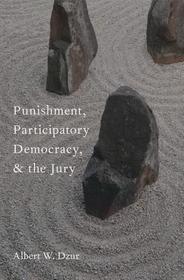
Punishment, Participatory Democracy, and the Jury
Sorozatcím: Studies in Penal Theory and Philosophy;
-
10% KEDVEZMÉNY?
- A kedvezmény csak az 'Értesítés a kedvenc témákról' hírlevelünk címzettjeinek rendeléseire érvényes.
- Kiadói listaár GBP 88.00
-
39 732 Ft (37 840 Ft + 5% áfa)
Az ár azért becsült, mert a rendelés pillanatában nem lehet pontosan tudni, hogy a beérkezéskor milyen lesz a forint árfolyama az adott termék eredeti devizájához képest. Ha a forint romlana, kissé többet, ha javulna, kissé kevesebbet kell majd fizetnie.
- Kedvezmény(ek) 10% (kb. 3 973 Ft)
- Kedvezményes ár 35 759 Ft (34 056 Ft + 5% áfa)
Iratkozzon fel most és részesüljön kedvezőbb árainkból!
Feliratkozom
39 732 Ft

Beszerezhetőség
Megrendelésre a kiadó utánnyomja a könyvet. Rendelhető, de a szokásosnál kicsit lassabban érkezik meg.
Why don't you give exact delivery time?
A beszerzés időigényét az eddigi tapasztalatokra alapozva adjuk meg. Azért becsült, mert a terméket külföldről hozzuk be, így a kiadó kiszolgálásának pillanatnyi gyorsaságától is függ. A megadottnál gyorsabb és lassabb szállítás is elképzelhető, de mindent megteszünk, hogy Ön a lehető leghamarabb jusson hozzá a termékhez.
A termék adatai:
- Kiadó OUP USA
- Megjelenés dátuma 2012. szeptember 13.
- ISBN 9780199874095
- Kötéstípus Keménykötés
- Terjedelem240 oldal
- Méret 160x239x22 mm
- Súly 454 g
- Nyelv angol 0
Kategóriák
Rövid leírás:
Focusing democratic theory on the pressing issue of punishment, Punishment, Participatory Democracy, and the Jury argues for participatory institutional designs as antidotes to the American penal state. Citizen action in institutions like the jury and restorative justice programs can foster the attunement, reflectiveness, and full-bodied communication needed as foundations for widespread civic responsibility for criminal justice.
TöbbHosszú leírás:
Focusing contemporary democratic theory on the neglected topic of punishment, Punishment, Participatory Democracy, and the Jury argues for increased civic engagement in criminal justice as an antidote to the American penal state. Albert W. Dzur considers how the jury, rather than merely expressing unreflective public opinion, may serve as a participatory institution that gathers and utilizes citizen's juridical capabilities. In doing so, the book resists trends in criminal justice scholarship that blame increases in penal severity on citizen participation and rejects political theorists' longstanding skepticism of lay abilities.
Dzur distinguishes constructive citizen involvement that takes responsibility for public problems from a mass politics mobilized superficially around single issues. This more positive view of citizen action, which was once a major justification for the jury trial, is now also manifest in the restorative justice movement, which has incorporated lay people into community boards and sentencing circles. Both jury trials and restorative justice programs, Dzur explains, are examples of rational disorganization, in which lay citizen action renders a process less efficient yet also contributes valuable qualities such as attunement, reflectiveness, and full-bodied communication. While restorative justice programs and participatory policy forums such as citizens' juries have become attractive to reformers, traditional juries have suffered a steep and troubling decline. Punishment, Participatory Democracy, and the Jury advocates a broader role for jurors in the criminal courts and more widespread use of jury trials.
Though no panacea for a political culture grown too comfortable with criminalization and incarceration, participatory institutional designs that rationally disorganize punishment practices and slow down criminal justice can increase civic responsibility and public awareness about the need to find alternative paths forward for America's broken penal system.
Tartalomjegyzék:
Acknowledgments
1. Three Puzzles about Crime, Punishment, and the Death of the American Jury
2. The Myth of Penal Populism
3. Participatory Democracy and Rational Disorganization
4. The Jury as a Civic Schoolhouse
5. Democracy in the Court: Lay Contributions to Justice
6. Juries, Juries, Everywhere (But Not Inside the Courts)
7. Reviving the Jury: Active Juries, Juror Activism, and Institutional Change
8. Public Justice vs. the Penal State^
Bibliography
Index

